
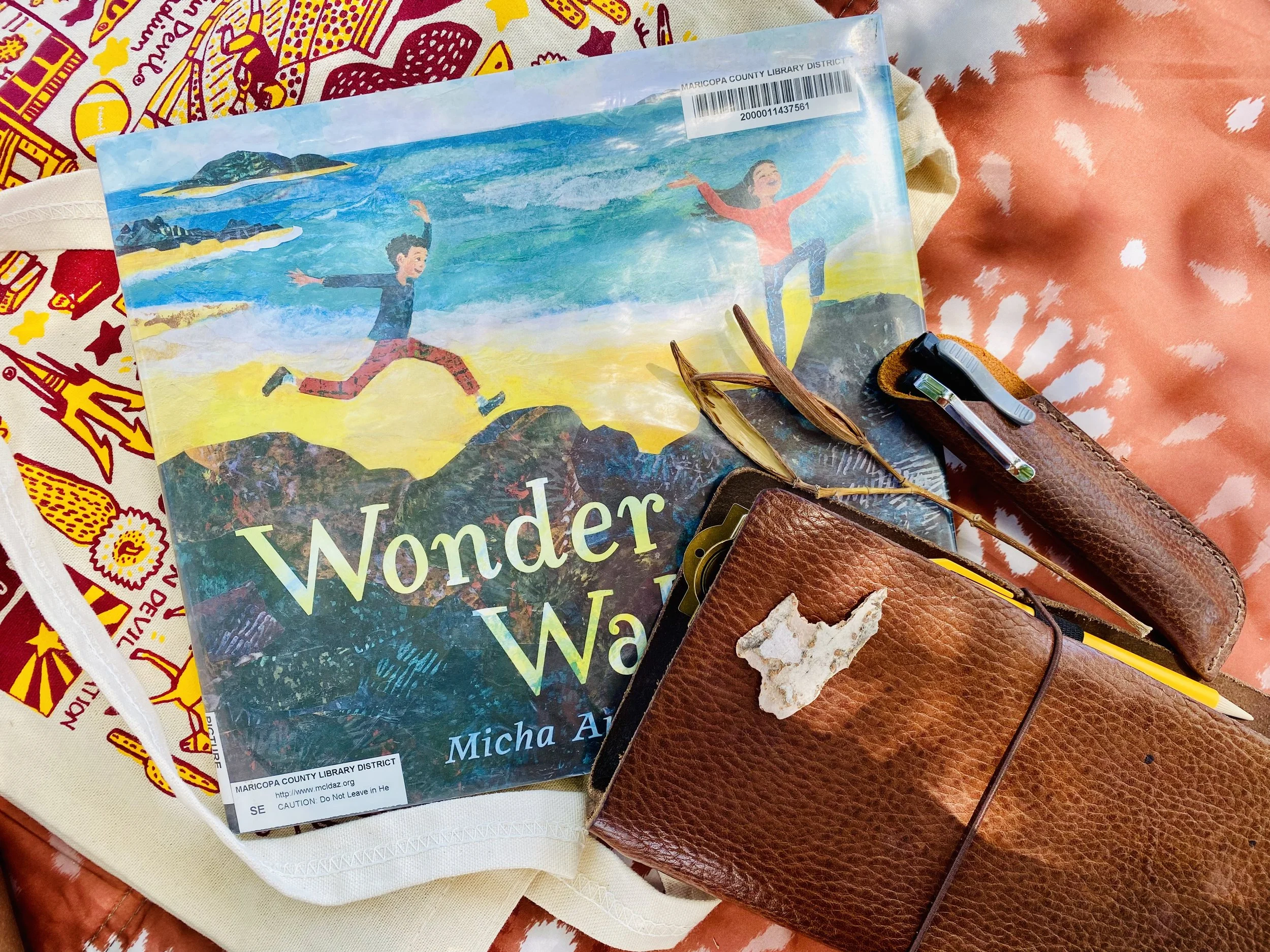
Mentor Text Resources
How to Start Using Mentor Texts in Your Classroom
Mentor texts are an amazing tool for so many reasons: They build reading appreciation and motivation, they show examples of great writing, and they provide students with an outlook that they could be an author someday because they can write just like the pros. If you are reading books in your classroom, you have mentor texts. Mentor texts are also one of the best teaching tools for not teaching grammar in isolation.
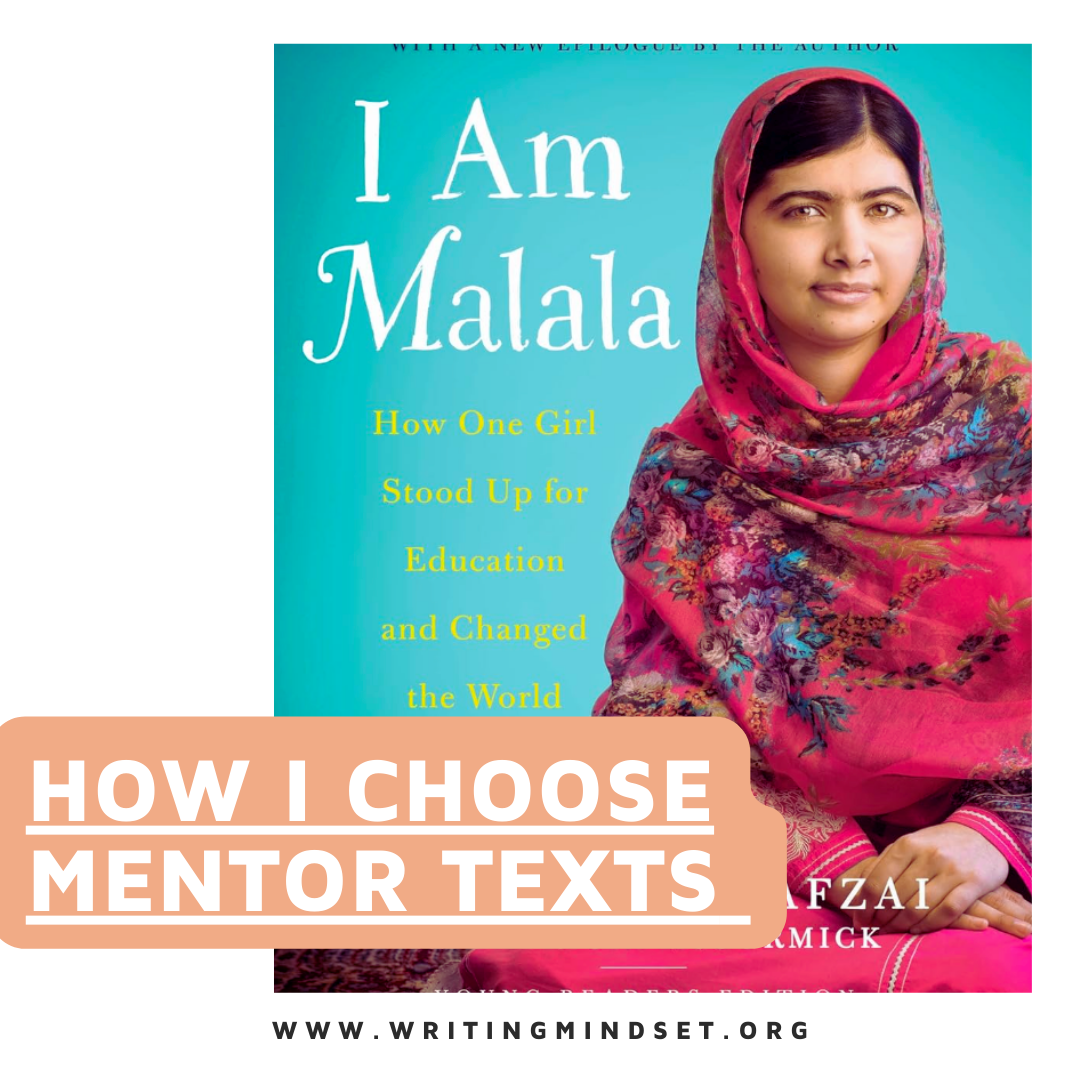
I am constantly reading books. This wasn’t always the case, and largely, I think I have to attribute my reintroduction to reading all the time to my mentor text work. I am constantly on the mission to find books to recommend to students and use in the classroom with my students for our “write like an author” study. As teachers we are bombarded with an onslaught of a million decisions, pounds of papers to grade, and work that is largely impossible to master. It’s exhausting.
But, it is also exhilarating.

I am not sure I have ever enjoyed teaching grammar this much. Would it be too much to say there is joy in grammar? The journey with mentor texts began back in the summertime when my main focus for summer reading was around the works of Kelly Gallagher, Penny Kittle, Rebekah O’Dell and Allison Marchetti, and Linda Reif. I was intrigued by the idea that this often used strategy happens at the elementary school level with picture books and at the high school level with higher-level writing craft and organization moves. But, where were my middle school student examples? My middle schoolers were coming to me without basic grammar skills and therefore lacked some key moves in their writing.

After reading Linda Reif’s The Quickwrite Handbook: 100 Mentor Texts to Jumpstart Your Students’ Thinking and Writing this summer, I knew I wanted to incorporate more mentor text work into my classroom this year. This was my ONE thing that I wanted to add that would change up a major system as to how I taught students writing. I also read other texts over the summer that supporting this mindset. It was clear to me: I want my students to call themselves authors.
Grammar Resources
Using Mentor Texts to Teach Adjectives and Introduce Snapshots
Using Mentor Texts to Teach Compound Sentences
Using Mentor Texts to Teach Helping and Linking Verbs
Using Mentor Texts to Teach Irregular Verbs
Using Mentor Texts to Teach Onomatopoeias!
Using Mentor Texts to Teach Similes in Writing
Close-Reading Exercises
Exercise #1: Using Mentor Texts to Analyze How Kids See Schools and Teachers
Exercise #2: Middle-Grade Narrative Writing: Using Mentor Texts to Describe Setting (Snapshots)
Exercise #3: Middle-Grade Narrative Writing: Using Mentor Texts to Describe Skin Color
Exercise #4: Middle-Grade Narrative Writing: Using Mentor Texts to Describe Characters
Blog Posts with Example Texts

Mary Lyn Ray and Felicita Sala’s When You Find the Right Rock is a quiet celebration of attention and belonging—of the small, ordinary things that feel extraordinary when noticed with care. Through poetic language and luminous illustrations, Ray and Sala capture the simple act of finding a rock and transform it into something magical: a story about connection, grounding, and discovery. I think one of my favorite parts of this book when reading it to our little one was pausing on lines like,
“Still, there might be times when rocks don’t seem like much to look at. But then one will surprise you—like when you notice something special about you that surprises you. Just when you were maybe feeling sort of ordinary, there it is.”
For writers and journalers, this book is a meditation on presence. It reminds us that meaning often hides in small moments—holding a smooth rock, feeling its weight, noticing its color or warmth. When You Find the Right Rock invites us to pause, look closer, and find joy in what fits just right in our hands and hearts.
In this post, you can find…
Tips for using this book as a mentor text for writing
Ways to use the book with preschoolers, grades k-5, grades 6-8, grades 9-12, and for disciplinary literacy projects
Journaling prompts linked to the book (including nature journaling)
One grammar exercise to access grammar instruction
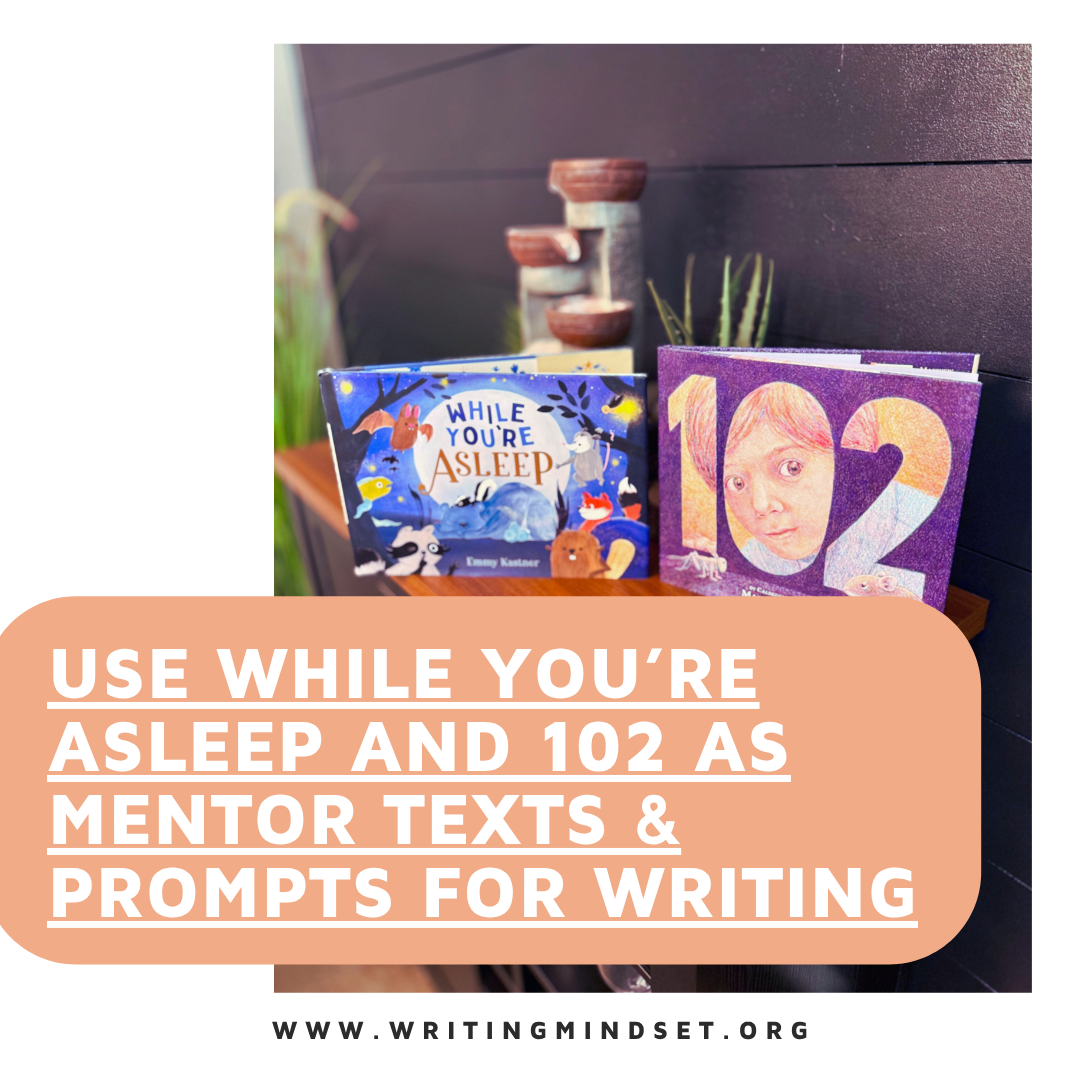
Both texts in this mentor text pairing share something important: they invite readers to think about possibilities and connections between people. Each story is set during nighttime—centered on sleeping, dreaming, and what might be happening beyond our awareness.
102 and While You’re Asleep both draw readers into a space of curiosity, asking us to imagine what exists just beyond what we can immediately see. Young readers will also appreciate that both authors illustrate their own stories, reinforcing the idea that storytelling is both written and visual. (102, notably, was created entirely with ballpoint pen.)
In 102, Matthew Cordell plays with the idea that even when we count and feel certain, there is always more—more to notice, more to discover, and more just outside our awareness. In While You’re Asleep, Emmy Kastner explores what might be happening in the quiet hours of the night, suggesting that the world continues in small, surprising ways while we rest.
Together, these books remind us that the world is full of hidden moments, unseen details, and endless possibility.
For writers, they offer an invitation to explore imagination, curiosity, and the idea that there is always more beneath the surface.
In this post, you can find…
Tips for using this book as a mentor text for writing
Ways to use the book with preschoolers, grades k-5, grades 6-8, grades 9-12, and for disciplinary literacy projects
Journaling prompts linked to the book (including nature journaling)
One grammar exercise to access grammar instruction
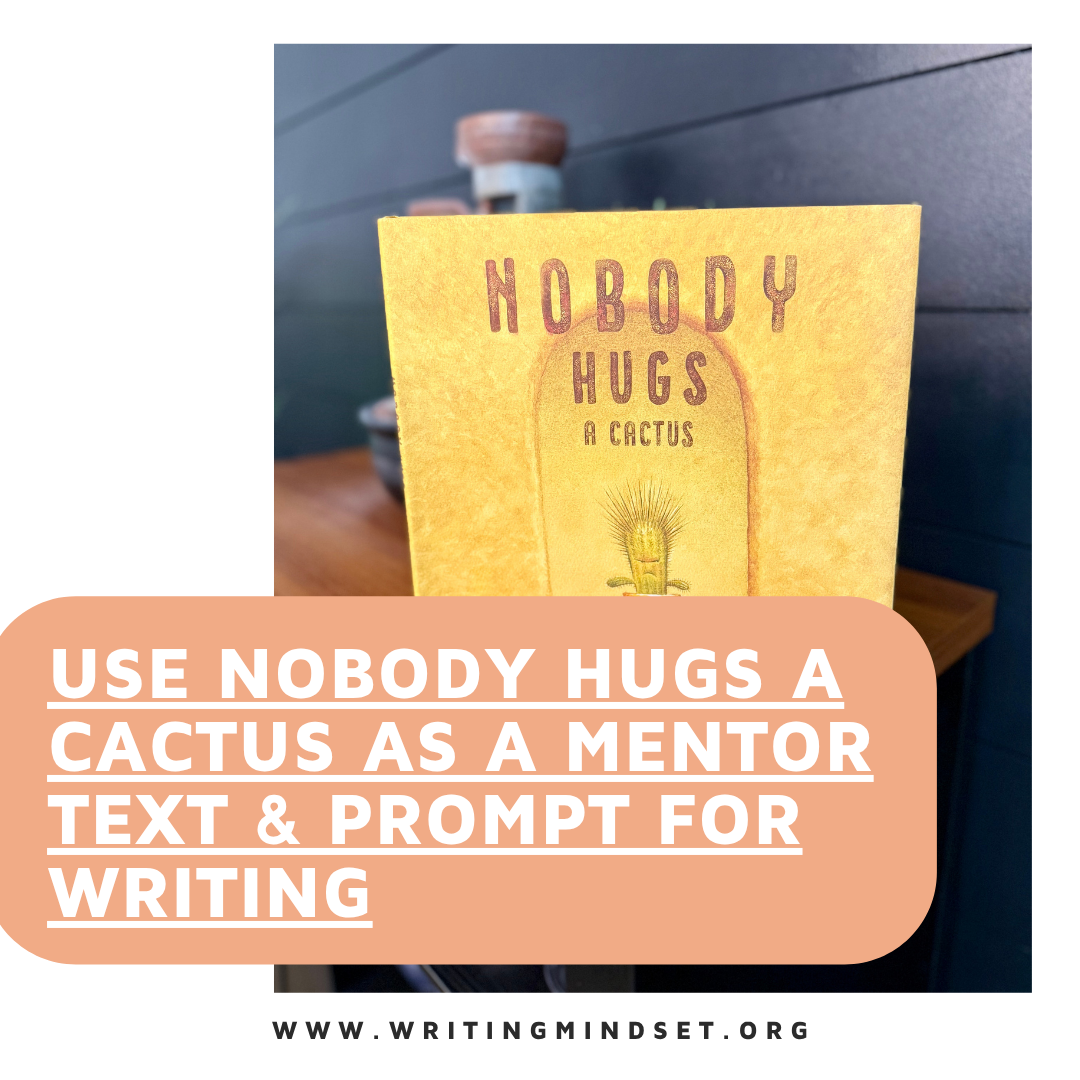
Nobody Hugs a Cactus is a humorous and heartfelt story about Hank, a cactus who prefers to be left alone—until loneliness begins to change his perspective. With expressive illustrations and minimal text, Goodrich captures the tension between independence and connection in a way that feels both playful and deeply relatable. Also, the grumpy cactus might be the cutest thing you have seen in a long while.
This story reminds us that sometimes what we think we want (space, quiet, distance) isn’t what we truly need. For writers, Nobody Hugs a Cactus becomes an entry point into exploring character, perspective, and internal change, showing how feelings shift over time and how those shifts shape our actions.
In this post, you can find…
Tips for using this book as a mentor text for writing
Ways to use the book with preschoolers, grades k-5, grades 6-8, grades 9-12, and for disciplinary literacy projects
Journaling prompts linked to the book (including nature journaling)
One grammar exercise to access grammar instruction
and LOTS of pictures of cacti from right here in Arizona
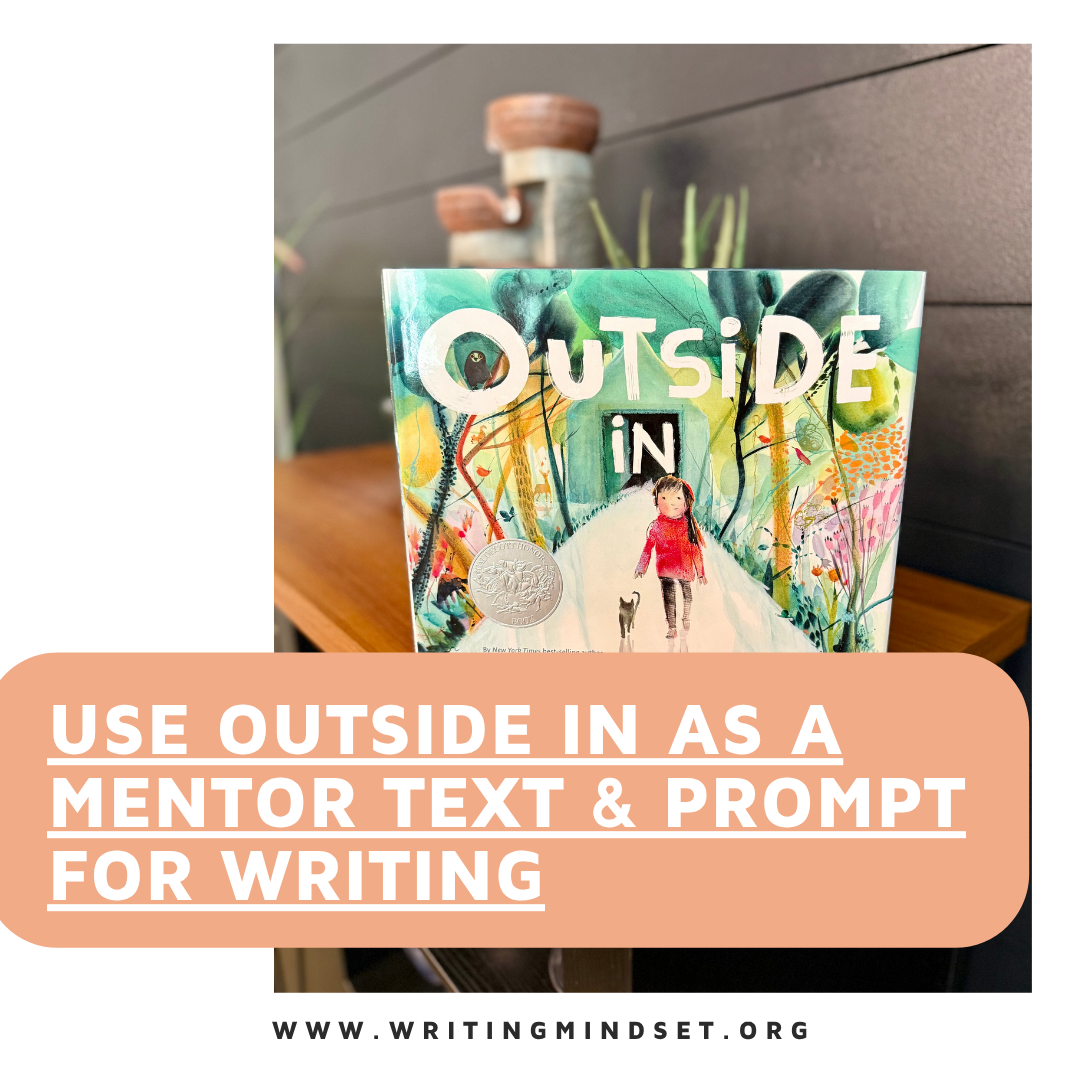
Outside In, written by Deborah Underwood and illustrated by Cindy Derby, is a poetic meditation on the quiet, persistent ways the natural world moves through our lives—even when we think we are separated from it. I would argue this is the perfect mentor text for a teacher that feels they cannot get outside in nature or wants to do more outside work with kids, but perhaps cannot because of time, budget, or access to natural spaces.
Through rhythmic, lyrical language and richly textured illustrations, the book shows how “outside” is never truly outside. It seeps in through light, sound, memory, breath, and presence. The world is always reaching us, even in stillness.
For writers, Outside In becomes an invitation to explore observation, contrast, and connection—especially the invisible threads between environments, emotions, and experience.
In this post, you can find…
Tips for using this book as a mentor text for writing
Ways to use the book with preschoolers, grades k-5, grades 6-8, grades 9-12, and for disciplinary literacy projects
Journaling prompts linked to the book (including nature journaling)
One grammar exercise to access grammar instruction
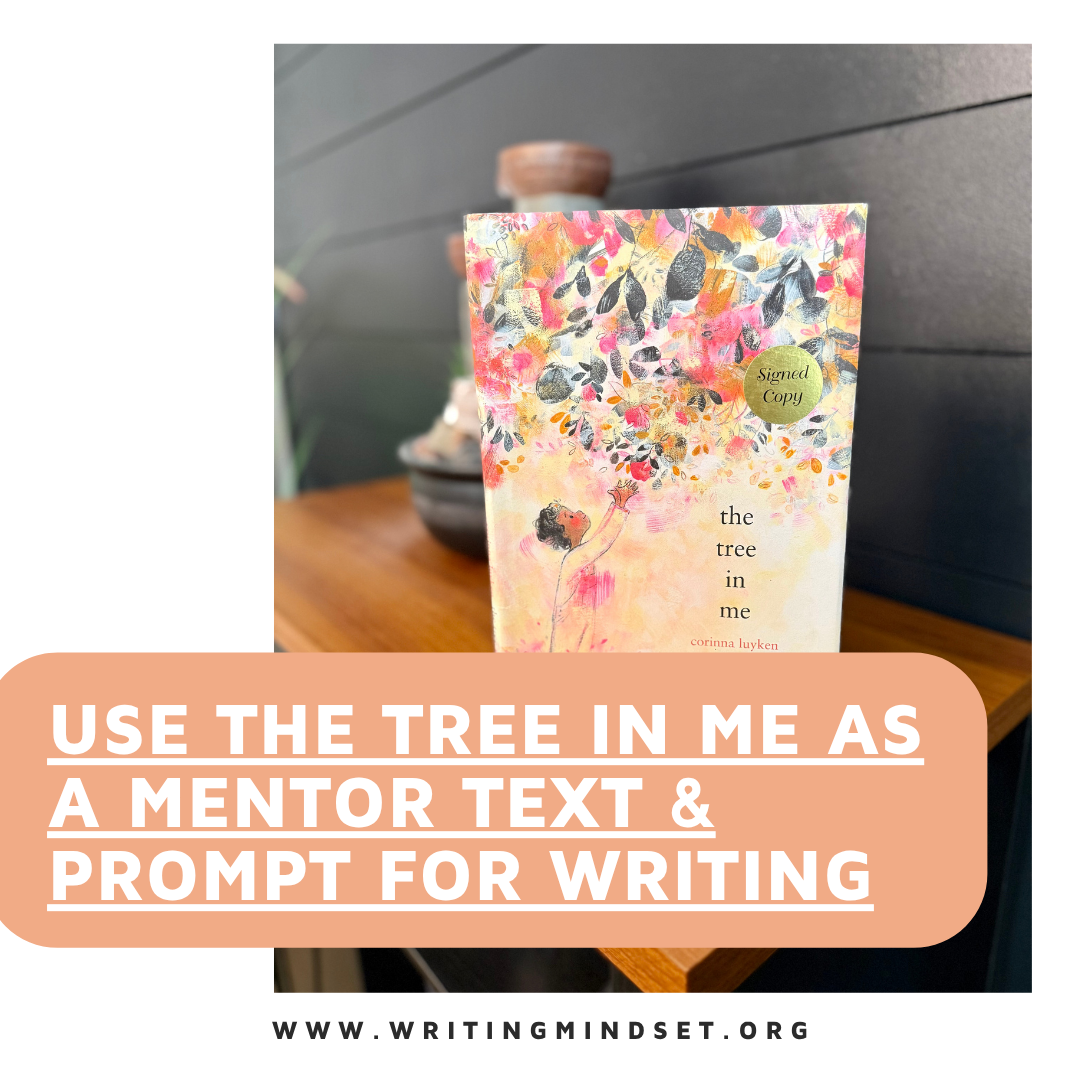
The Tree in Me is a quiet, powerful exploration of growth, change, and the deep connections between humans and the natural world. Through lyrical language and expressive illustrations, Luyken invites readers to see themselves reflected in trees—rooted, reaching, bending, and growing.
I especially love the colors throughout this book. The pages evoke a pink sunset, with bright oranges and pinks that seem to jump off the page.
This book reminds us that growth is not always linear. Like trees, we stretch toward the light, weather storms, and change with the seasons. For writers, The Tree in Me becomes an entry point into reflective and metaphorical writing, where personal experience connects to the natural world.
While the book primarily focuses on the trees within us, these ideas can extend to other elements of nature as well. We might consider the storms within us, the flowers that grow inside us, or the gardens we cultivate with our thoughts. In this way, we are deeply connected to the natural world and to one another.
In this post, you can find…
Tips for using this book as a mentor text for writing
Ways to use the book with preschoolers, grades k-5, grades 6-8, grades 9-12, and for disciplinary literacy projects
Journaling prompts linked to the book (including nature journaling)
One grammar exercise to access grammar instruction
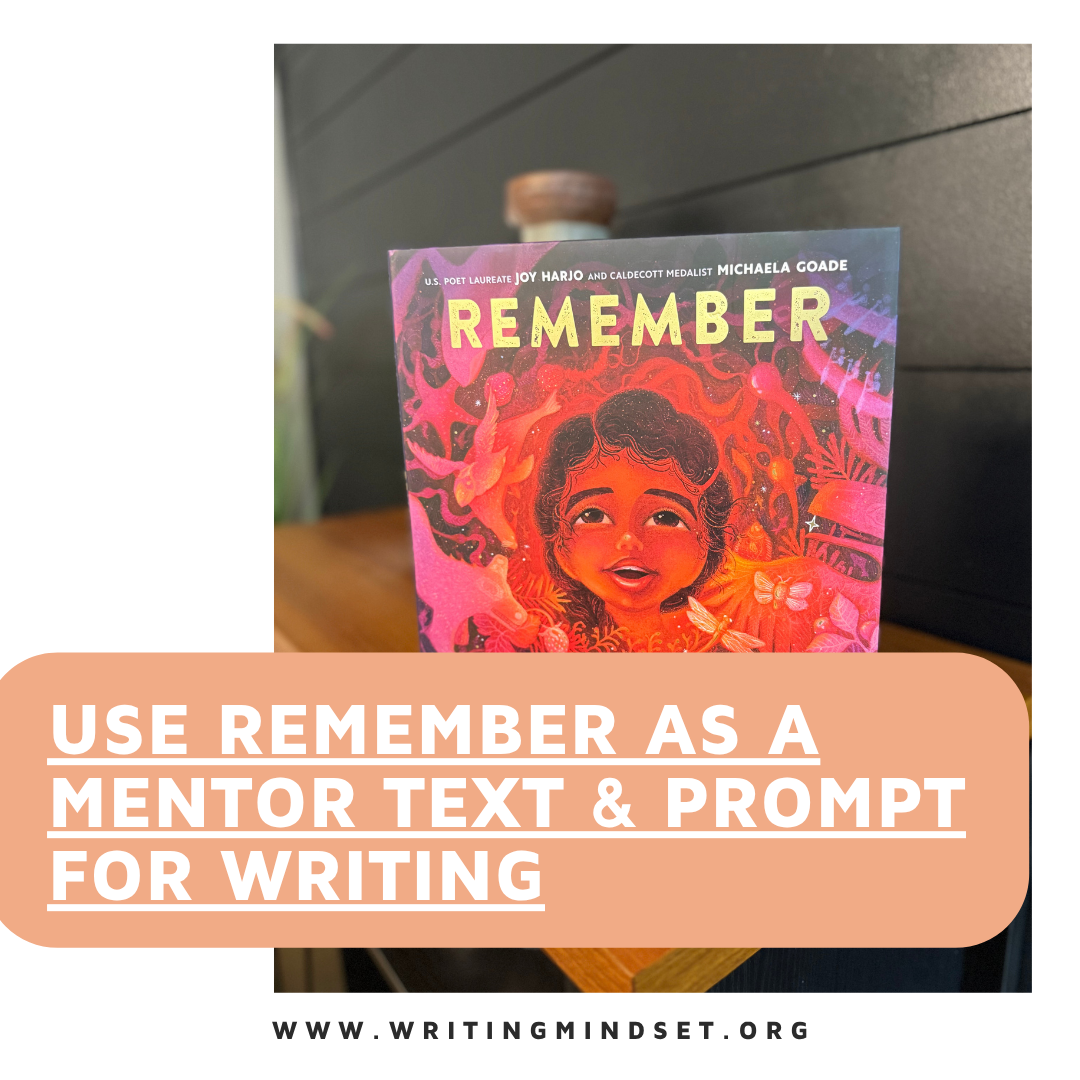
Remember, by Joy Harjo and illustrations by Michaela Goade, is an invitation to reflect on who we are, where we come from, and how we are connected to the world around us. Through Harjo’s poetic repetition and grounding language, readers are reminded that memory is not just something we recall—it is something we carry.
The text moves gently through reminders of connection: to the earth, to ancestors, to breath, to belonging.
This book encourages us to slow down, to listen inward, and to recognize that our stories are part of something larger. For writers, Remember becomes an entry point into reflective writing, where memory, identity, and observation can meet.
In this post, you can find…
Tips for using this book as a mentor text for writing
Ways to use the book with preschoolers, grades k-5, grades 6-8, grades 9-12, and for disciplinary literacy projects
Journaling prompts linked to the book (including nature journaling)
One grammar exercise to access grammar instruction
I start each day in a very similar way. After getting up and getting ready, I help our preschool-aged daughter prepare for school. As part of our daily hair routine, we always say our affirmations. These words set the tone for each day, and it is a non-negotiable part of our routine.
I want her to know what to say to herself when she doubts she can do something or feels unsure. I want her to be able to remind herself of how great she already is and how wonderful a person she is becoming.
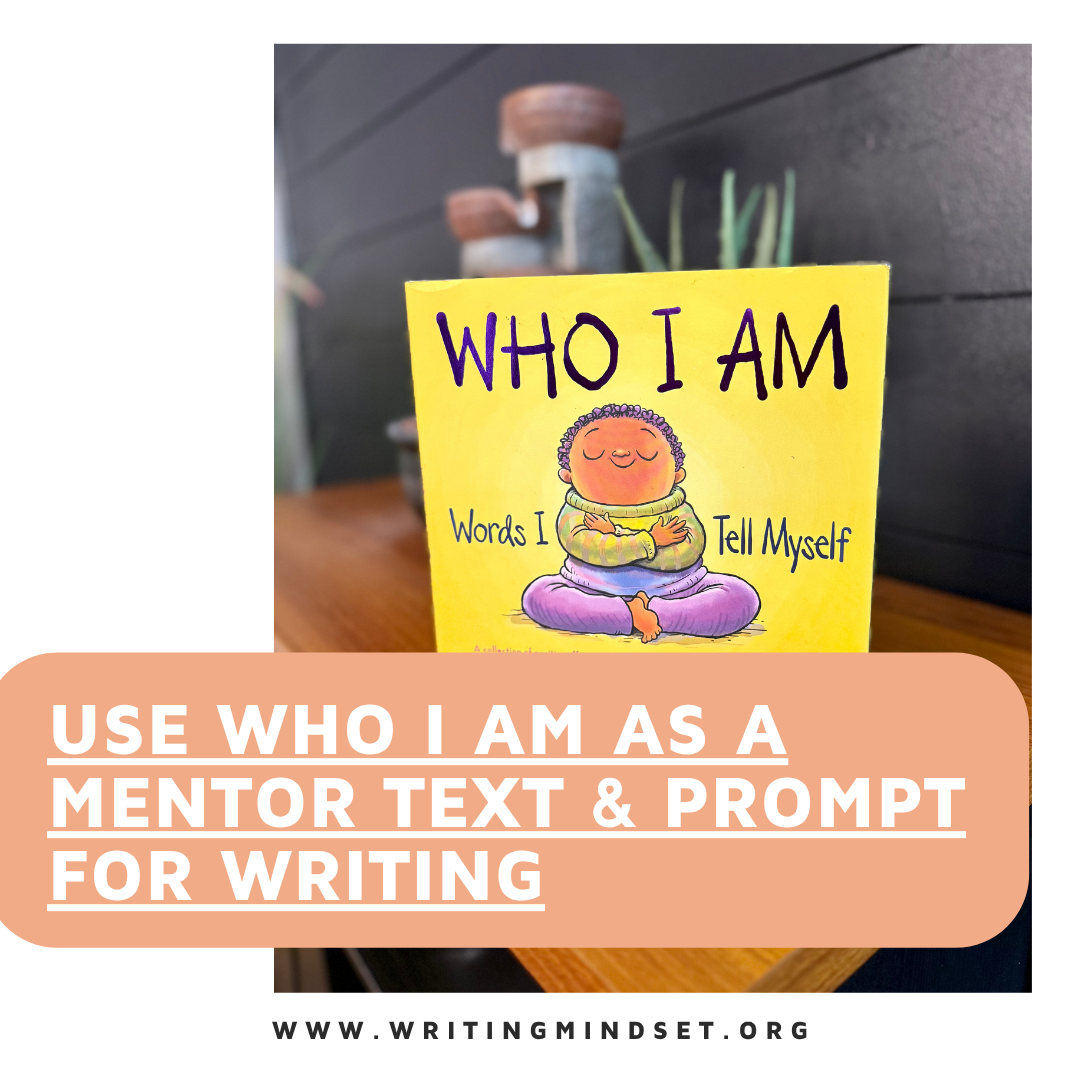
Affirmations are more than flowery phrases—they are the inner dialogue we create for ourselves. Who I Am: Words I Tell Myself, by Susan Verde and illustrated by Peter H. Reynolds, is a powerful exploration of identity and the quiet language we carry within ourselves. Through simple, intentional phrases, the book reminds readers that the words we repeat internally shape how we see ourselves and who we are becoming.
Each line invites reflection:
I am strong.
I am creative.
I am enough.
This text is both grounding and expansive. It creates space for readers to notice their inner voice and begin to shape it with care. This book is not just something to read—it is something to return to. It becomes a mirror for identity and a starting point for daily reflection.
For writers, journalers, students, and caregivers, Who I Am offers an invitation to build a daily practice of affirmation writing—using a notebook or journal as a place to shape identity through language.
In this post, you can find…
Tips for using this book as a mentor text for writing
Ways to use the book with preschoolers, grades k-5, grades 6-8, grades 9-12, and for disciplinary literacy projects
Journaling prompts linked to the book (including nature journaling)
One grammar exercise to access grammar instruction
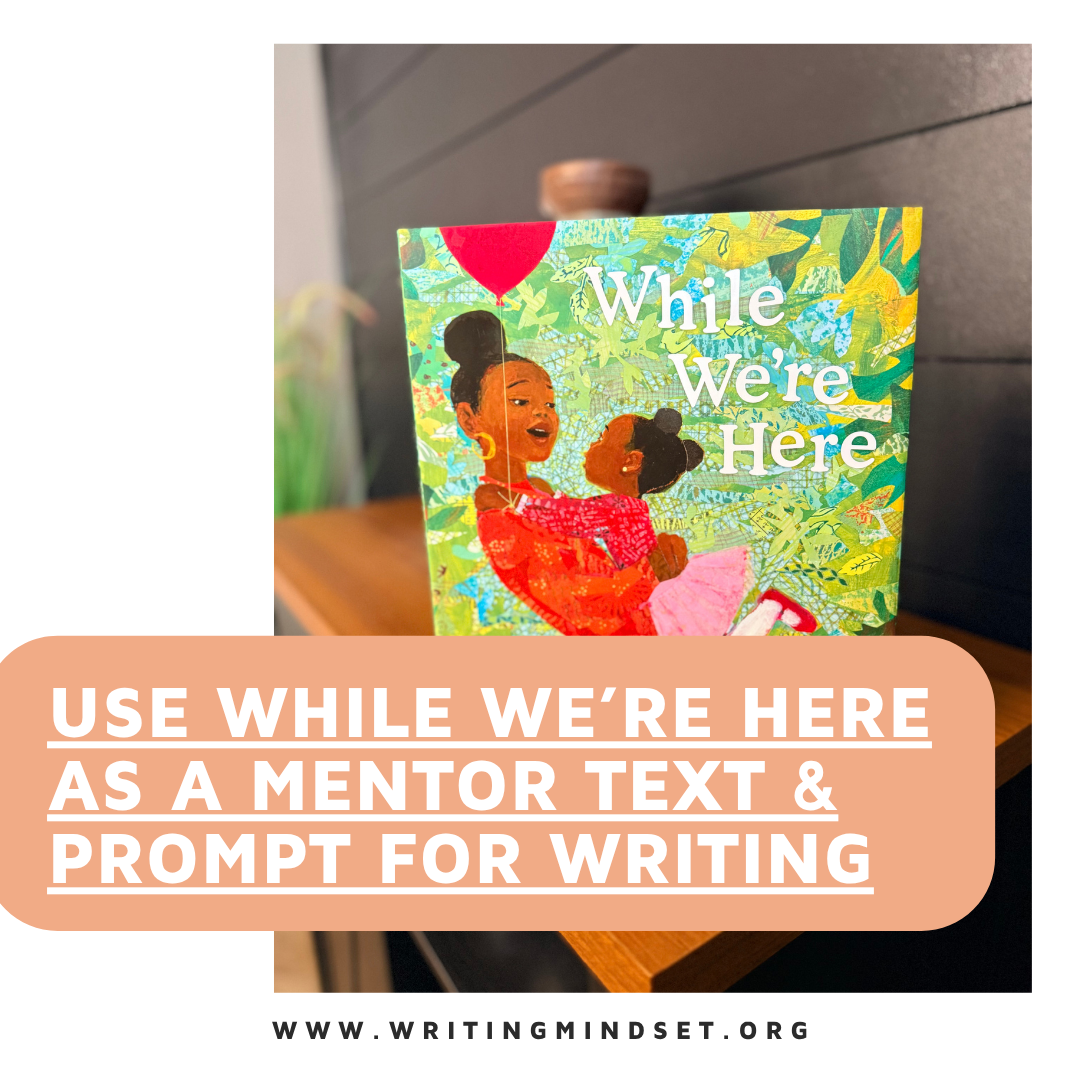
While We’re Here by Anne Wynter, with illustrations by Micha Archer, invites readers into a quiet, reflective space centered on a simple but powerful idea: we are here, together, in this moment. Through rhythmic language and layered, collage-style artwork, the book explores what it means to exist alongside others—humans, animals, and the natural world—right now. A striking message for anyone; however, anyone in a caretaker role will truly appreciate the images of slowing down and being with our kids in the everyday moments.
The text moves gently through shared experiences (and yes, disappointment), grounding readers in presence rather than urgency. It doesn’t rush toward a conclusion; instead, it lingers. It asks us to notice where we are, who we are with, and what it means to simply be.
For writers and journalers alike, While We’re Here becomes an invitation to pause, reflect, and write from the present moment—not as something fleeting, but as something worth holding onto.
In this post, you can find…
Tips for using this book as a mentor text for writing
Ways to use the book with preschoolers, grades k-5, grades 6-8, grades 9-12, and for disciplinary literacy projects
Journaling prompts linked to the book (including nature journaling)
One grammar exercise to access grammar instruction
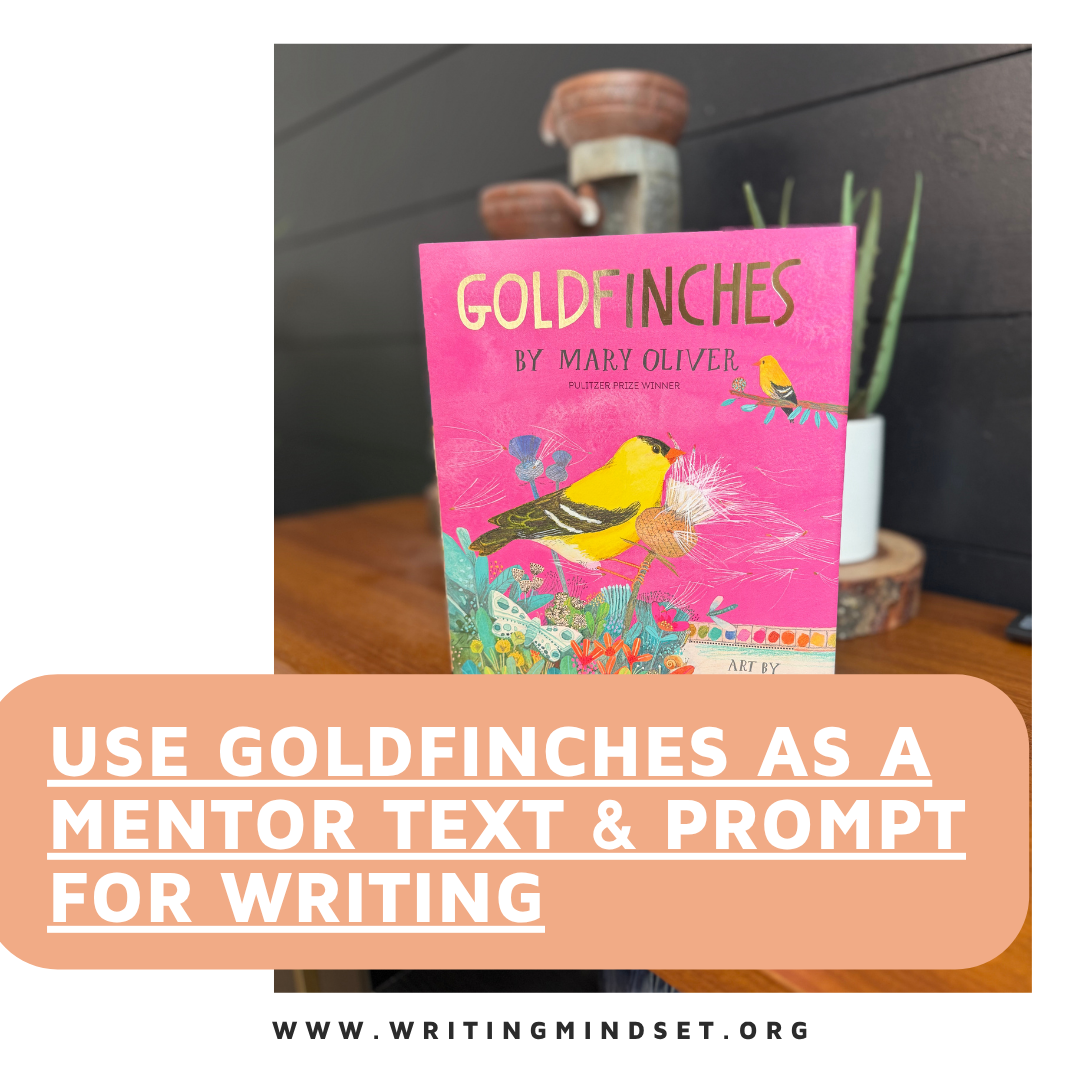
Goldfinches by Mary Oliver, with beautful artwork by Melissa Sweet, is a celebration of attention, presence, and the quiet joy found in the natural world. Through Oliver’s poetic language and Sweet’s layered, textured illustrations, readers are invited to slow down and notice—truly notice—the brilliance of a small yellow bird moving through its environment.
This picture book, adapted from Oliver’s poem, reminds us that wonder is always available to us, especially when we pause long enough to see it. The goldfinch becomes more than a bird.Iit becomes a symbol of delight, curiosity, and the art of paying attention.
For writers and journalers, Goldfinches offers an invitation to observe closely, to write what we see, and to rediscover beauty in the ordinary.
In this post, you can find…
Tips for using this book as a mentor text for writing
Ways to use the book with preschoolers, grades k-5, grades 6-8, grades 9-12, and for disciplinary literacy projects
Journaling prompts linked to the book (including nature journaling)
One grammar exercise to access grammar instruction
One grammar exercise to access grammar instruction
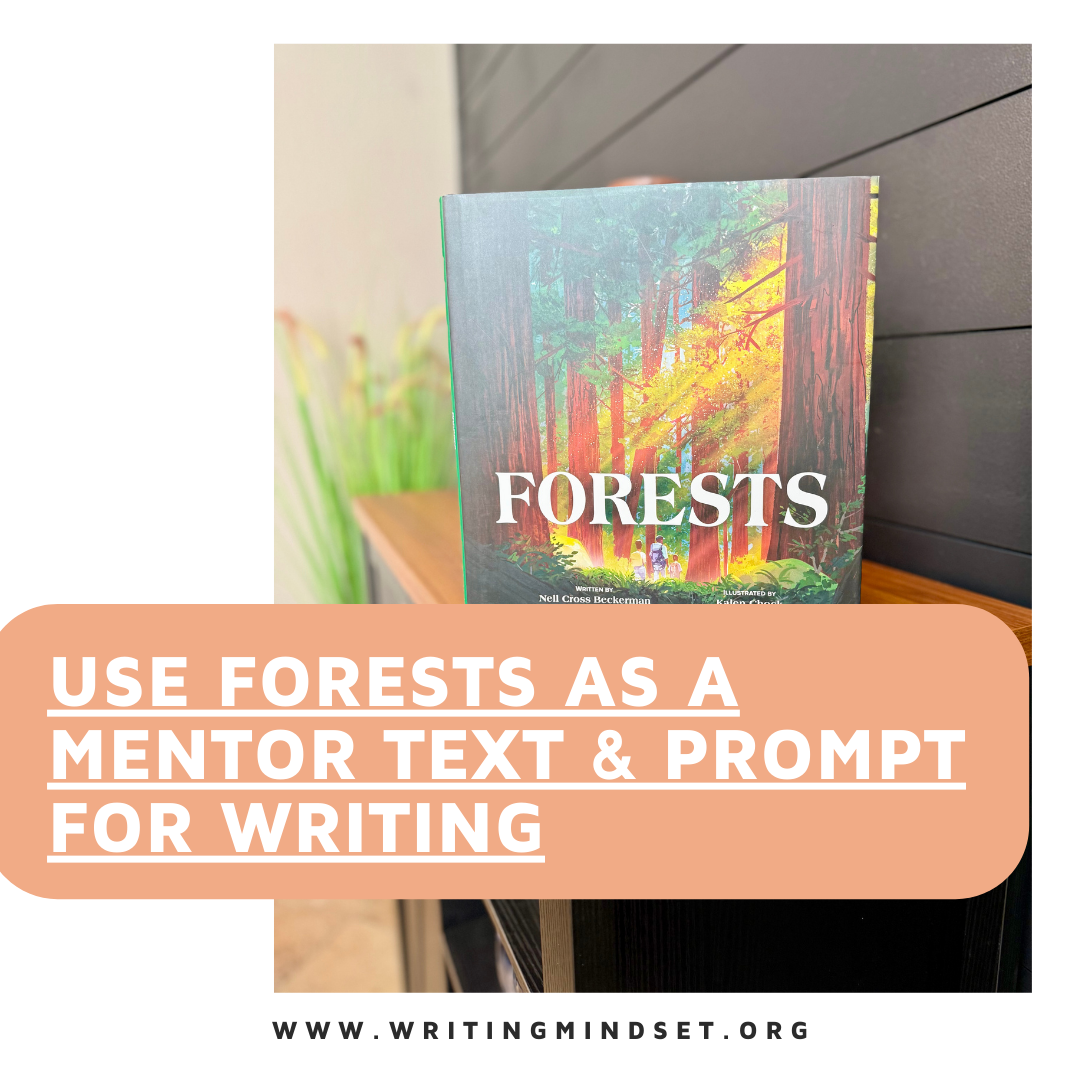
Nell Cross Beckerman’s Forests, illustrated by Kalen Chock, is a quietly powerful picture book that invites readers to slow down and look closely at the living systems all around them. Some of my favorite go-tos for mentor texts right now are nonfiction picture books that combine informational facts with storytelling in some kind of capacity. Told through a sequence of observational poems, the book explores forests across seasons, climates, and viewpoints—revealing them not as static backdrops, but as dynamic, breathing communities. Each spread highlights how forests are shaped by time, weather, animals, and human interaction, encouraging readers to consider how many stories exist within a single place.
Forests shifts perspective and place again and again. We move from underwater to an urban forest, from the woods to the jungle, from past to present. The result is a deep sense of interconnection: no organism exists alone, and no forest is ever just one thing. For writers, students, and journalers, Forests offers an invitation to observe, reflect, and write with curiosity about the systems we belong to.
In this post, you can find…
Tips for using this book as a mentor text for writing
Ways to use the book with preschoolers, grades k-5, grades 6-8, grades 9-12, and for disciplinary literacy projects
Journaling prompts linked to the book (including nature journaling)
One grammar exercise to access grammar instruction

Nikkolas Smith’s The History of We is a breathtaking picture book that explores humanity’s collective story from our earliest beginnings to the present moment and our shared responsibility to create a more compassionate world. Through his poetic text and powerful illustrations, Smith shows how we are all part of something bigger: a global community bound by love, struggle, and hope.
For writers, The History of We offers a reminder that personal stories connect to a much larger narrative. For journalers, it’s an invitation to reflect on identity, ancestry, and legacy—to ask: Where do I come from? What stories do I carry? What part of the “we” am I helping to write? It is also a picture book with a strong reminder about the danger of single stories. On how we can avoid making generalizations and assumptions in order to really take the time to get to know the multiple points of views that exist within a community, culture, and world around us.
In this post, you can find…
Tips for using this book as a mentor text for writing
Ways to use the book with preschoolers, grades k-5, grades 6-8, grades 9-12, and for disciplinary literacy projects
Journaling prompts linked to the book (including nature journaling)
One grammar exercise to access grammar instruction

Emmy Kastner’s So Tortoise Dug is a gentle, inspiring story about a tortoise who does what tortoises do best—dig! But as Tortoise digs, she discovers more than dirt and tunnels. She uncovers wonder, quiet courage, and the joy of moving at her own pace. Through Kastner’s warm language and playful illustrations, readers are invited to celebrate curiosity, self-trust, and the slow beauty of discovery. I also really love the nonfiction connections here as we encourage (as both teachers and parents) kids to be aware of the world around them. The book is based off of the real relationship of how two species coexist in the wild: the gopher tortoise and the Florida mouse. In the Author’s Note, Emmy goes on to explain that the book is a “pourquoi tale (“pourquoi” is the french word for “why”) This type of story is a fictional explanation of why something is the way that it is.” I love the idea of writers being able to explain real-world concepts through made up stories.
For writers and journalers alike, So Tortoise Dug reminds us that every creative journey takes time. It encourages us to keep going, keep digging, and find joy in uncovering what’s beneath the surface of our thoughts, stories, and dreams.
In this post, you can find…
Tips for using this book as a mentor text for writing
Ways to use the book with preschoolers, grades k-5, grades 6-8, grades 9-12, and for disciplinary literacy projects
Journaling prompts linked to the book (including nature journaling)
One grammar exercise to access grammar instruction

Joyce Sidman and Melissa Sweet’s Dear Acorn (Love, Oak) is a gentle and poetic exploration of connection, patience, and transformation. Told through a series of tender letters from an old oak tree to a newly fallen acorn, this picture book beautifully captures the rhythm of life cycles—growth, waiting, change, and renewal. Through Sidman’s lyrical language and Sweet’s rich mixed-media illustrations, readers are invited to consider how all things in nature are intertwined. On the blog, I have been a huge fan of the illustrations from Melissa Sweet. How to Write a Poem by Kwame Alexander and How to Read a Book by Kwame Alexander are two of the first picture books I recommend to teachers to lead conversations about reading and writing in their classrooms at any level.
For writers and journalers alike, Dear Acorn is an invitation to reflect on relationships, resilience, and the quiet passage of time. It reminds us that even the smallest beginnings hold the promise of something enduring and strong. In Dear Acorn the lost art of letter writing can help writers tap into new ideas and people working in a journal to access different parts of the world around them.
In this post, you can find…
Tips for using this book as a mentor text for writing
Ways to use the book with preschoolers, grades k-5, grades 6-8, grades 9-12, and for disciplinary literacy projects
Journaling prompts linked to the book (including nature journaling)
One grammar exercise to access grammar instruction

Julie Morstad’s picture book A Face is a Poem offers readers a playful and poetic way of seeing something familiar—our own faces. Instead of describing features literally, Morstad leans on metaphor: freckles as sprinkles, flowery faces, faces that you find in the clouds. Each page invites readers to view the ordinary as extraordinary. I actually paused in the bookstore when I saw the cover of this book because the colors and imagery were so beautiful.
For writers, this text is a gift. It reminds us that description doesn’t have to be technical—it can be imaginative, metaphorical, and deeply personal. For journalers, it opens the door to self-reflection and self-expression through the lens of poetry. This post serves as a how-to guide for using this text in multiple ways: in the classroom, at home, or within your own notebook.
In this post, you can find…
Tips for using this book as a mentor text for writing
Ways to use the book with preschoolers, grades k-5, grades 6-8, grades 9-12, and for disciplinary literacy projects
Journaling prompts linked to the book (including nature journaling)
One grammar exercise to access grammar instruction

Whether or not school was in session, I always found that the lessons embedded in Dr. Martin Luther King Jr.’s speeches were invaluable mentor texts for teaching writing and inspiring young people. My last year in the classroom, I was particularly moved by a tweet from Julia E. Torres, a librarian, educator, and activist, in which she shared a conversation she overheard:
“Just overheard a child in the hallway on the phone, ‘We are watching MLK videos again because you know they can neeeeever teach us anything new.’ This was a middle school student. Let’s think about that…”
That gave me pause. How often did I see my colleagues relying on MLK videos, or worse, skipping over this day entirely? How often had I felt like I couldn’t carve out the time to honor his legacy? I knew I needed to take the lesson of teaching dreams to a new level. I wanted my students to see Dr. Martin Luther King Jr. not just as a figure in history, but as an author to imitate and admire. His speeches made people listen to the issues that mattered. And no matter how pressured we feel to move through the curriculum, some lessons are simply more important.
On that day, it mattered. I reflected on how I could integrate Dr. King’s “I Have a Dream” speech into our mentor text work. The lesson wouldn’t take the entire hour, but my goal was clear: I wanted my students to notice the craft of his writing—specifically his use of repetition, metaphors, and the cadence of his voice—and then have them write about their own dreams in a similar way.
This post outlines the three-step process I used to teach his speech as a mentor text and offers further activities to extend the lesson.
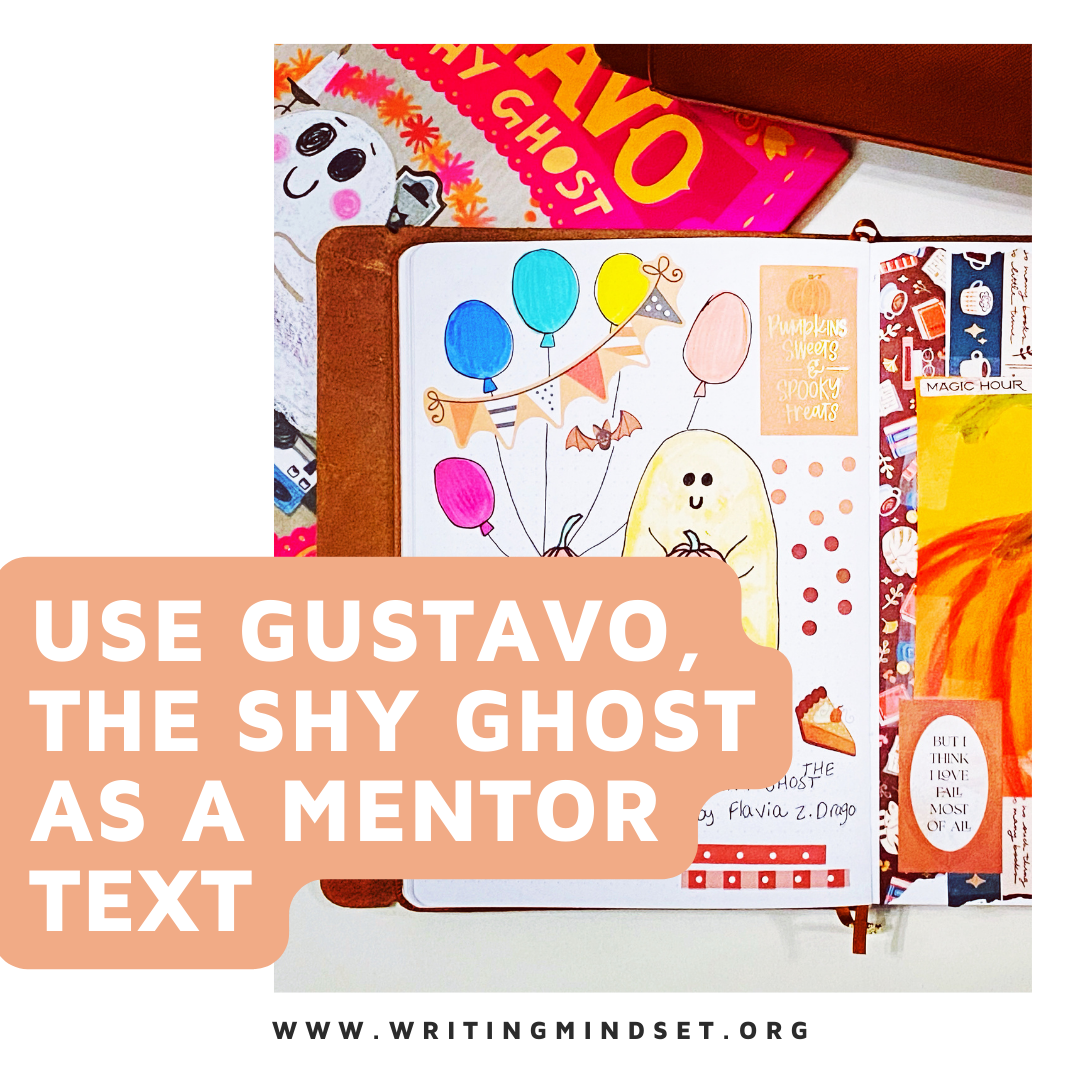
Gustavo, the Shy Ghost by Flavia Z. Drago is a heartwarming story of bravery, friendship, and self-expression—making it a rich mentor text for writing exercises across various disciplines. With its themes of shyness, the supernatural, and the courage to be seen, Gustavo’s journey offers endless opportunities for deep reflection and creativity in classrooms. Let’s explore how you can use this story as a springboard for disciplinary writing in all subject areas!

Dialogue is an essential element of storytelling, bringing characters to life and adding depth to narratives. As English Language Arts (ELA) educators, it is crucial to teach students the proper use of quotation marks and rules of dialogue. By mastering these skills, students can effectively convey conversations, enhance their writing, and develop a strong command of punctuation. In this blog post, I explore the importance of using quotation marks and the rules of dialogue, along with practical tips for teaching these concepts in the ELA classroom. Quotation marks serve two primary functions in writing: indicating direct speech and enclosing titles of short works. In this post, let’s focus on dialogue as it shows up in works of fiction or narratives.

At each step of the process in this post, I will stop and show you some things I consider when I plan for that part of the lesson. These considerations come from the questions and experiences from teaching the mentor text routine to sixth graders. I teach these lessons to students with third-grade level reading and eleventh-grade level reading in the same room. I have coached teachers that have ranged from 4th grade to 10th grade with this process. The results are the same, but you may have to adjust the strategies for your content and level.
These considerations are not meant to be overwhelming, but I want to share what has worked for me along the way. I have also broken them down in terms of estimated time. When I was doing mentor text work daily it took 5-10 minutes each day because of the routine that I chose to implement in my room. One single mentor text lesson taught alone might take 20-25 minutes.
This quickstart guide walks you through everything you need to get started with teaching mentor texts in your classroom right away. There are 7 key elements to teaching mentor texts. At the end of this post, download the free template to get started with a book of your choice! You will also have access to my mentor text work. This includes 180+ slides and sentence frames featuring 55+ books.

The I Am series by Susan Verde and Peter Reynolds is one of the most identifiable book series in classrooms and stores. The art by Peter Reynolds is so specific to him, and the books have almost become synonymous with social & emotional text lists, mindfulness, and meditation for young people. There are 7 books in the series. This post covers 4 of them and how to use them in your classroom for teaching mindfulness through read-aloud and also writer moves for kids through mentor texts. While the recommended reading age for the books often states 3-7, these mentor texts could be used in any level classroom.
Let’s dive into using the I Am series as a whole group mentor text, and then let’s take a quick look at how 4 of the books can be broken down further for writing moves.

What could be better than working with mentor texts AND talking about food? I love The Food Group series from Jory John and Pete Oswald. All of the picture books in this series feature a type of food and then a description that hints at the story behind the food. The whole series can be used in a variety of ways in any classroom grades 4-12. These books would also make great introductory activities and back-to-school mentor texts because kids love talking about food (I mean, most of us like talking about food). This post is a breakdown of how to apply The Food Group series to lessons as a whole, and then it includes details in a few of the books so you can see the mentor text examples. I will also remind everyone of the mentor text process of how to use books to teach writing to kids.
Hope you are hungry! Let’s write.

Narrative writing is always the first big unit taught in sixth-grade English, but I would also argue that narrative writing is the perfect way to open up a brand new school year because we are finding out about our students’ stories. I am also pretty sure that October may be one of the toughest months to teach in considering that it consists of conferences, the end of the first marking period for my middle school, the flu season that starts circulating, and it is my birthday month. The last part is not a bad thing, I just find it easier to resent less “me time” with all of the to-do lists piling up. This post contains step-by-step directions for teaching a personal narrative writing unit at the secondary level. This includes directions, elements of the assignment, teaching strategies, and mentor texts. I also wanted to include information about writing conferences and grading information.

Reading and writing are all too often cyclical. Everyone knows good reading fuels good writing and vice versa. As a middle school teacher, I really wish that I was able to teach reading and writing separately or even give them their own block of time, but I do also love the impossible harmony that is being a reading AND writing teacher. This post will explain how I start my week with students, and how I often will start each class. I always start each hour the first day of the week with a book talk about a middle grade or young adult novel or nonfiction book. It kicks off my mentor text work with kids, and it gets them excited about a book they may or may not have heard about before. This post goes into detail to explain why the simple act of talking about books in a way that makes kids want to read them is one of the most important things we can do as teachers each day.

For many years, I lived in the school of thought that my middle-school students wouldn’t want to read picture books. As with many things in teaching, we don’t know until we know. I love reading aloud to my students, and naturally, they love it because reading aloud goes back to a time when they loved reading as young children. As I could spend a lengthy bit of time here on this post about the apparent lack of love of reading that my sixth-graders come into my classroom with every fall, I will l quote Pernille Ripp from #NerdCampMI: “My goal is to make them dislike reading less.” Reading aloud to my students starts to work on this mission. The power of the read-aloud is equivalent to the power of the book talk. When kids hear stories and your recommendations for stories enough, they start to listen. Colby Sharp, a 5th-grade teacher in Parma, Mi, said this past week, “This year the picture book read aloud is as close to normal as anything we are doing in my classroom. The energy in the room is electric and I feed off it” (@colbysharp). This post contains 15 books that will spark electricity with words and stories.
If I were in my classroom’s physical space, I would plan to read one picture book aloud to my students each week. Now that I am virtual teaching, I plan at least 3-4 picture book read-alouds a week. One of my reflections from the 2018-2019 school year was that I loved how I felt solid with my growth in my independent reading program and my mentor text work, but I felt like I needed to be a driving force behind building empathy and compassion through both of these works. Empathy and reading were my two goals for 2019-2020, and they remain my two priorities in online learning. Reading aloud helps build not only a reading community but empathy and compassion in the form of community listening.

Whether you call quick writes your warmup, a focused writing prompt, writing into the day, or simply timed writing, a quick write has a range of possibilities that are just plain cool and useful in the English classroom. I adhere to the definition that Linda Reif uses in her book The Quickwrite Handbook: 100 Mentor Texts to Jumpstart Your Students' Thinking and Writing: “A quick write is a first draft response to a short piece of writing…” (3). Linda Reif uses other authors’ writing to spark ideas, but in my opinion, it can also be in the form of a question or another prompt to get students thinking. The three-minute quick write as a strategy is not new. It is a technique that published authors use, screenwriters, and classrooms young and old. This post is designed to help you revisit an old strategy and maybe weave in some new techniques to freshen it up a bit. If you are preparing the fall, it may be a perfect time to revisit your classroom weekly teaching routine.
The timing of three minutes is on purpose. It is just long enough to have a moment to think, but not enough time to really have a ton of delay that could cause disruptions in the classroom. I often will be able to put my response in my notebook and warn them just in time that they have a minute and a half left. The timing of this is “enough” time that it is not obtrusive to other activities in a day’s lesson plan. Think short and sweet, but just urgent enough that students will not have much time for hesitation in getting ideas down on paper.

Arthur O’Shaughnessy in his 1874 poem “Ode” wrote: “Yet we are the movers and shakers/Of the world forever, it seems.” I love the term “mover and shaker” because it reminds me of dancing, but what it really lends is to people who make an impact on the world. It is no secret that one of my favorite units to teach is research. I love the choice, the process, and the hard work it takes to produce the product. I also love seeing middle schoolers wrap their brains around the formatting of this project (MLA), and how they get excited about solving problems. One of my favorite things, after all, is to solve problems.
The MLA Research Paper unit I do each winter going into spring focuses on activism. Students identify a problem in their school, community, or world and then research that problem, Inevitably, they see causes, effects, and hypothesize solutions as well. This post will walk you through some mentor texts and resources, strategies, and pacing of the overall unit.

Similes and metaphors might be my favorite figurative language skills to teach because once students notice what they are, they find them everywhere in fiction literature. Similes make everything better. At first glance, students keep reading over them, but the understanding of similes and metaphors unlocks another layer of reading. It is a layer that is deeper and makes readers really think. Figurative language skills matter because they help build critical readers. When building sentence fluency, these skills create stronger readers that add sentence variety and fluency to their writing skills. While you can catch similes in almost any work of fiction these days, I like the books featured in this post for the deliberate instruction of simile usage in literature. This post will outline three books and examples of similes, and it will also show you how I help young writers transfer these skills to their own writing through the mentor text process.
Easy as pie.

For the week back from winter break, I love doing figurative language review, especially with onomatopoeias! If you have been following the mentor text routine on the blog, I always start with a book talk. For onomatopoeias, I love The Wild Robot by Peter Brown because there are so many great examples, and the mentor text example sentences involve the island animals as well. Kids love sounds. Kids love animals. Not only does this lesson provide an easy frame for students to follow, the book naturally pulls kids in with interest and content. This post outlines a quick lesson you can do with your students to use mentor texts and have some fun teaching onomatopoeias.
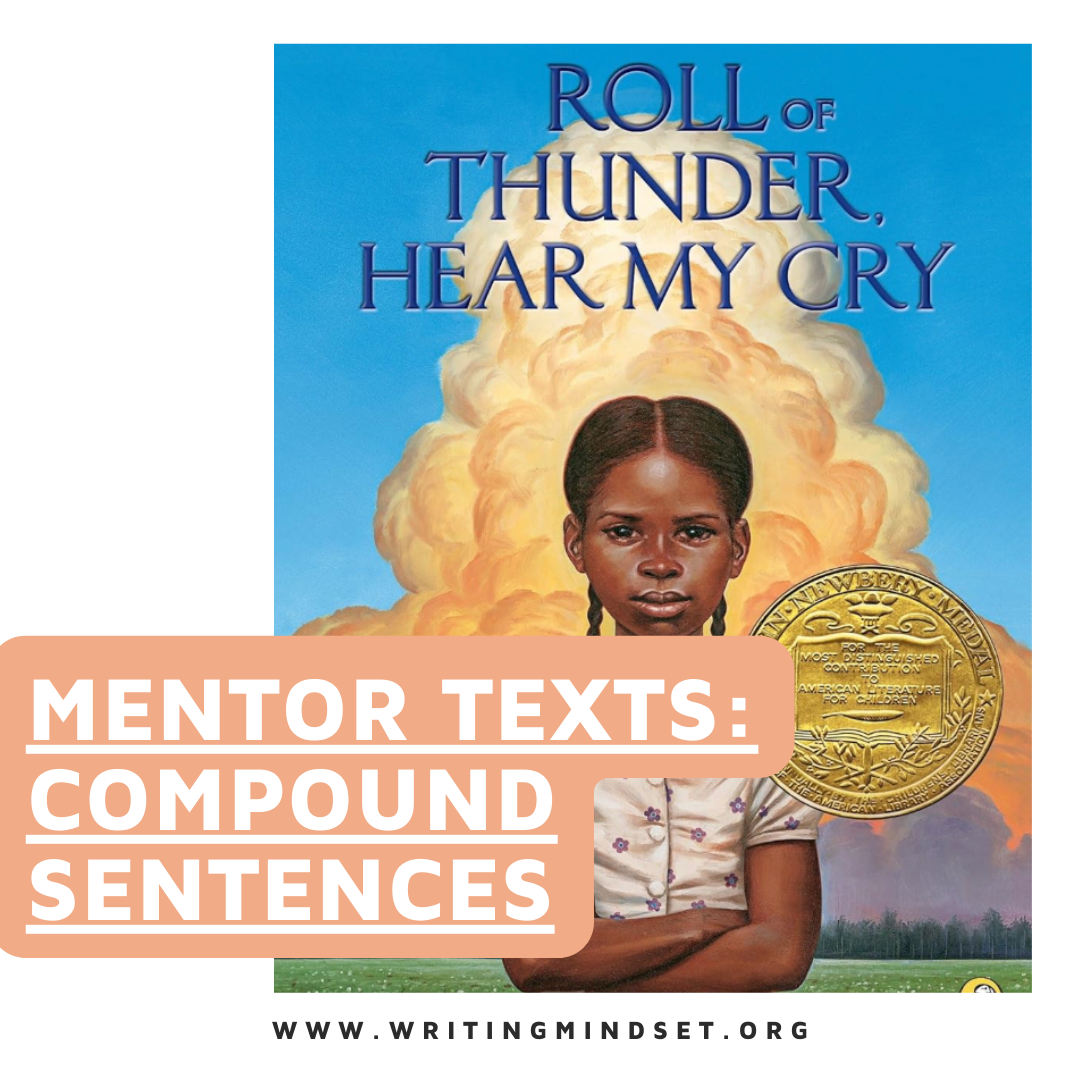
Compound sentences are all about bringing ideas together or showing how those ideas relate to one another. There is a real opportunity when we start talking about combining sentences together to help build the classroom community and share how our writing looks in different situations. The very nature of conjunctions suggests jointness. It is during these mentor text lessons where I will increase the level of movement and partner work to show how we can generate ideas together. When completing the mentor text routine, I look at how I can book talk mentor text books so students want to read them, and I use the whole class novels that we study during this marking period to show example sentences. Last year, I covered the conjunctions “and” and “but.” This year, I am also adding the conjunction “so” to tie in some cause and effect lessons. This post will outline the mentor text slides and activities used for each sequence of lessons for compound sentences with the conjunctions “and,” “but,” and “so.”
Highlights of each conjunction:
But-This conjunction is fun to say to middle schoolers over and over, and it shows opposites.
And-This conjunction connects ideas and shows addition.
So-This conjunction shows cause and effect, and the ideas here can transfer over to other cause and effect work in class.

The mentor texts for these two weeks, Ghost Boys by Jewell Parker Rhodes and The War That Saved My Life by Kimberly Brubaker Bradley, are similar in the sense that they are amazing examples of kids working through problems. Both books are easy to sell during the book talk because kids love books where students are handling conflict. I love teaching irregular verbs over the course of two weeks because the first week we learn what irregular verbs are and then do some practicing with examples. In the second week, we combine standard past tense verbs with an -ed ending, AND we also use irregular verbs in our sentences. We are still building on our work with action verbs/verbs of being and helping verbs from previous weeks.

The Crossover by Kwame Alexander might be one of my all-time favorite mentor texts. It could be because kids love the novel-in-verse format of this book, or the basketball theme, or the fact that they want to know what happens each quarter. This is an easy book to book talk because it just grabs kids. I love using this book to show helping and linking verbs in the present tense. This continues from the work the previous week where students identified action verbs and verbs of being. This lesson speaks to the easy conversational tone that we all have with each other on a daily basis. Kwame Alexander sounds like me. He sounds like you. This directly links to the ability to make grammar accessible because it is something we already know, we just have to know what to call the writer move when we make it.
Reading and writing are all too often cyclical. Everyone knows good reading fuels good writing and vice versa. As a middle school teacher, I really wish that I was able to teach reading and writing separately or even give them their own block of time, but I do also love the impossible harmony that is being a reading AND writing teacher. This post will explain how I start my week with students, and how I often will start each class. I always start each hour the first day of the week with a book talk about a middle grade or young adult novel or nonfiction book. It kicks off my mentor text work with kids, and it gets them excited about a book they may or may not have heard about before. This post goes into detail to explain why the simple act of talking about books in a way that makes kids want to read them is one of the most important things we can do as teachers each day.