
Teaching
Categories include the teaching of writing, the teaching of reading, diverse texts, mentor texts in the classroom, and teacher self-care.
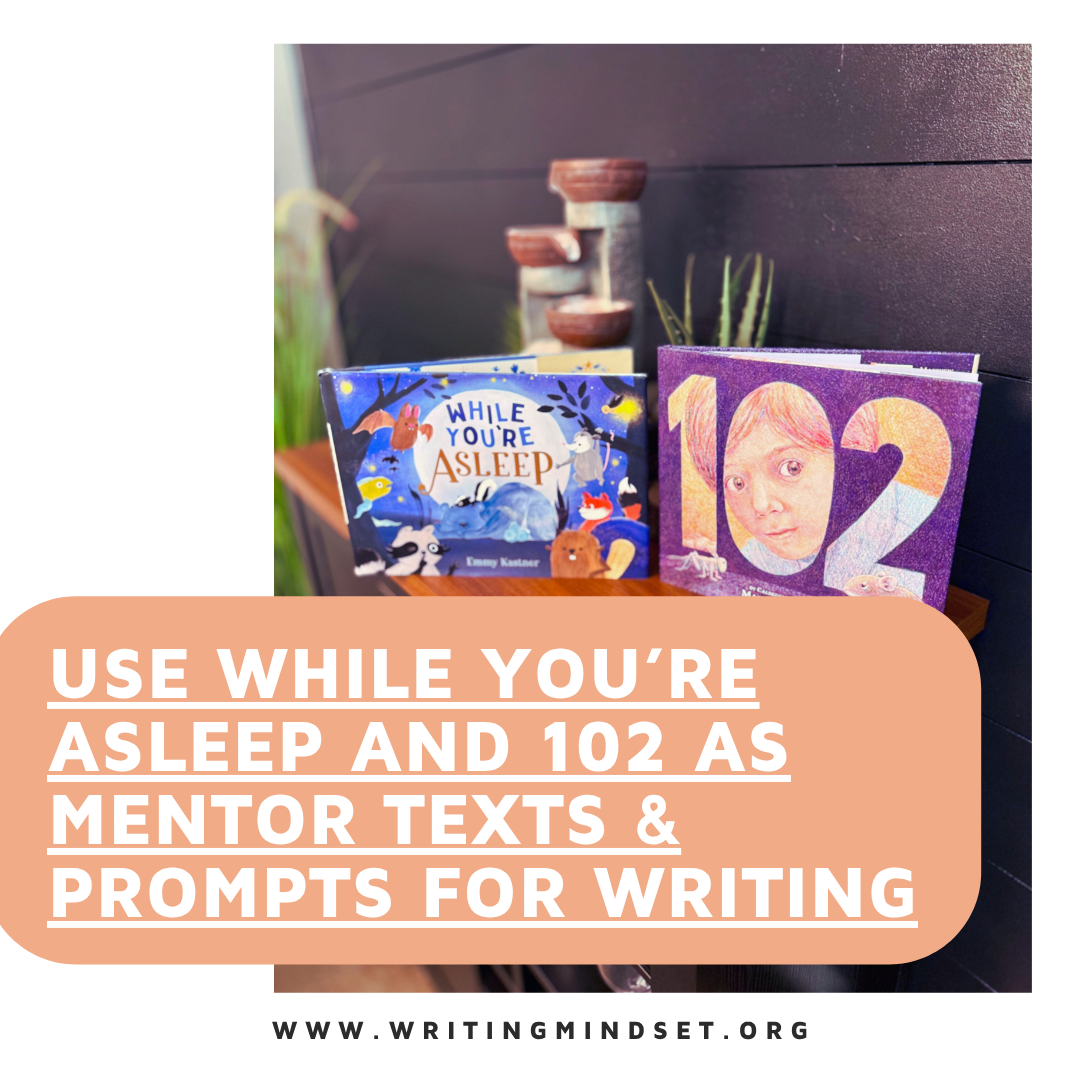
Both texts in this mentor text pairing share something important: they invite readers to think about possibilities and connections between people. Each story is set during nighttime—centered on sleeping, dreaming, and what might be happening beyond our awareness.
102 and While You’re Asleep both draw readers into a space of curiosity, asking us to imagine what exists just beyond what we can immediately see. Young readers will also appreciate that both authors illustrate their own stories, reinforcing the idea that storytelling is both written and visual. (102, notably, was created entirely with ballpoint pen.)
In 102, Matthew Cordell plays with the idea that even when we count and feel certain, there is always more—more to notice, more to discover, and more just outside our awareness. In While You’re Asleep, Emmy Kastner explores what might be happening in the quiet hours of the night, suggesting that the world continues in small, surprising ways while we rest.
Together, these books remind us that the world is full of hidden moments, unseen details, and endless possibility.
For writers, they offer an invitation to explore imagination, curiosity, and the idea that there is always more beneath the surface.
In this post, you can find…
Tips for using this book as a mentor text for writing
Ways to use the book with preschoolers, grades k-5, grades 6-8, grades 9-12, and for disciplinary literacy projects
Journaling prompts linked to the book (including nature journaling)
One grammar exercise to access grammar instruction
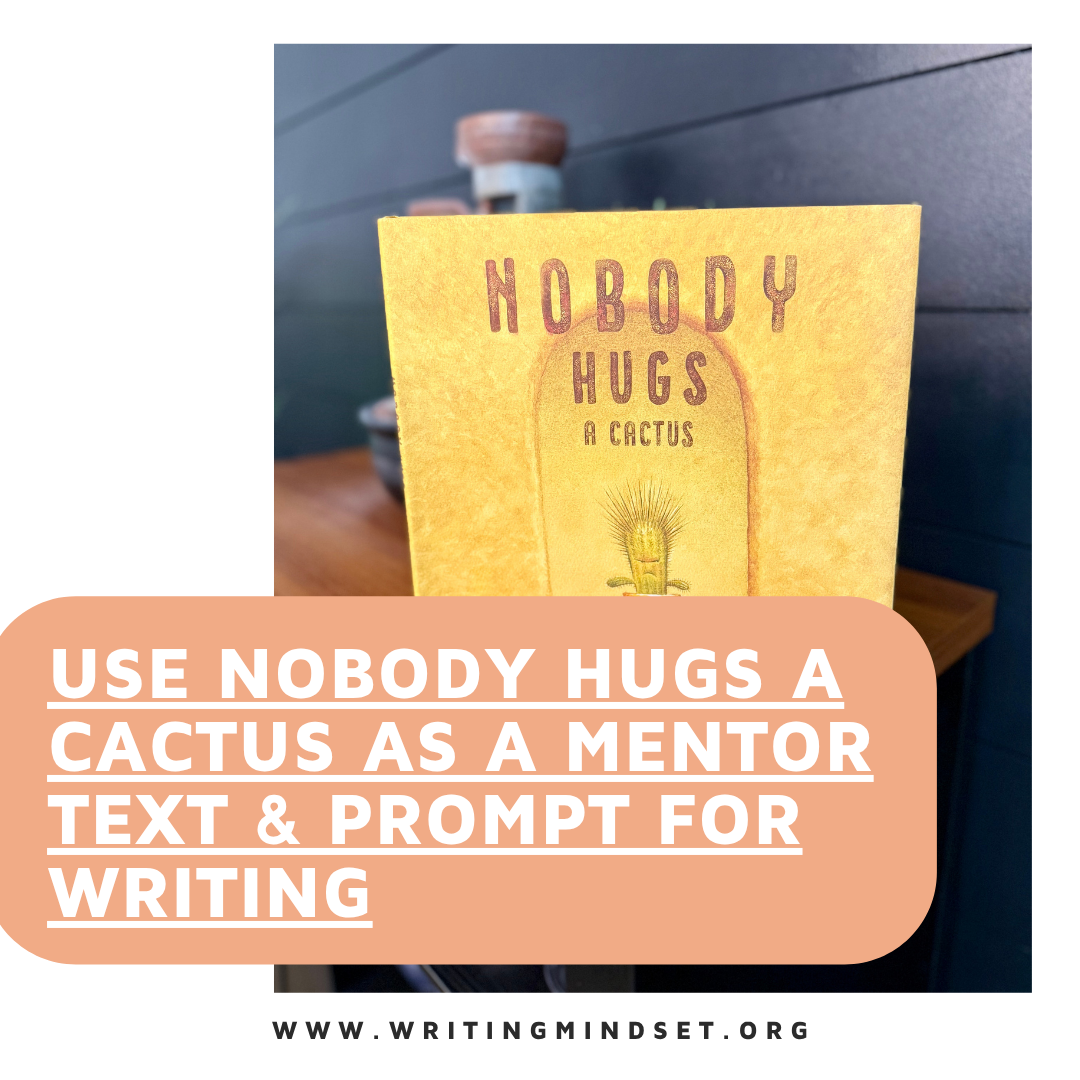
Nobody Hugs a Cactus is a humorous and heartfelt story about Hank, a cactus who prefers to be left alone—until loneliness begins to change his perspective. With expressive illustrations and minimal text, Goodrich captures the tension between independence and connection in a way that feels both playful and deeply relatable. Also, the grumpy cactus might be the cutest thing you have seen in a long while.
This story reminds us that sometimes what we think we want (space, quiet, distance) isn’t what we truly need. For writers, Nobody Hugs a Cactus becomes an entry point into exploring character, perspective, and internal change, showing how feelings shift over time and how those shifts shape our actions.
In this post, you can find…
Tips for using this book as a mentor text for writing
Ways to use the book with preschoolers, grades k-5, grades 6-8, grades 9-12, and for disciplinary literacy projects
Journaling prompts linked to the book (including nature journaling)
One grammar exercise to access grammar instruction
and LOTS of pictures of cacti from right here in Arizona
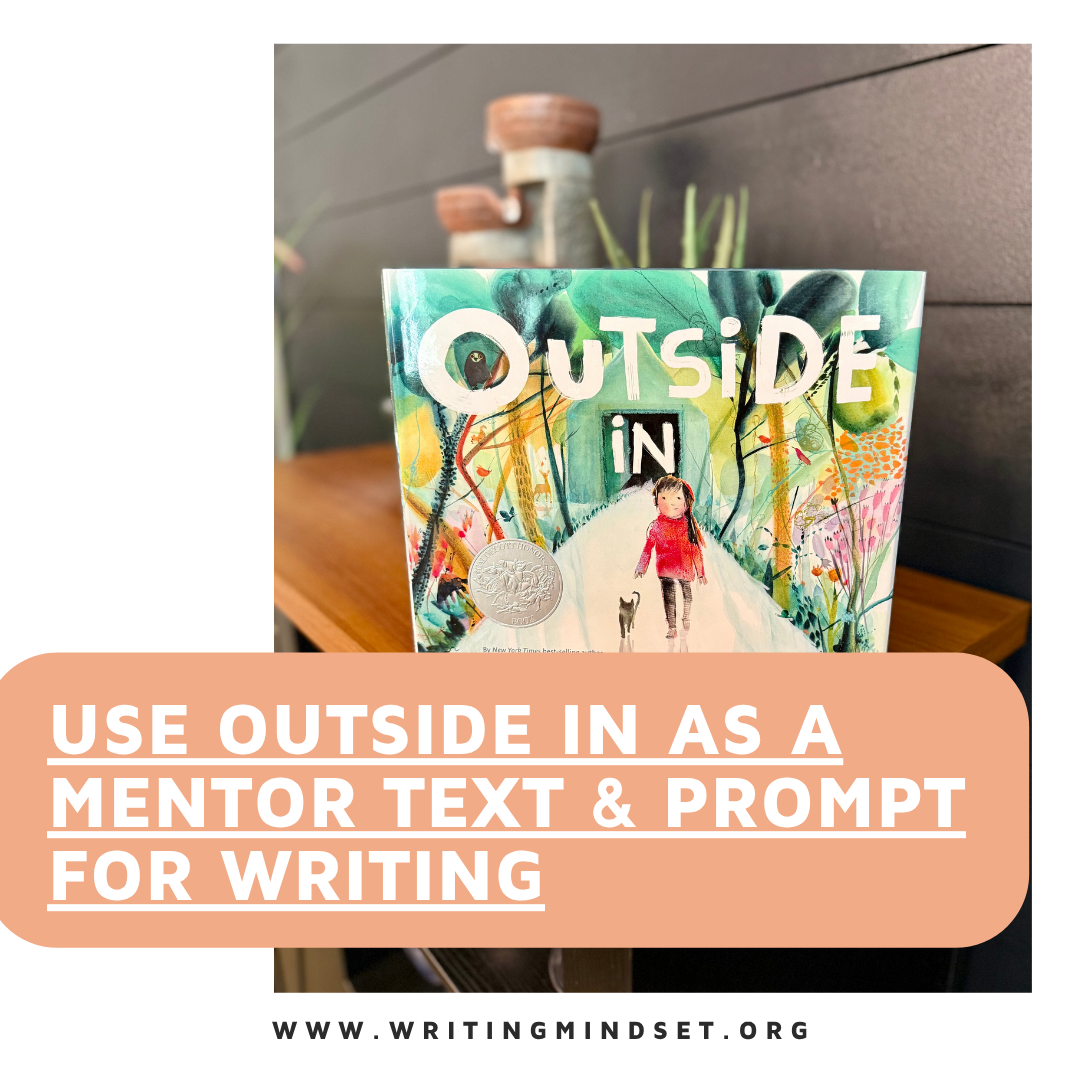
Outside In, written by Deborah Underwood and illustrated by Cindy Derby, is a poetic meditation on the quiet, persistent ways the natural world moves through our lives—even when we think we are separated from it. I would argue this is the perfect mentor text for a teacher that feels they cannot get outside in nature or wants to do more outside work with kids, but perhaps cannot because of time, budget, or access to natural spaces.
Through rhythmic, lyrical language and richly textured illustrations, the book shows how “outside” is never truly outside. It seeps in through light, sound, memory, breath, and presence. The world is always reaching us, even in stillness.
For writers, Outside In becomes an invitation to explore observation, contrast, and connection—especially the invisible threads between environments, emotions, and experience.
In this post, you can find…
Tips for using this book as a mentor text for writing
Ways to use the book with preschoolers, grades k-5, grades 6-8, grades 9-12, and for disciplinary literacy projects
Journaling prompts linked to the book (including nature journaling)
One grammar exercise to access grammar instruction
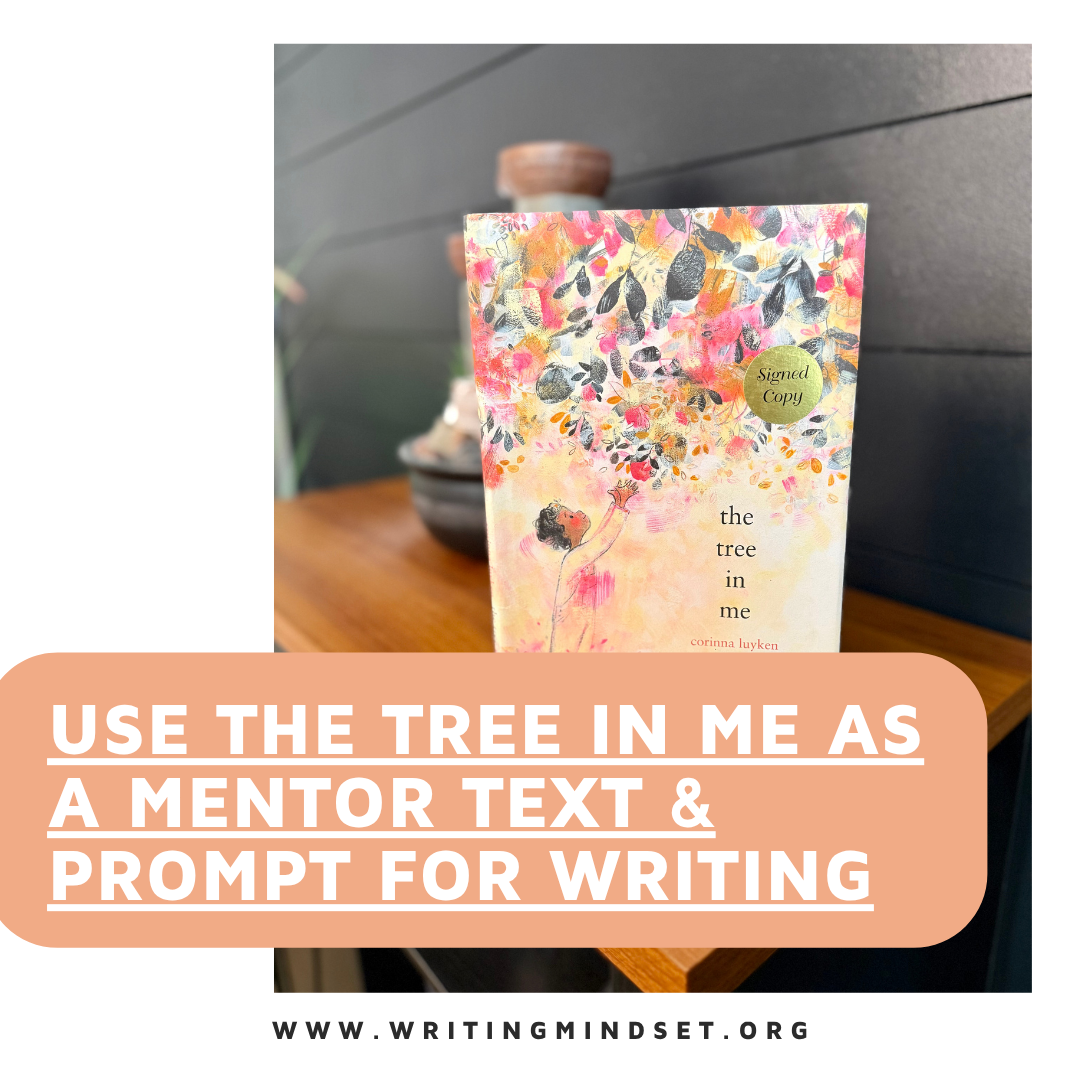
The Tree in Me is a quiet, powerful exploration of growth, change, and the deep connections between humans and the natural world. Through lyrical language and expressive illustrations, Luyken invites readers to see themselves reflected in trees—rooted, reaching, bending, and growing.
I especially love the colors throughout this book. The pages evoke a pink sunset, with bright oranges and pinks that seem to jump off the page.
This book reminds us that growth is not always linear. Like trees, we stretch toward the light, weather storms, and change with the seasons. For writers, The Tree in Me becomes an entry point into reflective and metaphorical writing, where personal experience connects to the natural world.
While the book primarily focuses on the trees within us, these ideas can extend to other elements of nature as well. We might consider the storms within us, the flowers that grow inside us, or the gardens we cultivate with our thoughts. In this way, we are deeply connected to the natural world and to one another.
In this post, you can find…
Tips for using this book as a mentor text for writing
Ways to use the book with preschoolers, grades k-5, grades 6-8, grades 9-12, and for disciplinary literacy projects
Journaling prompts linked to the book (including nature journaling)
One grammar exercise to access grammar instruction
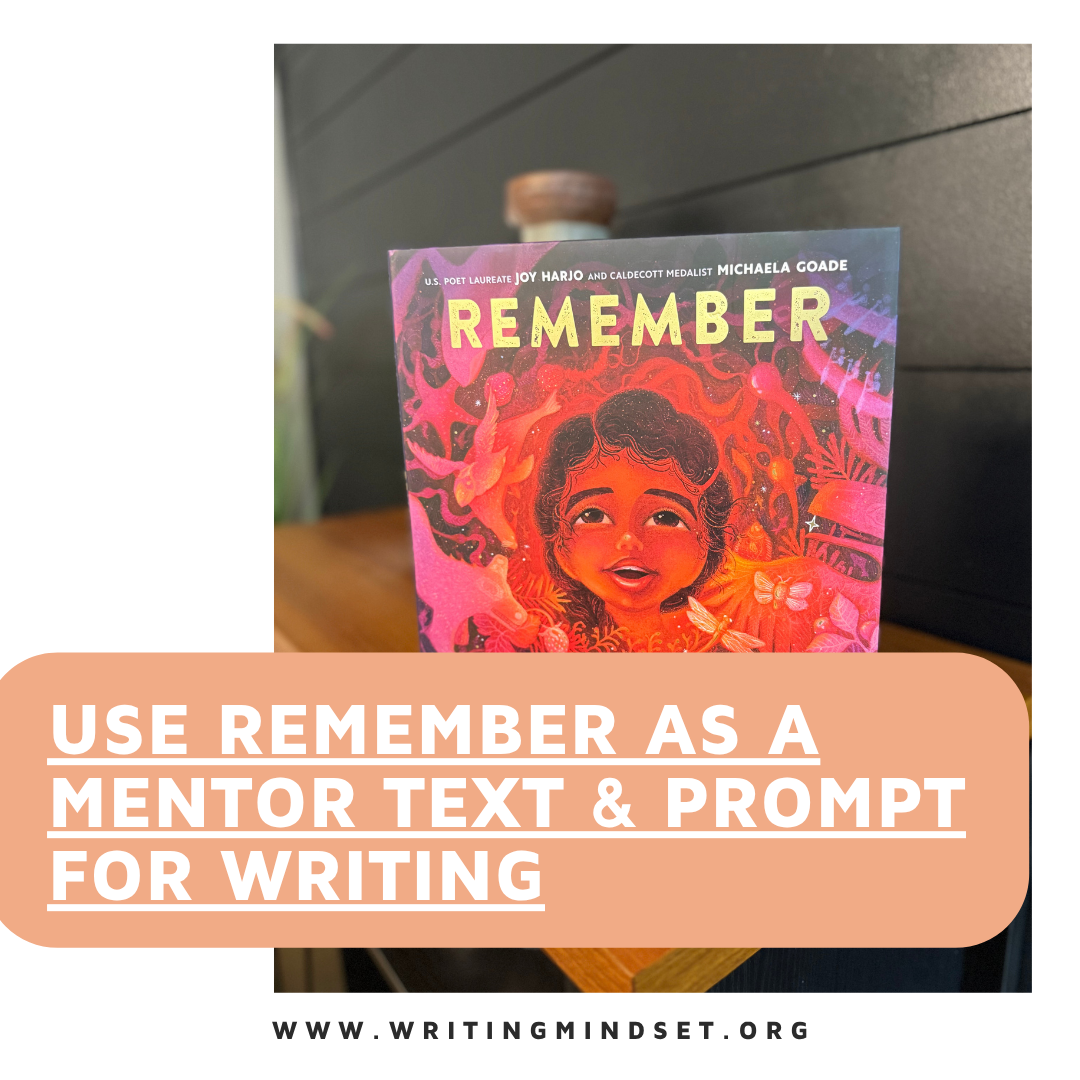
Remember, by Joy Harjo and illustrations by Michaela Goade, is an invitation to reflect on who we are, where we come from, and how we are connected to the world around us. Through Harjo’s poetic repetition and grounding language, readers are reminded that memory is not just something we recall—it is something we carry.
The text moves gently through reminders of connection: to the earth, to ancestors, to breath, to belonging.
This book encourages us to slow down, to listen inward, and to recognize that our stories are part of something larger. For writers, Remember becomes an entry point into reflective writing, where memory, identity, and observation can meet.
In this post, you can find…
Tips for using this book as a mentor text for writing
Ways to use the book with preschoolers, grades k-5, grades 6-8, grades 9-12, and for disciplinary literacy projects
Journaling prompts linked to the book (including nature journaling)
One grammar exercise to access grammar instruction
I start each day in a very similar way. After getting up and getting ready, I help our preschool-aged daughter prepare for school. As part of our daily hair routine, we always say our affirmations. These words set the tone for each day, and it is a non-negotiable part of our routine.
I want her to know what to say to herself when she doubts she can do something or feels unsure. I want her to be able to remind herself of how great she already is and how wonderful a person she is becoming.
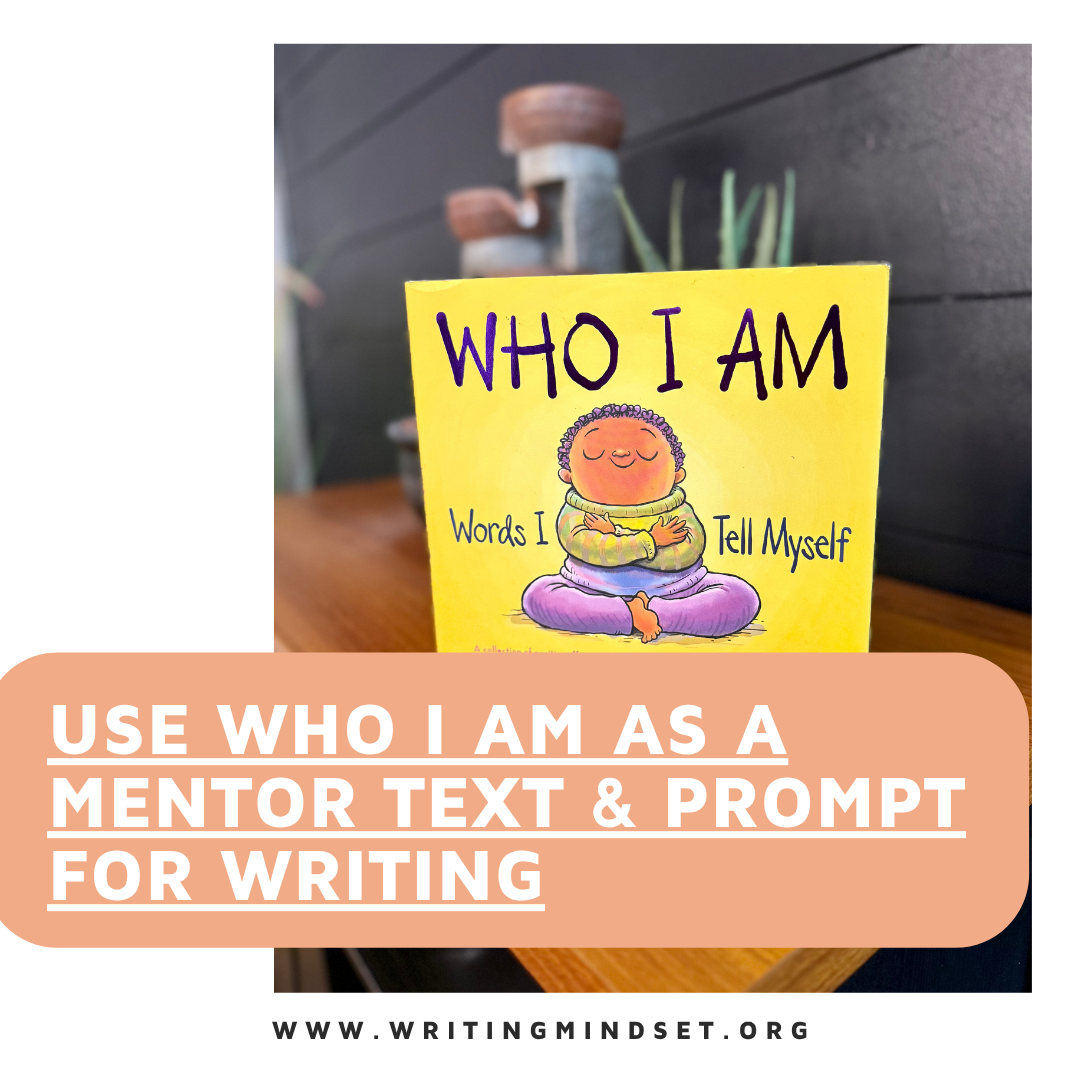
Affirmations are more than flowery phrases—they are the inner dialogue we create for ourselves. Who I Am: Words I Tell Myself, by Susan Verde and illustrated by Peter H. Reynolds, is a powerful exploration of identity and the quiet language we carry within ourselves. Through simple, intentional phrases, the book reminds readers that the words we repeat internally shape how we see ourselves and who we are becoming.
Each line invites reflection:
I am strong.
I am creative.
I am enough.
This text is both grounding and expansive. It creates space for readers to notice their inner voice and begin to shape it with care. This book is not just something to read—it is something to return to. It becomes a mirror for identity and a starting point for daily reflection.
For writers, journalers, students, and caregivers, Who I Am offers an invitation to build a daily practice of affirmation writing—using a notebook or journal as a place to shape identity through language.
In this post, you can find…
Tips for using this book as a mentor text for writing
Ways to use the book with preschoolers, grades k-5, grades 6-8, grades 9-12, and for disciplinary literacy projects
Journaling prompts linked to the book (including nature journaling)
One grammar exercise to access grammar instruction
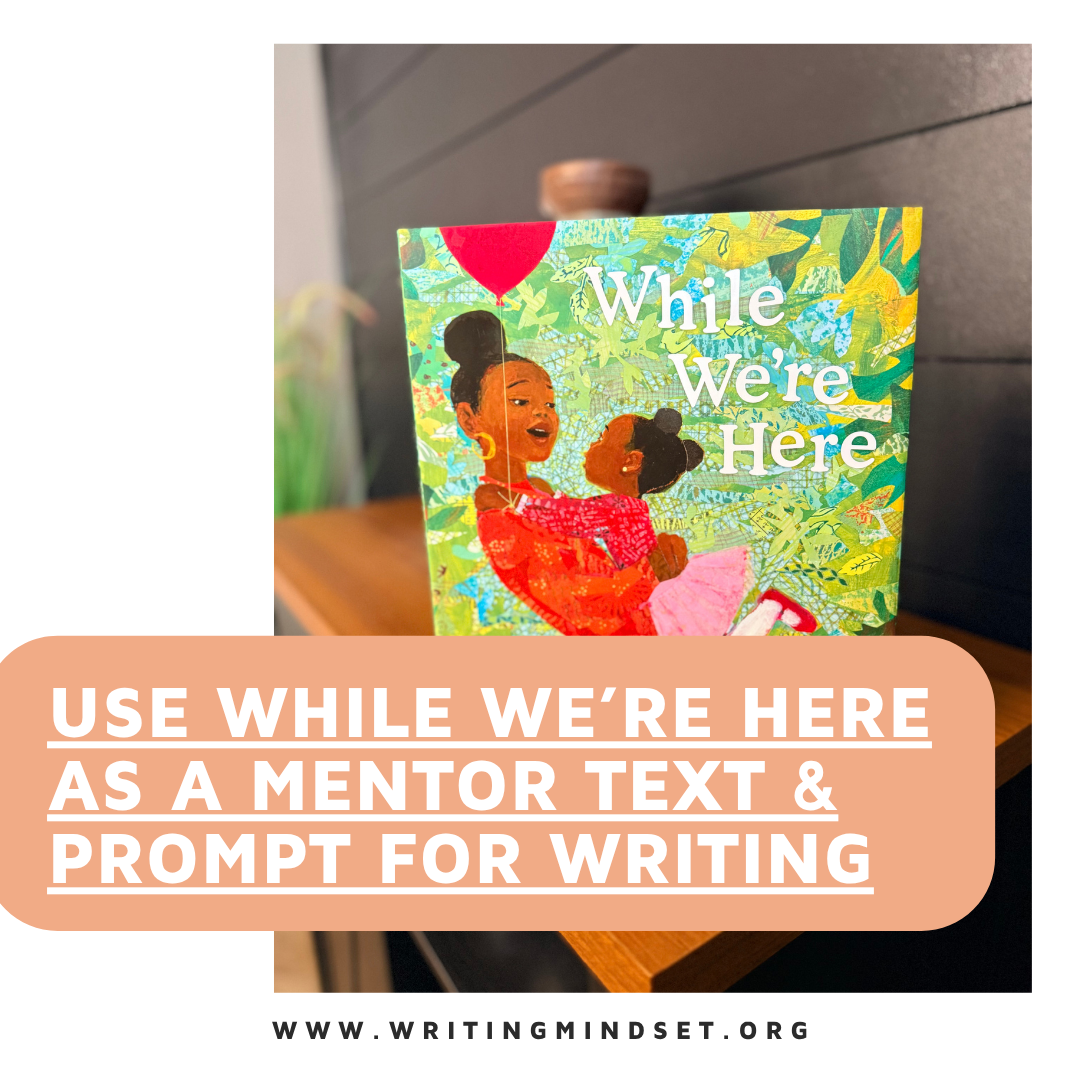
While We’re Here by Anne Wynter, with illustrations by Micha Archer, invites readers into a quiet, reflective space centered on a simple but powerful idea: we are here, together, in this moment. Through rhythmic language and layered, collage-style artwork, the book explores what it means to exist alongside others—humans, animals, and the natural world—right now. A striking message for anyone; however, anyone in a caretaker role will truly appreciate the images of slowing down and being with our kids in the everyday moments.
The text moves gently through shared experiences (and yes, disappointment), grounding readers in presence rather than urgency. It doesn’t rush toward a conclusion; instead, it lingers. It asks us to notice where we are, who we are with, and what it means to simply be.
For writers and journalers alike, While We’re Here becomes an invitation to pause, reflect, and write from the present moment—not as something fleeting, but as something worth holding onto.
In this post, you can find…
Tips for using this book as a mentor text for writing
Ways to use the book with preschoolers, grades k-5, grades 6-8, grades 9-12, and for disciplinary literacy projects
Journaling prompts linked to the book (including nature journaling)
One grammar exercise to access grammar instruction
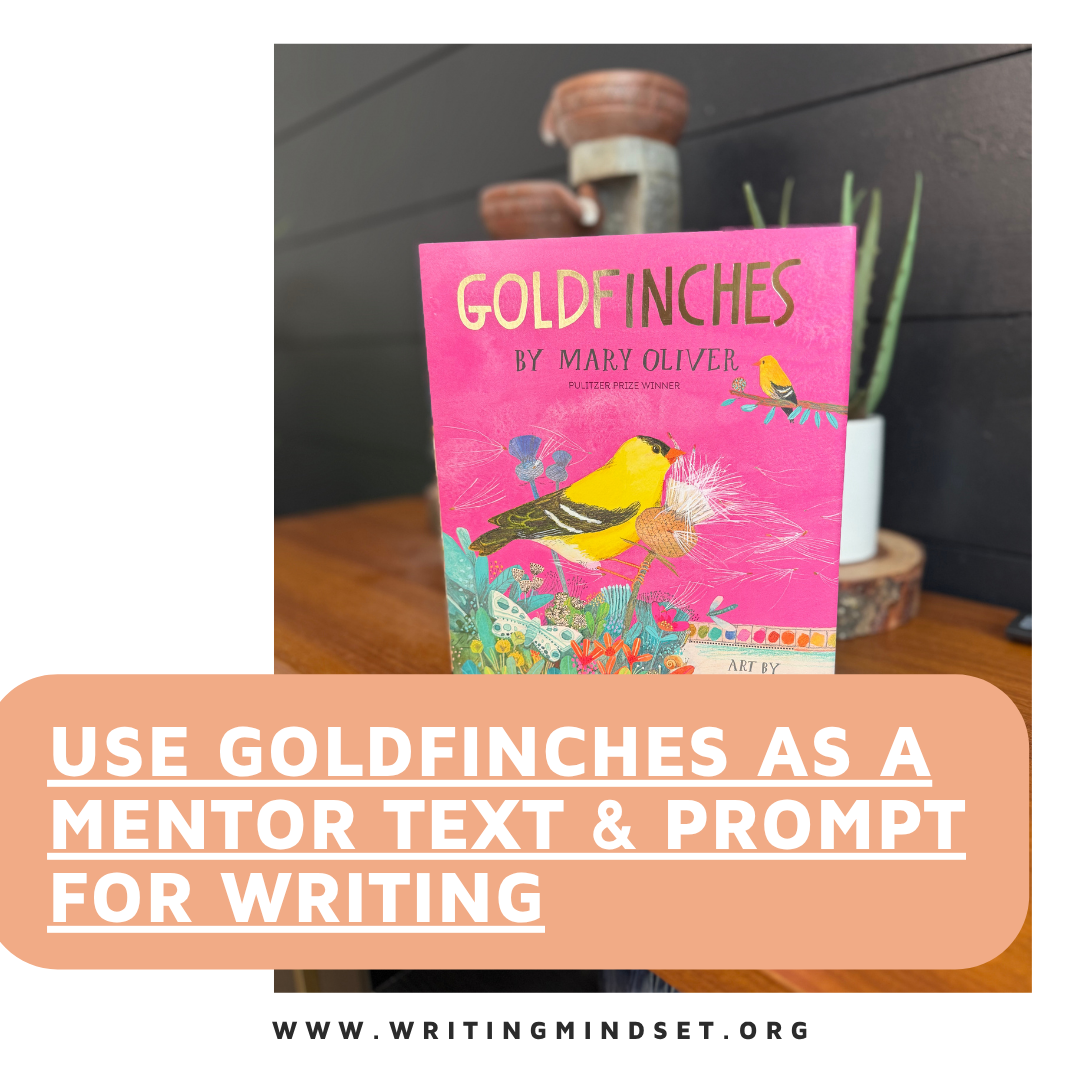
Goldfinches by Mary Oliver, with beautful artwork by Melissa Sweet, is a celebration of attention, presence, and the quiet joy found in the natural world. Through Oliver’s poetic language and Sweet’s layered, textured illustrations, readers are invited to slow down and notice—truly notice—the brilliance of a small yellow bird moving through its environment.
This picture book, adapted from Oliver’s poem, reminds us that wonder is always available to us, especially when we pause long enough to see it. The goldfinch becomes more than a bird.Iit becomes a symbol of delight, curiosity, and the art of paying attention.
For writers and journalers, Goldfinches offers an invitation to observe closely, to write what we see, and to rediscover beauty in the ordinary.
In this post, you can find…
Tips for using this book as a mentor text for writing
Ways to use the book with preschoolers, grades k-5, grades 6-8, grades 9-12, and for disciplinary literacy projects
Journaling prompts linked to the book (including nature journaling)
One grammar exercise to access grammar instruction
One grammar exercise to access grammar instruction
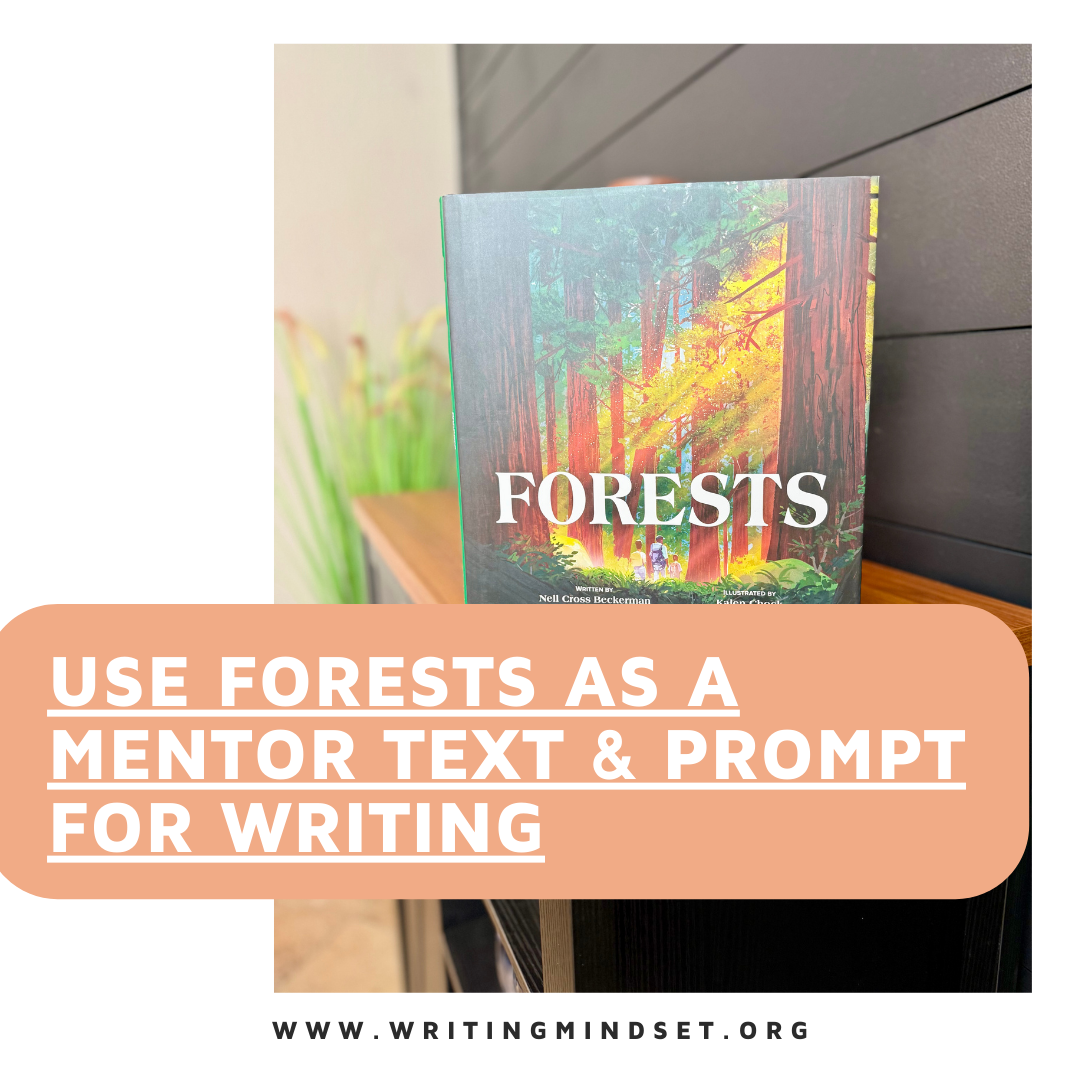
Nell Cross Beckerman’s Forests, illustrated by Kalen Chock, is a quietly powerful picture book that invites readers to slow down and look closely at the living systems all around them. Some of my favorite go-tos for mentor texts right now are nonfiction picture books that combine informational facts with storytelling in some kind of capacity. Told through a sequence of observational poems, the book explores forests across seasons, climates, and viewpoints—revealing them not as static backdrops, but as dynamic, breathing communities. Each spread highlights how forests are shaped by time, weather, animals, and human interaction, encouraging readers to consider how many stories exist within a single place.
Forests shifts perspective and place again and again. We move from underwater to an urban forest, from the woods to the jungle, from past to present. The result is a deep sense of interconnection: no organism exists alone, and no forest is ever just one thing. For writers, students, and journalers, Forests offers an invitation to observe, reflect, and write with curiosity about the systems we belong to.
In this post, you can find…
Tips for using this book as a mentor text for writing
Ways to use the book with preschoolers, grades k-5, grades 6-8, grades 9-12, and for disciplinary literacy projects
Journaling prompts linked to the book (including nature journaling)
One grammar exercise to access grammar instruction

Winter break offers more than a pause from lesson plans and deadlines. It is a chance to truly rest and restore, not by adding more “self-care” to our to-do lists, but by rethinking how we support ourselves in sustainable ways. I am intentionally trying to move past the buzzwords and focus on practices that can live alongside the realities of teaching and education. These are habits that become automatic responses to stress, overload, and the everyday chaos of this work.
These weeks matter. How we rest now shapes how we return, how we listen, respond, create, and care in the months ahead. Pouring into ourselves is not selfish; it is necessary. Our health, energy, and well-being ripple outward into the spaces and people we serve.
So, how will you spend your winter break?
Below you will find 115+ ideas for gentle, realistic self-care, organized into mental, physical, practical, social, writing-focused, and teacher-specific categories. I have also included a section at the end just for fellow mamas who are navigating rest alongside caregiving.

Nikkolas Smith’s The History of We is a breathtaking picture book that explores humanity’s collective story from our earliest beginnings to the present moment and our shared responsibility to create a more compassionate world. Through his poetic text and powerful illustrations, Smith shows how we are all part of something bigger: a global community bound by love, struggle, and hope.
For writers, The History of We offers a reminder that personal stories connect to a much larger narrative. For journalers, it’s an invitation to reflect on identity, ancestry, and legacy—to ask: Where do I come from? What stories do I carry? What part of the “we” am I helping to write? It is also a picture book with a strong reminder about the danger of single stories. On how we can avoid making generalizations and assumptions in order to really take the time to get to know the multiple points of views that exist within a community, culture, and world around us.
In this post, you can find…
Tips for using this book as a mentor text for writing
Ways to use the book with preschoolers, grades k-5, grades 6-8, grades 9-12, and for disciplinary literacy projects
Journaling prompts linked to the book (including nature journaling)
One grammar exercise to access grammar instruction

Emmy Kastner’s So Tortoise Dug is a gentle, inspiring story about a tortoise who does what tortoises do best—dig! But as Tortoise digs, she discovers more than dirt and tunnels. She uncovers wonder, quiet courage, and the joy of moving at her own pace. Through Kastner’s warm language and playful illustrations, readers are invited to celebrate curiosity, self-trust, and the slow beauty of discovery. I also really love the nonfiction connections here as we encourage (as both teachers and parents) kids to be aware of the world around them. The book is based off of the real relationship of how two species coexist in the wild: the gopher tortoise and the Florida mouse. In the Author’s Note, Emmy goes on to explain that the book is a “pourquoi tale (“pourquoi” is the french word for “why”) This type of story is a fictional explanation of why something is the way that it is.” I love the idea of writers being able to explain real-world concepts through made up stories.
For writers and journalers alike, So Tortoise Dug reminds us that every creative journey takes time. It encourages us to keep going, keep digging, and find joy in uncovering what’s beneath the surface of our thoughts, stories, and dreams.
In this post, you can find…
Tips for using this book as a mentor text for writing
Ways to use the book with preschoolers, grades k-5, grades 6-8, grades 9-12, and for disciplinary literacy projects
Journaling prompts linked to the book (including nature journaling)
One grammar exercise to access grammar instruction

Joyce Sidman and Melissa Sweet’s Dear Acorn (Love, Oak) is a gentle and poetic exploration of connection, patience, and transformation. Told through a series of tender letters from an old oak tree to a newly fallen acorn, this picture book beautifully captures the rhythm of life cycles—growth, waiting, change, and renewal. Through Sidman’s lyrical language and Sweet’s rich mixed-media illustrations, readers are invited to consider how all things in nature are intertwined. On the blog, I have been a huge fan of the illustrations from Melissa Sweet. How to Write a Poem by Kwame Alexander and How to Read a Book by Kwame Alexander are two of the first picture books I recommend to teachers to lead conversations about reading and writing in their classrooms at any level.
For writers and journalers alike, Dear Acorn is an invitation to reflect on relationships, resilience, and the quiet passage of time. It reminds us that even the smallest beginnings hold the promise of something enduring and strong. In Dear Acorn the lost art of letter writing can help writers tap into new ideas and people working in a journal to access different parts of the world around them.
In this post, you can find…
Tips for using this book as a mentor text for writing
Ways to use the book with preschoolers, grades k-5, grades 6-8, grades 9-12, and for disciplinary literacy projects
Journaling prompts linked to the book (including nature journaling)
One grammar exercise to access grammar instruction

Julie Morstad’s picture book A Face is a Poem offers readers a playful and poetic way of seeing something familiar—our own faces. Instead of describing features literally, Morstad leans on metaphor: freckles as sprinkles, flowery faces, faces that you find in the clouds. Each page invites readers to view the ordinary as extraordinary. I actually paused in the bookstore when I saw the cover of this book because the colors and imagery were so beautiful.
For writers, this text is a gift. It reminds us that description doesn’t have to be technical—it can be imaginative, metaphorical, and deeply personal. For journalers, it opens the door to self-reflection and self-expression through the lens of poetry. This post serves as a how-to guide for using this text in multiple ways: in the classroom, at home, or within your own notebook.
In this post, you can find…
Tips for using this book as a mentor text for writing
Ways to use the book with preschoolers, grades k-5, grades 6-8, grades 9-12, and for disciplinary literacy projects
Journaling prompts linked to the book (including nature journaling)
One grammar exercise to access grammar instruction
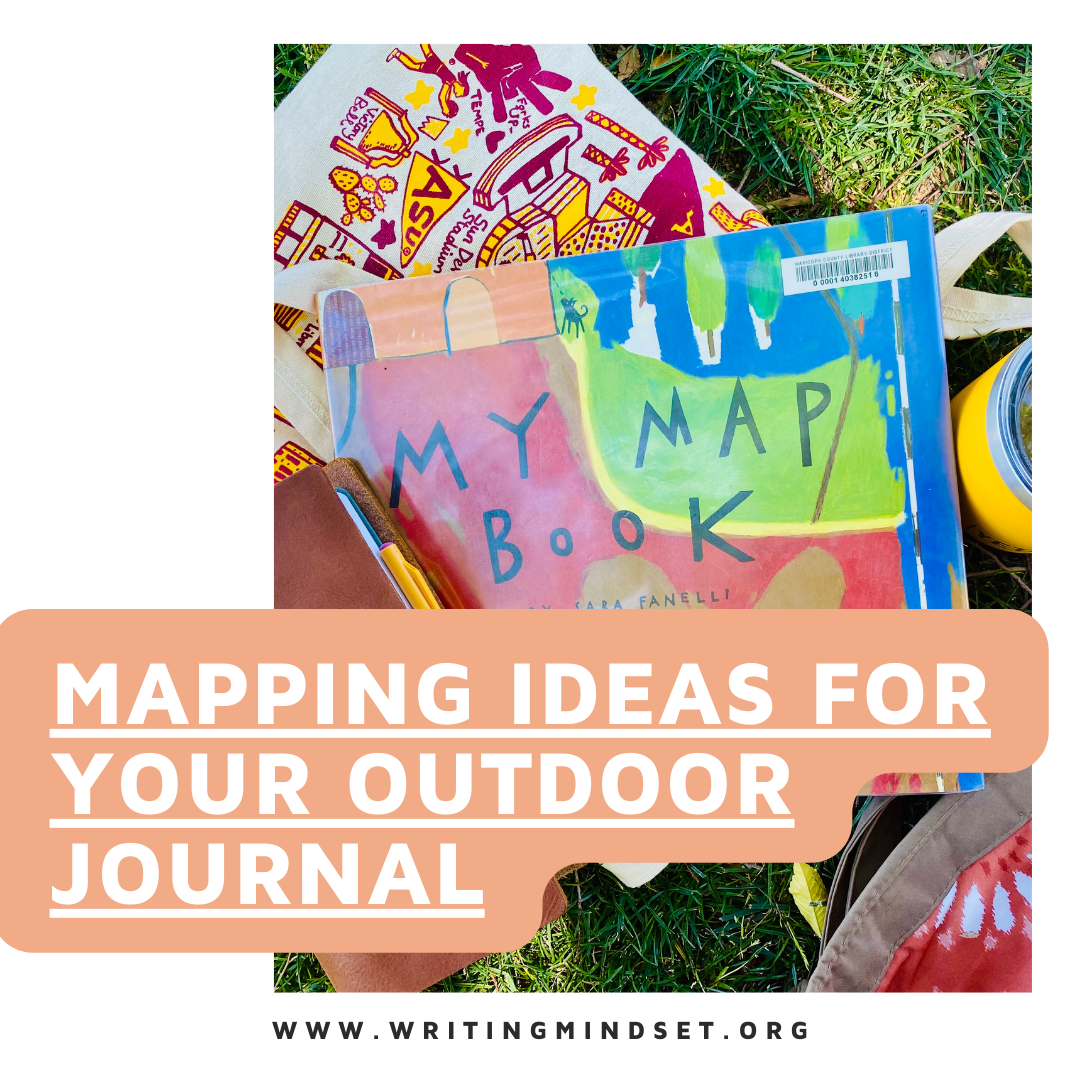
Maps and the act of getting directions are some of the most literal ways people connect from one place to another. There’s something deeply grounding about drawing a map—especially one that doesn’t follow traditional geography. In My Map Book, author-illustrator Sara Fanelli reimagines what mapping can be: not just a way to track location, but a playful and reflective tool for understanding ourselves, our experiences, and our world. Inspired by her work, this blog post offers 25 creative mapping activities perfect for outdoor journaling. These prompts are flexible for individuals, students, or groups, and each one encourages cross-curricular connections—blending literacy, science, art, and social-emotional learning. If you’re a teacher without easy access to green space, outdoor mapping is also a great way to introduce nature journaling to your students.

If you’re feeling the tug to slow down, step outside, and reconnect with the world around you, nature journaling might be exactly what you need. But where do you begin? The easiest entry point is one that feels more like play than practice: go on a nature scavenger hunt or take a simple walk outdoors. Whether you're on your own or with kids, this gentle activity opens the door to curiosity, observation, and connection—the very heart of nature journaling. And when I say "nature walk," I simply mean stepping outside. Whether you're facing desert heat or a winter blast, you can observe the world around you and begin with any notebook or journal.
This post provides a starting point with some prompts, and it gives some resources and materials for stepping into the outdoors.
Whenever I sat down with my middle school English team, met with a colleague for curriculum planning, or chatted with teachers across departments, one question always surfaced: “How do you teach the essay?” or “What parts need to be taught to students?”
As I continue working with more and more teachers, I’ve noticed that the academic essay is often assigned based on a teacher’s own learning experiences, their mentor’s approach, or a set of commonly accepted skills that are rarely questioned. I’m not claiming that my method of teaching essays is better than anyone else’s. Instead, this post serves as a starting point for a larger conversation about how the academic essay is implemented across grade levels. The goal, ultimately, should be consistency.
In this post, I’ll use the Six Traits of Writing as a shared language for teaching writing in the classroom. I’ll also outline the essential components of an academic essay—what I refer to as the building blocks.
Just like physical building blocks, these parts can be removed, rearranged, or used differently depending on the purpose of the assignment. The same concept applies here: consider each part as an area where you can choose to emphasize, adapt, or even skip depending on what your students need. I like the Six Traits of Writing because they provide flexible, universal terminology that applies across genres and writing types.
The academic essay can feel overwhelming to teach because it’s often viewed as a rigid form. But in reality, there’s quite a bit of flexibility, depending on the teacher’s experience, the grade level, and the writing genre. In my experience, success in teaching essay writing comes from two things: using a consistent structure and adopting a shared language. When teachers have a common understanding of these areas, it leads to better conversations about writing—and more clarity, purpose, and structure for students.

Our daughter’s favorite part of a trip to Lowe’s is walking through the garden section to see the flowers and collecting a stack of “rainbows”—color paint sample cards. After one of these trips, I remembered that I had a writing prompt kit called Paint Chip Poetry. This little box includes a wide variety of colors, each paired with a word or phrase, along with prompts to spark ideas. There’s something magical about color—how a single shade can evoke a memory, tell a story, or capture the essence of a season. When we combine that sensory experience with the power of words, we open up an entirely new pathway to creativity.
One of my favorite tools for inspiring outdoor journaling is using paint chips taped into a notebook. Paint chip poetry and color-based activities offer an accessible, playful, and deeply reflective way to connect with nature, especially when paired with time spent outside. Whether you’re journaling in your backyard, at a park, or on a classroom nature walk, these activities add a vibrant lens to the experience.
This post outlines five color-inspired journaling activities to try with your students or in your own nature notebook. It also includes recommended picture books that serve as wonderful resources for kids of all ages, from upper elementary to high school.

In all classrooms that thrive, students are not only readers and writers—they are thinkers. Stephanie Harvey and Anne Goudvis, in their foundational text Strategies That Work: Teaching Comprehension for Engagement, Understanding, and Building Knowledge, Grades K-8, remind us that comprehension is more than just decoding words; it’s about making meaning. The six key strategies they outline—monitoring comprehension, activating and building background knowledge, asking questions, visualizing and inferring, determining importance, and summarizing—are not only tools for deep reading, but also cornerstones of effective writing.
Strategic readers make intentional decisions as they interact with texts. The same is true for strategic writers. When students are invited to use writing as a thinking tool, especially through writing-to-learn strategies like outdoor journaling, they begin to connect ideas, process emotions, and synthesize information in authentic and meaningful ways. Outdoor journaling, in particular, provides a rich opportunity to activate background knowledge, ask curious questions, and synthesize observations—all while immersing students in the world around them.
In this post, we’ll explore how each of these six comprehension strategies can be found in journaling activities. Outdoor journaling can foster not just literacy growth, but confident, curious communicators. Let’s take literacy goals out of the classroom and into the fresh air—where thinking and writing grow together. Below, you'll find a list of 42 different journaling activities that align with literacy goals. Included is the activity name, a brief description, suggested resources, and example classroom applications.

“What is poetry?” Daniel asks.
“Come with me,” says Spider, “and I will show you.”
— Daniel Finds a Poem by Micha Archer
In Daniel Finds a Poem, readers journey with Daniel as he walks through the park and asks his animal friends, “What is poetry?” Each creature responds in their own way. Spider speaks of dew, Frog talks about cool water, and Owl praises the night sky. As Daniel listens, observes, and reflects, he discovers that poetry is all around him. Poetry is what you see, hear, feel, and imagine—just like what our students can discover during a walk outside.
Using Daniel Finds a Poem as a mentor text, you can create a powerful classroom-building activity that also helps destigmatize the practice of writing poetry through found poems.
Creating a sense of belonging in the classroom isn't just a goal—it’s the foundation for all other interactions. This activity is a great way to build community at the beginning of the year, or to reconnect after a longer break. Found poetry invites writers to “find” words and phrases from existing texts or the world around them. For this activity, you might take students outside, but you could also use books, signs, notes, or even snippets of spoken dialogue—then arrange them into a new poetic form.
In this variation, students become the source text. You collect their words and transform them into a poem that reflects your shared classroom identity. The best part? When everyone shares their favorite line to create a collaborative community poem, it almost feels like teaching magic.

Writing is more than just a way to show what we know—it’s a tool for thinking, processing, and discovering. One of the most effective and versatile strategies for strengthening student voice and supporting content-area learning is the Claim, Evidence, Reason (CER) paragraph. This structure helps students organize their thoughts and communicate their ideas, whether they’re in an English, science, or social studies classroom. The CER paragraph is a strong place to start if your team or school wants to build consistency in writing expectations. In this post, you’ll find ideas for teaching CER using the mentor text The One Thing You’d Save by Linda Sue Park and Robert Sae-Heng, along with practical tips for helping students develop strong, thoughtful responses.

In Wonder Walkers by Micha Archer, two curious children explore the natural world by asking poetic questions like, “Are trees the sky’s legs?” and “Is dirt the world’s skin?” This mentor text serves as a powerful model for both students and teachers—it invites readers to slow down, observe, and wonder. The book can inspire an activity that not only takes students outdoors, but also encourages them to reflect on the different kinds of questions they are asking each day. The very place where we are standing can become a tool for learning if we’re willing to pause and look closely through a lens of inquiry.
This post offers a walkthrough of a lesson you can bring outside—as a StoryWalk or as an introduction to nature journaling. It’s also a great cross-curricular activity that can launch an inquiry or research unit, blending observation, curiosity, and writing in a meaningful way.

Teaching writing isn’t about chasing perfection—it’s about nurturing confident, capable communicators who understand that writing is a process. Whether you’re guiding students through a writing-to-learn activity or a more formal activity centered around the narrative, informational, or argumentative genres, each step of the writing journey provides an opportunity to build skills, spark creativity, and deepen learning. In this post, I’m breaking down the writing process using eight visual icons—each paired with clear definitions and classroom-ready examples. From gathering ideas with mentor texts to celebrating student voice and real-world connections, these tools help make writing more accessible, engaging, and meaningful for all learners. Let’s explore how each stage supports writers in finding their voice and growing their mindset.
First, let’s talk about the term “writing process” and clarify what I mean when I use this term with teachers and with my students.

An awesome quick strategy to teach narrative summary writing combines the video elements of Pixar Shorts and the application of Somebody Wanted But So Then. Somebody Wanted But So Then is a widely taught strategy for teaching summary while reading fiction. While the materials for SWBST are vast, I often find the easiest way to teach this memorable technique is through the use of quick shorts or Pixar shorts that are available on YouTube. I use the gradual release of responsibility model that focuses no I Do, We Do, You Do. This technique is best applied as a scaffolding technique to reach a higher-level goal. This post will outline the strategy for teaching summary writing with fiction texts, and it will also link some of my favorite Pixar shorts or clips to use in my middle-grade classroom.

What if the timeline of your life could tell a bigger story—one that connects your personal milestones with the history unfolding around you? In this reflective and analytical writing prompt, Your Life At-A-Glance (Moments from History), students begin by mapping out five significant life events. Then, they explore how these moments overlap with world, national, cultural, and local events. The goal? To select one historically significant moment that holds an argument or debate, and craft a compelling argumentative paragraph through the lens of their own experience. This activity not only builds historical thinking and writing skills, but it also helps students see their lives as part of a broader narrative—where their voice and story matter in the context of history.
The National Council of Teachers of English (NCTE) Annual Convention never fails to inspire, and the 2024 theme—Heart, Hope, and Humanity—beautifully underscored every session I attended. From practical classroom strategies to profound reflections on identity and storytelling, the convention offered a wealth of insight and inspiration. There is something powerful about bringing together people who love learning, who love working with students, and who love teaching—it creates an undeniable sense of belonging.
My goal for 2025 is to ground myself in the meaningful work of teaching, even though I am no longer in the classroom. I seek direction, passion, and a renewed spirit for doing what I love. This post highlights key takeaways from the 2024 convention and includes personal reflections on what I hope to find in 2025—a deeper connection to heart, hope, and humanity in my work.

Whether or not school was in session, I always found that the lessons embedded in Dr. Martin Luther King Jr.’s speeches were invaluable mentor texts for teaching writing and inspiring young people. My last year in the classroom, I was particularly moved by a tweet from Julia E. Torres, a librarian, educator, and activist, in which she shared a conversation she overheard:
“Just overheard a child in the hallway on the phone, ‘We are watching MLK videos again because you know they can neeeeever teach us anything new.’ This was a middle school student. Let’s think about that…”
That gave me pause. How often did I see my colleagues relying on MLK videos, or worse, skipping over this day entirely? How often had I felt like I couldn’t carve out the time to honor his legacy? I knew I needed to take the lesson of teaching dreams to a new level. I wanted my students to see Dr. Martin Luther King Jr. not just as a figure in history, but as an author to imitate and admire. His speeches made people listen to the issues that mattered. And no matter how pressured we feel to move through the curriculum, some lessons are simply more important.
On that day, it mattered. I reflected on how I could integrate Dr. King’s “I Have a Dream” speech into our mentor text work. The lesson wouldn’t take the entire hour, but my goal was clear: I wanted my students to notice the craft of his writing—specifically his use of repetition, metaphors, and the cadence of his voice—and then have them write about their own dreams in a similar way.
This post outlines the three-step process I used to teach his speech as a mentor text and offers further activities to extend the lesson.
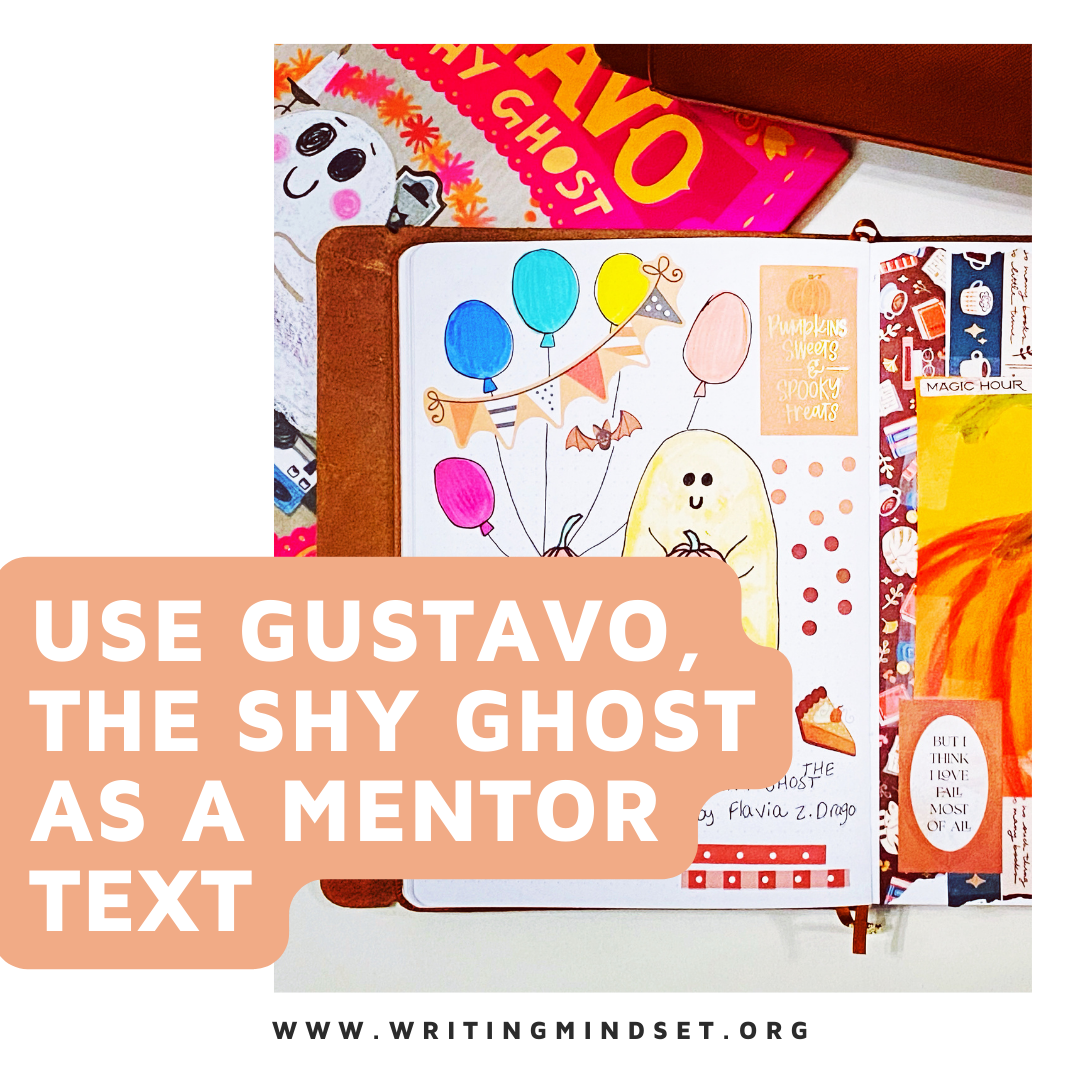
Gustavo, the Shy Ghost by Flavia Z. Drago is a heartwarming story of bravery, friendship, and self-expression—making it a rich mentor text for writing exercises across various disciplines. With its themes of shyness, the supernatural, and the courage to be seen, Gustavo’s journey offers endless opportunities for deep reflection and creativity in classrooms. Let’s explore how you can use this story as a springboard for disciplinary writing in all subject areas!

Picture books aren’t just for children—they hold profound lessons and beautiful insights that resonate with readers of all ages. For caregivers and teachers, these books are especially powerful tools, offering a creative and accessible way to foster emotional exploration and self-reflection. Picture books can serve as a bridge to reflective journaling, unlocking deep thoughts about life, emotions, and personal growth. They provide a unique opportunity to engage both young readers and adults in meaningful discussions, offering simple yet evocative narratives that inspire reflection. In this blog post, we’ll explore several picture books that not only tell compelling stories but also provide rich opportunities for journaling. Each book comes with a summary, a link to a read-aloud YouTube video, and thoughtfully crafted journal prompts to guide readers in exploring their inner world and nurturing personal growth.
Mary Lyn Ray and Felicita Sala’s When You Find the Right Rock is a quiet celebration of attention and belonging—of the small, ordinary things that feel extraordinary when noticed with care. Through poetic language and luminous illustrations, Ray and Sala capture the simple act of finding a rock and transform it into something magical: a story about connection, grounding, and discovery. I think one of my favorite parts of this book when reading it to our little one was pausing on lines like,
For writers and journalers, this book is a meditation on presence. It reminds us that meaning often hides in small moments—holding a smooth rock, feeling its weight, noticing its color or warmth. When You Find the Right Rock invites us to pause, look closer, and find joy in what fits just right in our hands and hearts.
In this post, you can find…
Tips for using this book as a mentor text for writing
Ways to use the book with preschoolers, grades k-5, grades 6-8, grades 9-12, and for disciplinary literacy projects
Journaling prompts linked to the book (including nature journaling)
One grammar exercise to access grammar instruction