Forests: Journaling Through Interconnection, Perspective, and Place
Disclosure: Writing Mindset only endorses things that I’ve personally used, something similar, or come highly recommended by trusted peers. If you grab anything I mention using a referral link, I may get a small commission. However, there’s no extra cost to you. If you would like to learn more, please visit the privacy policy and disclosure page.
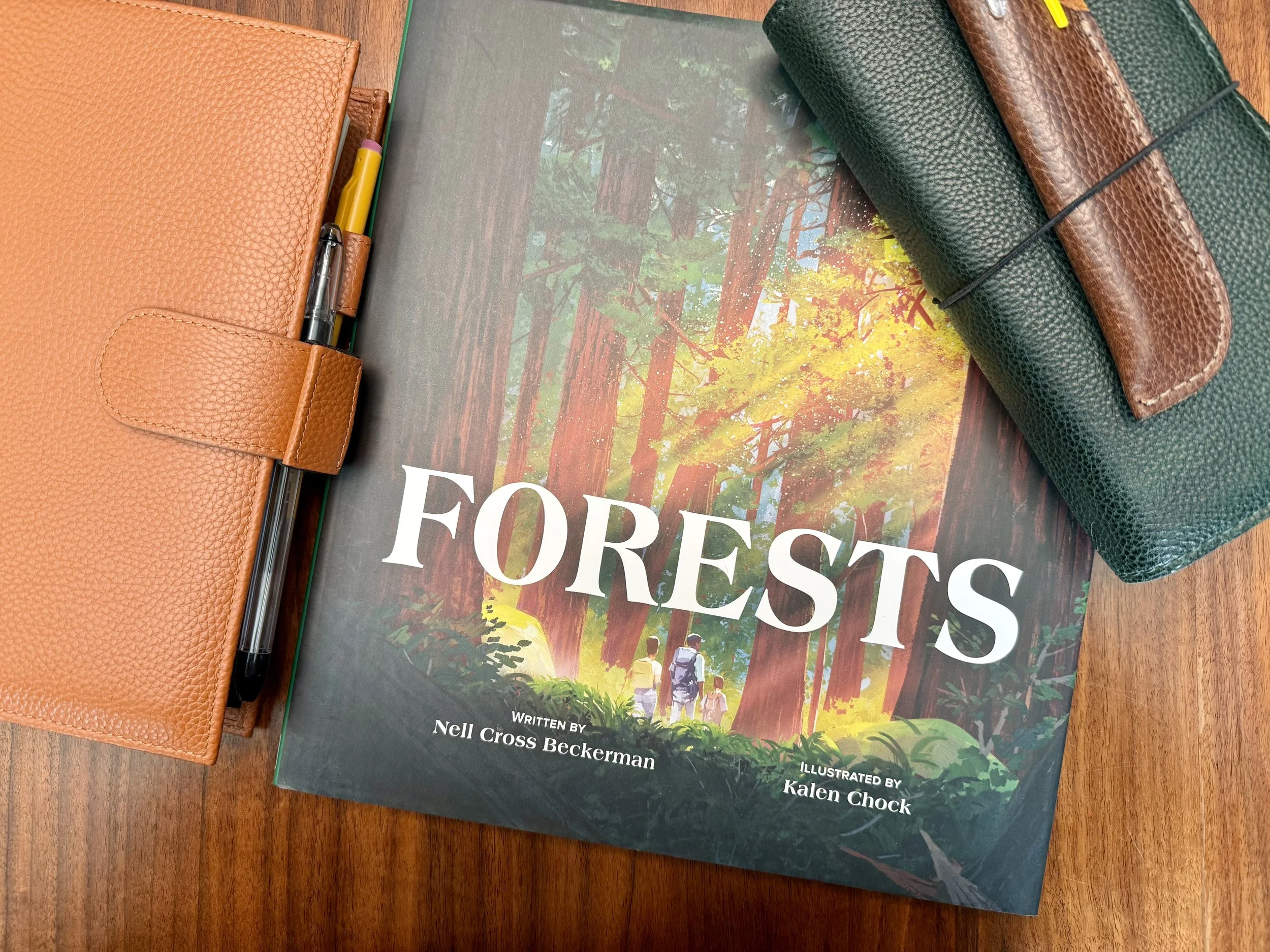
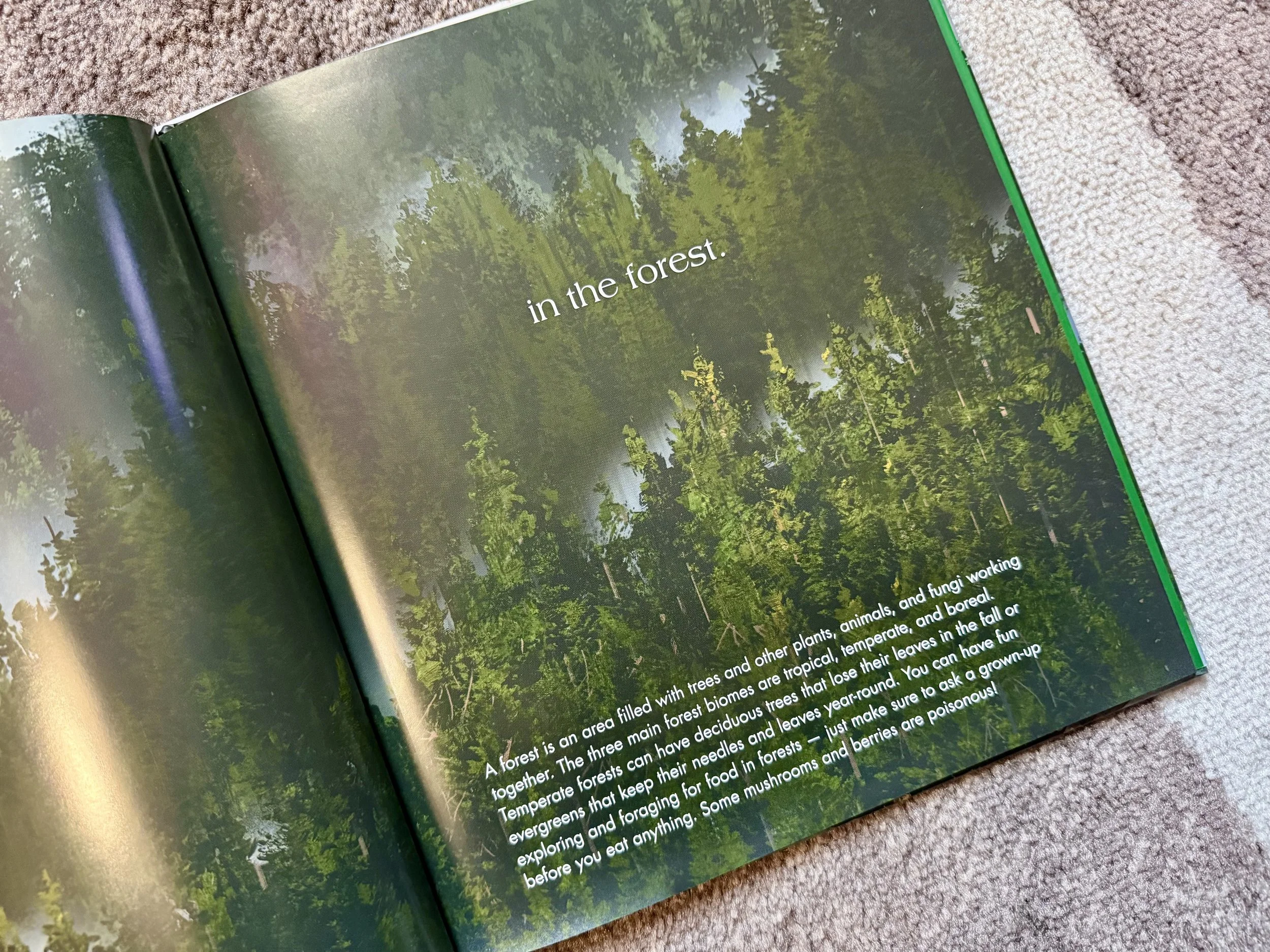
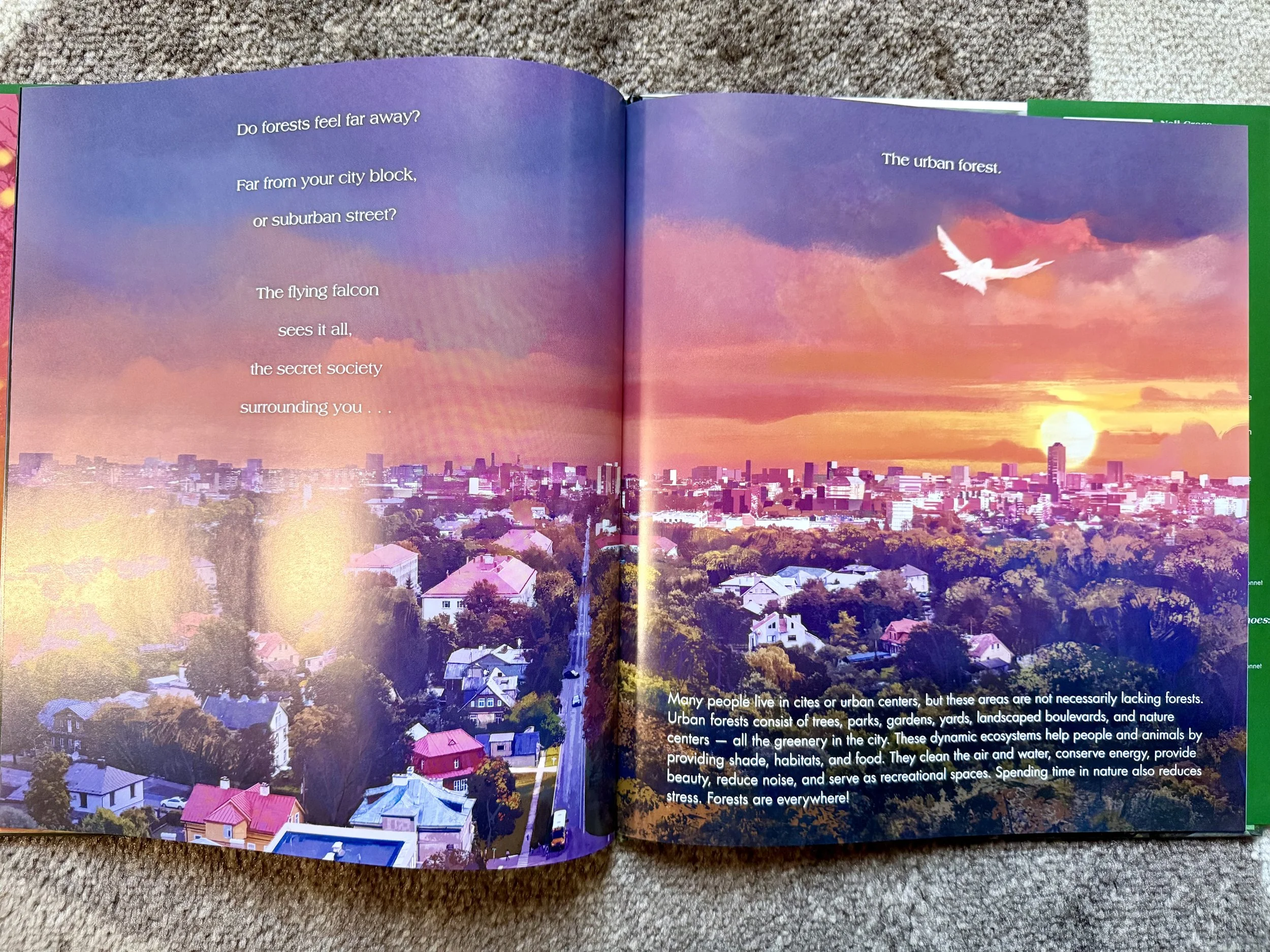
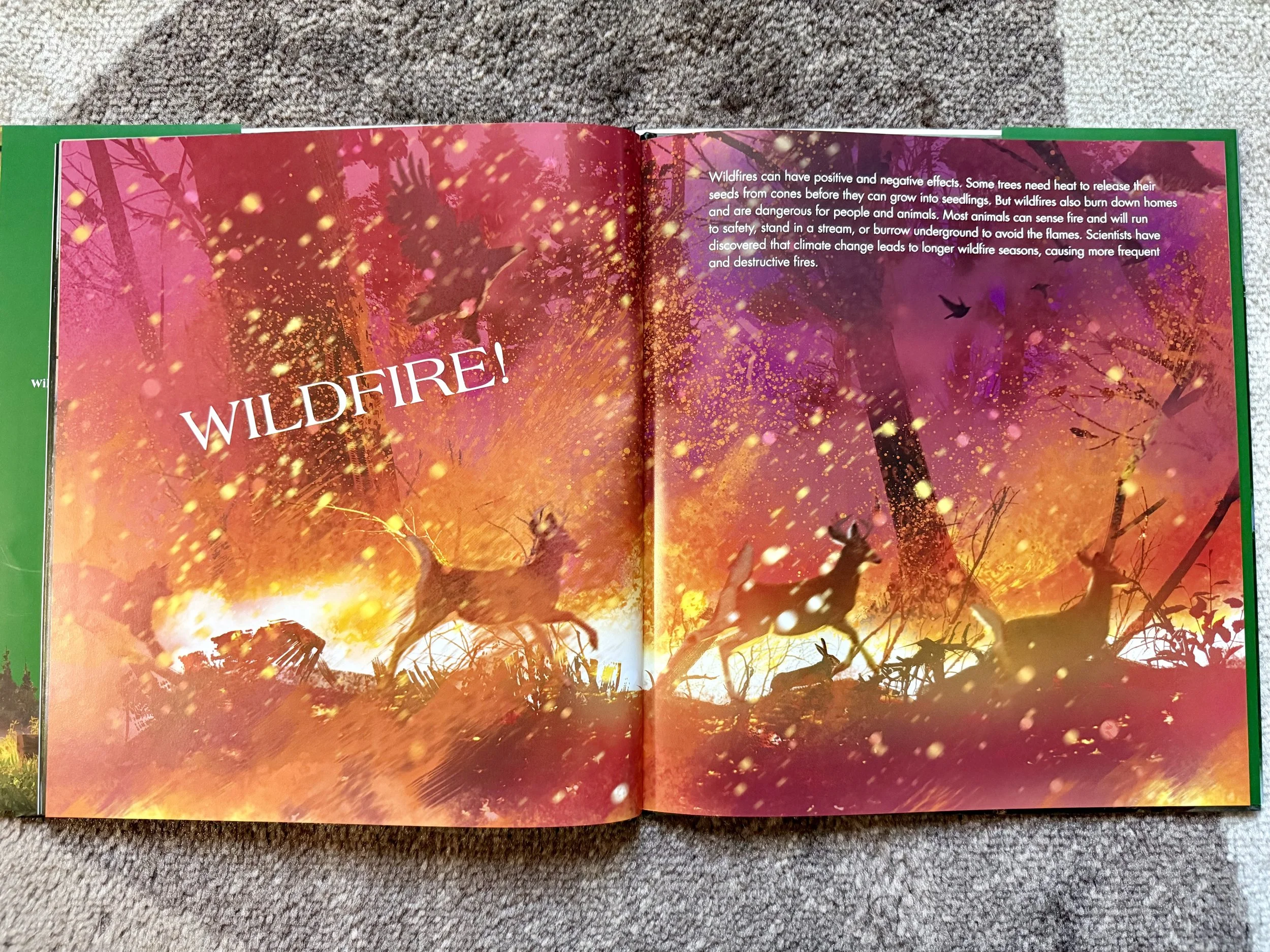
Nell Cross Beckerman’s Forests, illustrated by Kalen Chock, is a quietly powerful picture book that invites readers to slow down and look closely at the living systems all around them. Some of my favorite go-tos for mentor texts right now are nonfiction picture books that combine informational facts with storytelling in some kind of capacity. Told through a sequence of observational poems, the book explores forests across seasons, climates, and viewpoints—revealing them not as static backdrops, but as dynamic, breathing communities. Each spread highlights how forests are shaped by time, weather, animals, and human interaction, encouraging readers to consider how many stories exist within a single place.
Forests shifts perspective and place again and again. We move from underwater to an urban forest, from the woods to the jungle, from past to present. The result is a deep sense of interconnection: no organism exists alone, and no forest is ever just one thing. For writers, students, and journalers, Forests offers an invitation to observe, reflect, and write with curiosity about the systems we belong to.
In this post, you can find…
Tips for using this book as a mentor text for writing
Ways to use the book with preschoolers, grades k-5, grades 6-8, grades 9-12, and for disciplinary literacy projects
Journaling prompts linked to the book (including nature journaling)
One grammar exercise to access grammar instruction

Using Forests as a Mentor Text
This mentor text was selected for its layered structure, its use of precise language, and its emphasis on perspective and place. Beckerman demonstrates how short, carefully crafted lines can hold both scientific truth and poetic wonder. The book is an excellent model for writers learning to describe complex systems, shift viewpoints, and write with clarity and restraint.
When reading Forests, notice how Beckerman:
Uses free-verse poetry to convey information – Facts about ecosystems are embedded in lyrical, accessible language.
Shifts perspective across time and space – Each poem offers a new lens, reminding readers that understanding grows when we look from multiple angles.
Builds meaning through accumulation – No single poem explains a forest fully; understanding emerges as the poems stack and echo.
Balances awe with accuracy – The tone is reverent but grounded in real ecological processes. There is a harmony between factual information and storytelling.
As a mentor text, Forests teaches writers to observe carefully and trust that small details—when placed side by side—can reveal something much larger.
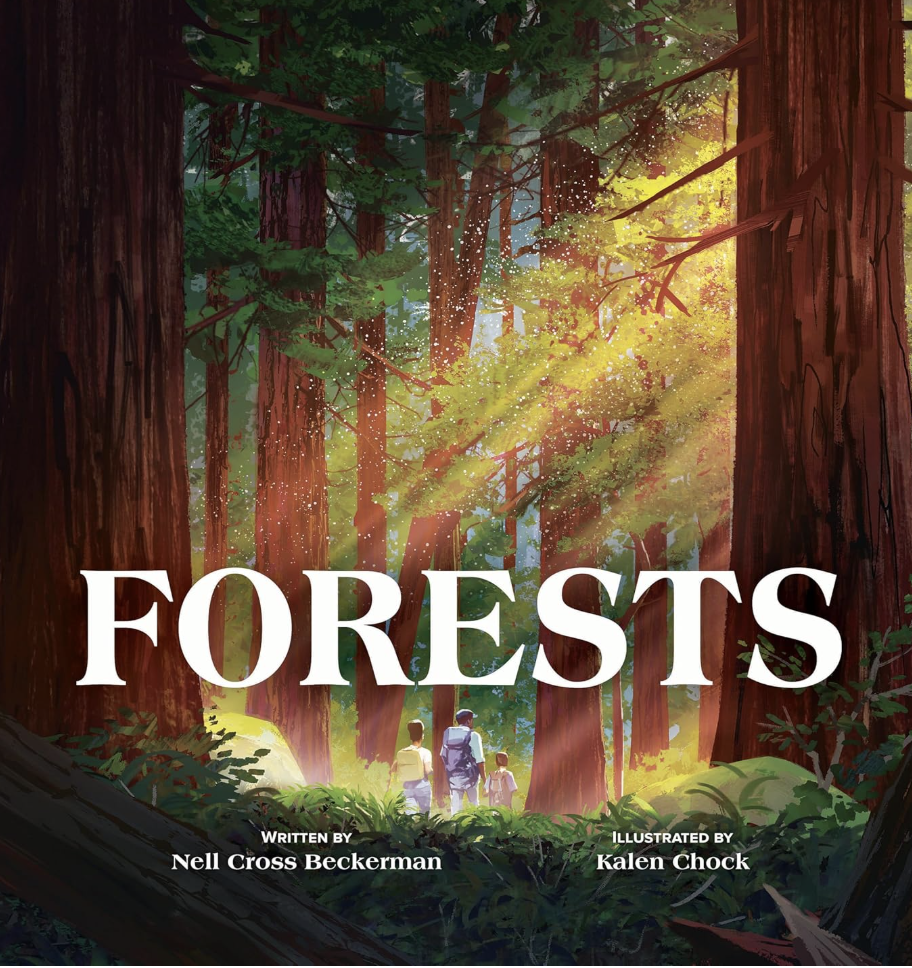
Forests (Adventure Through Nature)
So much to see, to smell, to hear, to taste, to feel. So much to find… in the forest.
Using evocative storytelling, Nell Cross Beckerman leads readers on an exciting adventure through the magic of forests! From kelp forests on the ocean floor to the wonders of the Amazon, Beckerman guides readers through these tree-filled ecosystems using dramatic, poetic language. Nonfiction text on every page allows for a deeper understanding of the topic.
Illustrator Kalen Chock's stunning illustrations have been praised as "atmospheric" and "striking." Readers will be delighted as each spread brings a surprise.
Extensive backmatter includes author's and illustrator's notes, additional information on planting trees, and fun facts about forests!
Mentor Text Moment: Alliteration
One aspect of this text that I love is the use of alliteration. This would be an amazing text in helping to teach sentence fluency and how words can sound like music. As you read the text to kids, have them record the moments where moments of alliteration occur in the book.
Alliteration: the occurrence of the same letter or sound at the beginning of adjacent or closely connected words.
Examples:
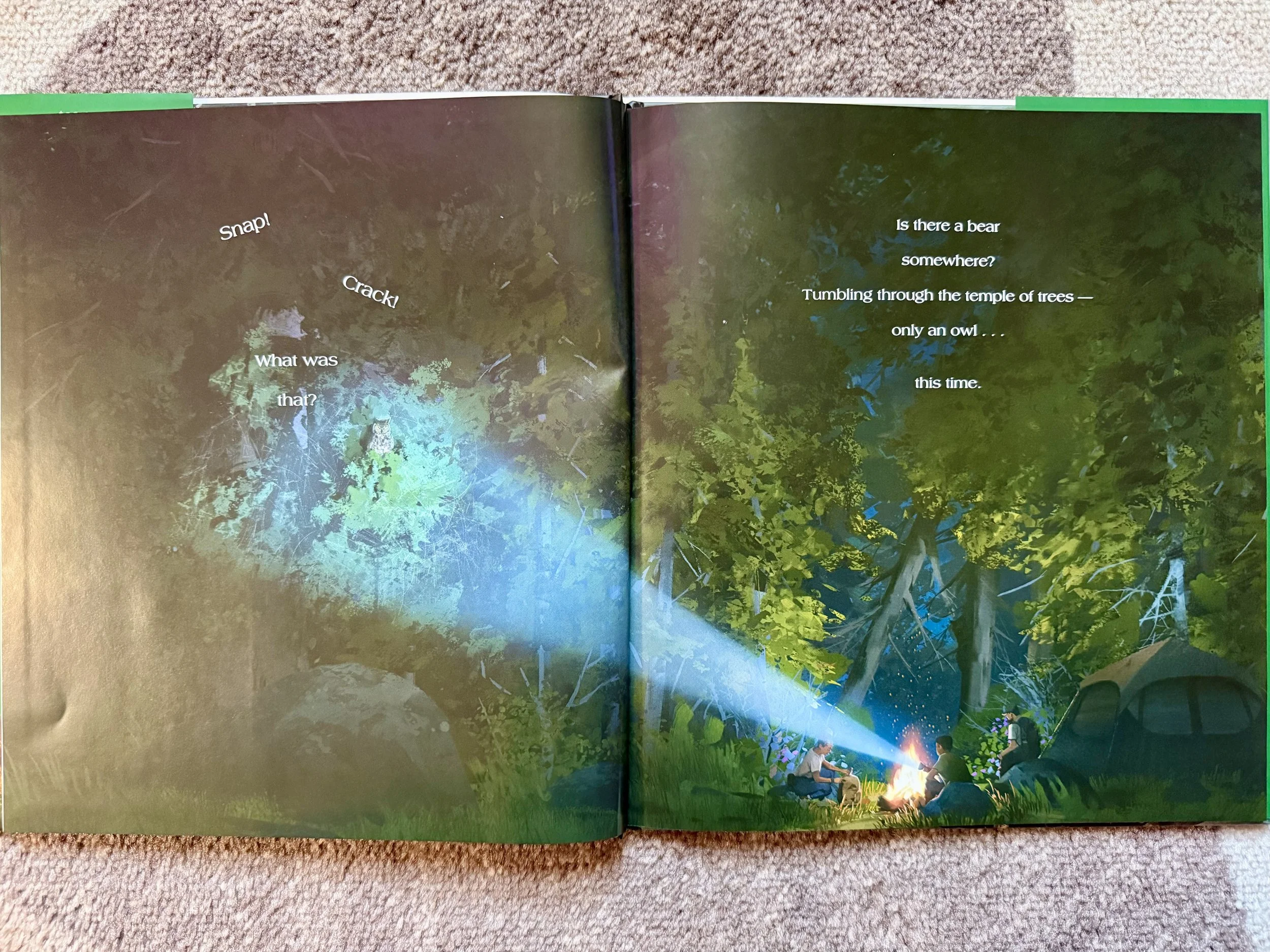
“Tumbling through the temple of trees”
“Munching mouthfuls”
“Bursting blueberries”
“Trees transmit”
“Secret signals”
“Roots roam”
“…like tangled timber telephone lines”
“Branches and bark”
“Fearful forest families flee”
“Burning black bark”
“Stalks stretch for the sun”
“…beautiful bugs”
“Millions of monarchs”
“…the secret society surrounding you”
Journaling Prompt: “A Place with Many Voices”
Open your journal and think about a place you know well. It might be a park, a backyard, a street, a classroom, or a forest trail. Instead of describing it all at once, write a series of short entries or poems from different perspectives.
You might write from:
Different parts of the place (ground, edge, center, above)
Different inhabitants (tree, insect, bird, human, weather)
Different moments in time (morning, night, past, future)
Try to keep each entry brief and observational, as Beckerman does.
Sample openings:
From the ground, I notice…
In winter, this place becomes…
I am one small part of this system, and I…
This practice encourages attentiveness, systems thinking, and respect for complexity.
Why This Works
Forests reminds us that understanding doesn’t come from a single story. Journaling in fragments—short poems, snapshots, shifting perspectives—mirrors how we actually learn about the world. Writing this way builds patience, humility, and ecological awareness, helping writers see themselves as participants rather than observers alone.
👉 Try it today: Write a series of five short entries about one place, each from a different perspective. Title the collection “This Place Is…”
For Educators: Bringing Forests into the Classroom
Preschool Literacy Connections
Young children are natural observers, and Forests builds on that curiosity.
Read a single spread and ask: “What do you notice living here?”
Take a nature walk and have children draw what they see on the ground, in the air, or far away.
Dictate simple observational sentences: “I see a tree.” “I see a bug.”
Focus on vocabulary: forest, tree, leaf, animal, seasons, grow.
Grades K–5
This book beautifully integrates literacy and science.
Create a class chart titled “A Forest Is…” and add student observations.
Have students write short free-verse poems about one element of a forest.
Connect to science units on ecosystems, food webs, or habitats.
Introduce simple craft moves:
Line breaks for emphasis
Strong nouns and verbs instead of long descriptions
Grades 6–8
Middle schoolers can explore perspective and systems thinking.
Begin with the reflection: “What is something we only understand when we look closely?”
Have students write a series of 3–5 poems about one place from different viewpoints.
Discuss how structure shapes meaning—why short poems work well here.
Encourage revision by focusing on precision: Which words do the most work?
Grades 9–12
For older students, Forests opens space for discussions about complexity and responsibility.
Pair with excerpts from Robin Wall Kimmerer or Mary Oliver.
Have students write about a place that has shaped them, using multiple lenses (personal, historical, ecological).
Experiment with segmented or braided structures rather than traditional essays.
Discuss how Beckerman’s restraint and specificity create emotional impact without overt commentary.
Disciplinary Literacy Connections
Forests lends itself naturally across content areas:
Science: Study ecosystems, succession, or climate zones, then write from within the system.
Social Studies: Explore how human communities depend on land and resources over time.
Art: Create layered mixed-media landscapes showing what exists above and below the surface.
Math: Write metaphorical reflections on patterns, cycles, or growth.
Each activity reinforces the idea that writing helps us understand complexity.
Grammar Focus: Sentence-Level Craft
Skill Focus: Simple and Expanded Sentences
Many lines in Forests rely on clear, simple sentence structures that allow imagery to shine.
Examples inspired by the text:
The forest breathes.
Beneath the leaves, life continues.
Teach students to expand sentences thoughtfully:
The forest breathes through mist and birdsong.
Beneath the leaves, invisible roots trade nutrients and time.
This helps writers see grammar as a tool for meaning, not just correctness.
Nature Journaling Connection
Forests is a natural companion to nature journaling. Spend time outdoors observing one small area. Encourage writers to record:
What they see
What they hear
What they wonder
Have them write from two perspectives:
The observer
One element being observed
Add sketches, maps, or labeled diagrams. This practice builds curiosity, care, and ecological literacy.
Additional Journal Prompts for Wellness
Inspired by the reflective tone of Forests:
“What system am I part of right now?”
“Where do I feel most rooted?”
“What supports me that I don’t always notice?”
“What changes when I slow down and observe?”
These prompts support grounding, awareness, and a sense of belonging.
Other Texts from Nell Cross Beckerman
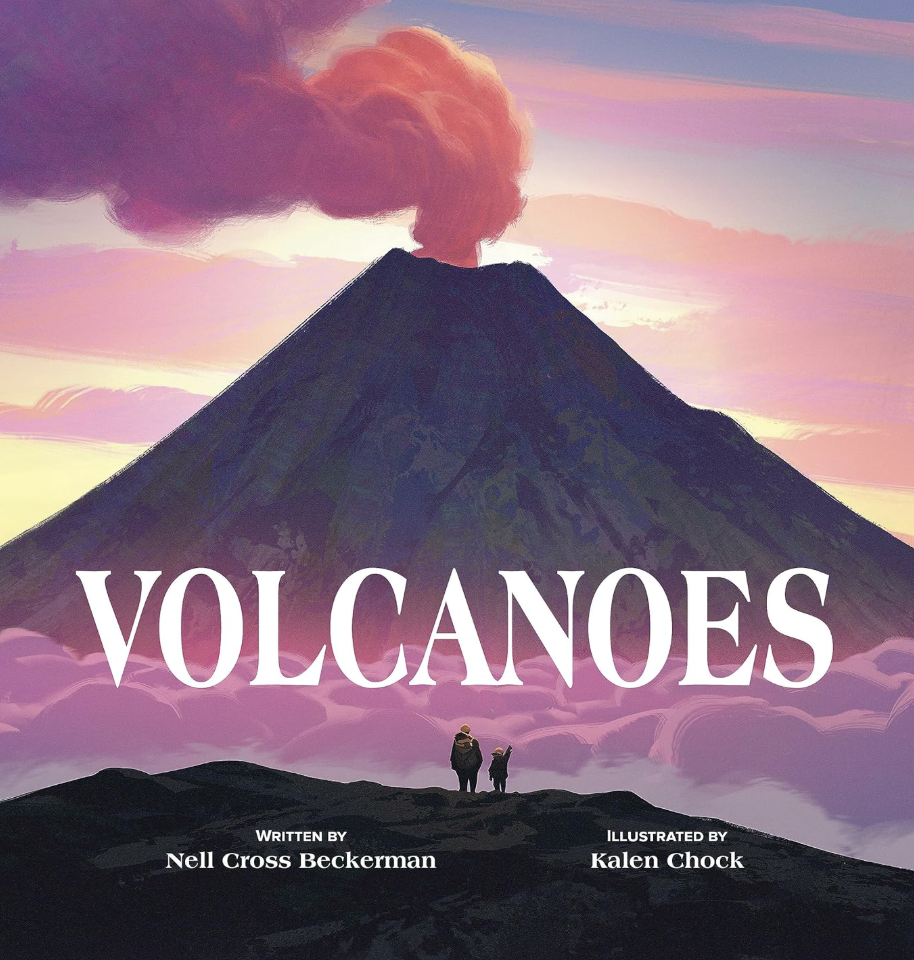
Volcanoes (Adventure Through Nature)
A rumble. A tremble. A grumble. Growing, growling, getting hot. When will it... POP?!
Using evocative storytelling, Nell Cross Beckerman leads children on an adventure through the radioactive wonders that are volcanoes. From deep down on the ocean floor to extraterrestrial volcanoes, Beckerman guides readers with dramatic, poetic language. Nonfiction text on every page allows for deeper understanding of the topic.
Illustrator Kalen Chock's stunning illustrations have been praised as "atmospheric" and "striking," and readers will be delighted as each page brings a new surprise.
Extensive backmatter includes an author's note, additional information on the types of volcanic eruptions and the questions volcanologists are trying to answer, and additional facts.
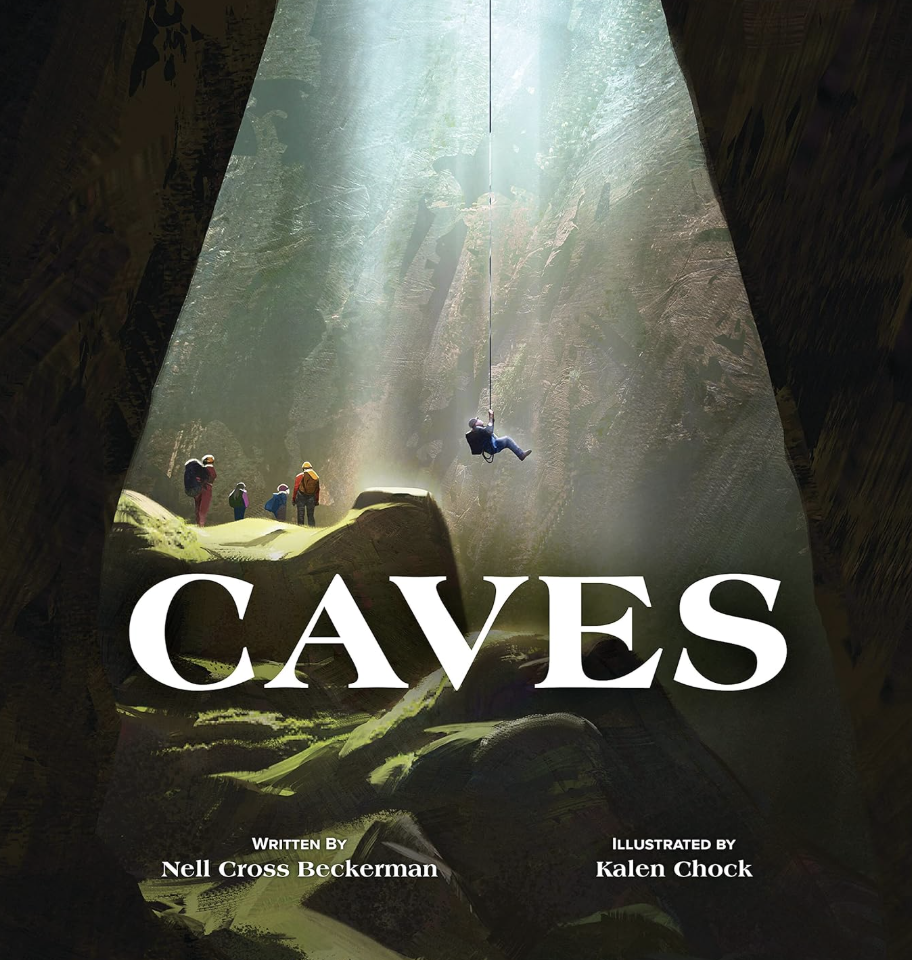
Caves (Adventure Through Nature)
In the shade of the woods is a hill with a hole. Beaconing black. Goosebump chills. Excitement and fear battle. What will win? You want to go in... do you dare?
Using evocative storytelling, Nell Cross Beckerman urges children to explore one of nature's most curious ecosystems. Dramatic, poetic language guides kids through different caves around the world while nonfiction text allows for deeper understanding.
Debut illustrator Kalen Chock's stunning illustrations will astonish readers, as each new page brings another delightful surprise.
Extensive backmatter includes an author's note, best practices for safe cave exploration, and additional information about the caves featured in the book.
Final Thought
Forests reminds us that no place is simple and no story is singular. By observing closely, shifting perspective, and writing in small, intentional pieces, we begin to see how everything connects. Whether used for journaling, classroom instruction, or quiet reflection, this mentor text encourages us to pay attention—to the land, to one another, and to the systems that sustain us. Like a forest itself, meaning grows when we look again and look deeper.