

When You Find the Right Rock: Journaling with Wonder, Belonging, and Connection
Mary Lyn Ray and Felicita Sala’s When You Find the Right Rock is a quiet celebration of attention and belonging—of the small, ordinary things that feel extraordinary when noticed with care. Through poetic language and luminous illustrations, Ray and Sala capture the simple act of finding a rock and transform it into something magical: a story about connection, grounding, and discovery. I think one of my favorite parts of this book when reading it to our little one was pausing on lines like,
“Still, there might be times when rocks don’t seem like much to look at. But then one will surprise you—like when you notice something special about you that surprises you. Just when you were maybe feeling sort of ordinary, there it is.”
For writers and journalers, this book is a meditation on presence. It reminds us that meaning often hides in small moments—holding a smooth rock, feeling its weight, noticing its color or warmth. When You Find the Right Rock invites us to pause, look closer, and find joy in what fits just right in our hands and hearts.
In this post, you can find…
Tips for using this book as a mentor text for writing
Ways to use the book with preschoolers, grades k-5, grades 6-8, grades 9-12, and for disciplinary literacy projects
Journaling prompts linked to the book (including nature journaling)
One grammar exercise to access grammar instruction
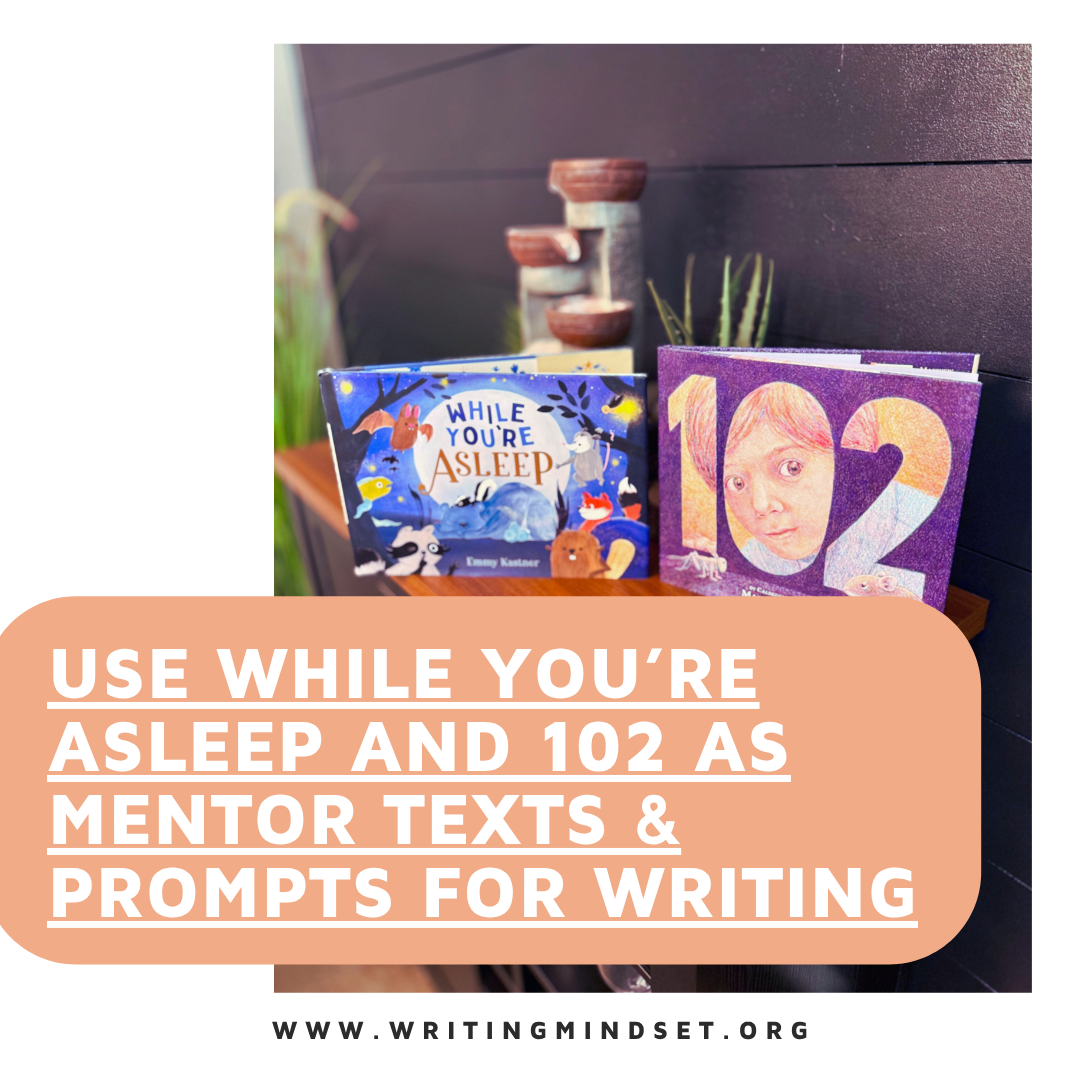
102 & While You’re Asleep: Writing Through Wonder, Possibility, and What We Don’t See
Both texts in this mentor text pairing share something important: they invite readers to think about possibilities and connections between people. Each story is set during nighttime—centered on sleeping, dreaming, and what might be happening beyond our awareness.
102 and While You’re Asleep both draw readers into a space of curiosity, asking us to imagine what exists just beyond what we can immediately see. Young readers will also appreciate that both authors illustrate their own stories, reinforcing the idea that storytelling is both written and visual. (102, notably, was created entirely with ballpoint pen.)
In 102, Matthew Cordell plays with the idea that even when we count and feel certain, there is always more—more to notice, more to discover, and more just outside our awareness. In While You’re Asleep, Emmy Kastner explores what might be happening in the quiet hours of the night, suggesting that the world continues in small, surprising ways while we rest.
Together, these books remind us that the world is full of hidden moments, unseen details, and endless possibility.
For writers, they offer an invitation to explore imagination, curiosity, and the idea that there is always more beneath the surface.
In this post, you can find…
Tips for using this book as a mentor text for writing
Ways to use the book with preschoolers, grades k-5, grades 6-8, grades 9-12, and for disciplinary literacy projects
Journaling prompts linked to the book (including nature journaling)
One grammar exercise to access grammar instruction
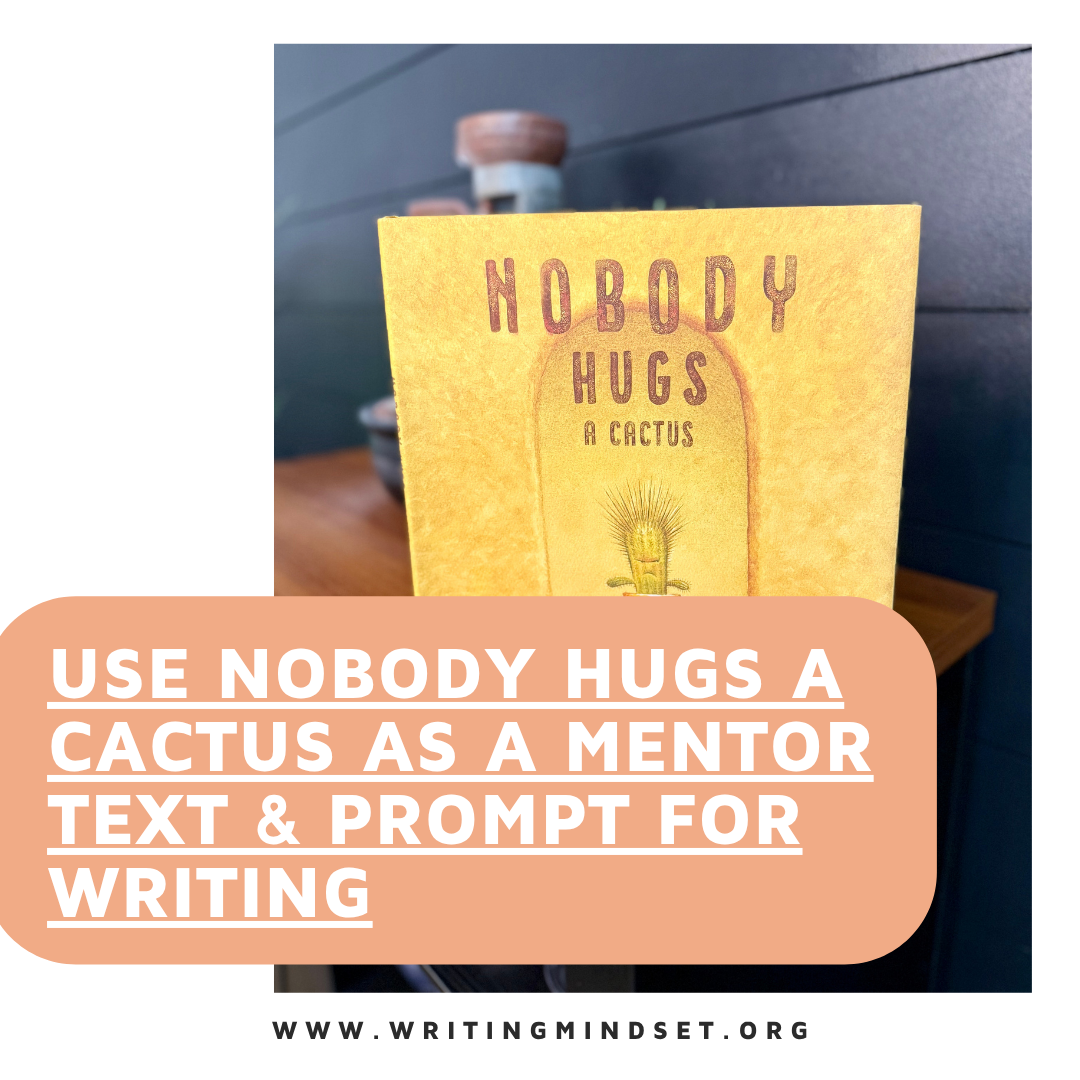
Nobody Hugs a Cactus: Writing About Who We Are and How We Change
Nobody Hugs a Cactus is a humorous and heartfelt story about Hank, a cactus who prefers to be left alone—until loneliness begins to change his perspective. With expressive illustrations and minimal text, Goodrich captures the tension between independence and connection in a way that feels both playful and deeply relatable. Also, the grumpy cactus might be the cutest thing you have seen in a long while.
This story reminds us that sometimes what we think we want (space, quiet, distance) isn’t what we truly need. For writers, Nobody Hugs a Cactus becomes an entry point into exploring character, perspective, and internal change, showing how feelings shift over time and how those shifts shape our actions.
In this post, you can find…
Tips for using this book as a mentor text for writing
Ways to use the book with preschoolers, grades k-5, grades 6-8, grades 9-12, and for disciplinary literacy projects
Journaling prompts linked to the book (including nature journaling)
One grammar exercise to access grammar instruction
and LOTS of pictures of cacti from right here in Arizona
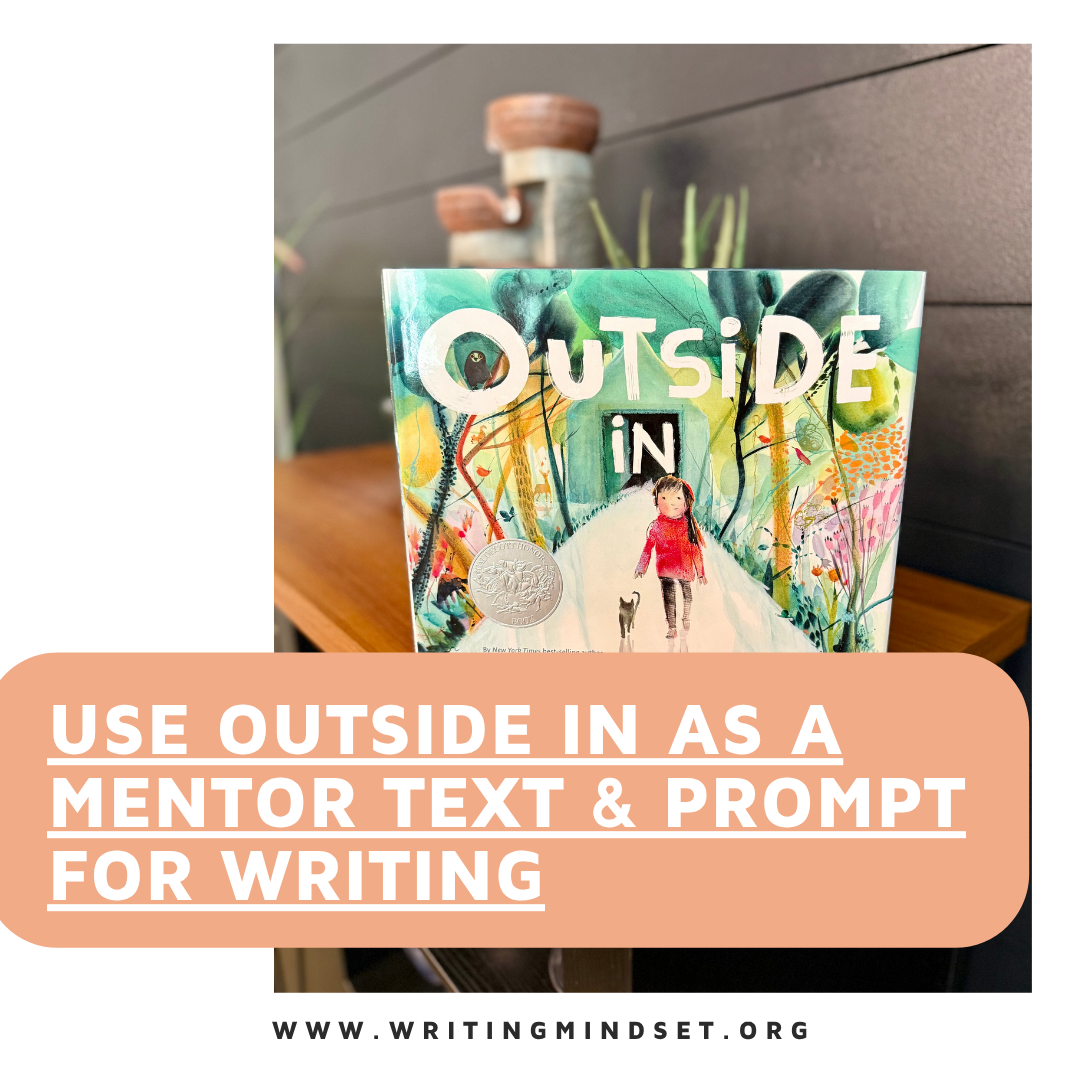
Outside In: Writing Through Boundaries, Connection, and Awareness
Outside In, written by Deborah Underwood and illustrated by Cindy Derby, is a poetic meditation on the quiet, persistent ways the natural world moves through our lives—even when we think we are separated from it. I would argue this is the perfect mentor text for a teacher that feels they cannot get outside in nature or wants to do more outside work with kids, but perhaps cannot because of time, budget, or access to natural spaces.
Through rhythmic, lyrical language and richly textured illustrations, the book shows how “outside” is never truly outside. It seeps in through light, sound, memory, breath, and presence. The world is always reaching us, even in stillness.
For writers, Outside In becomes an invitation to explore observation, contrast, and connection—especially the invisible threads between environments, emotions, and experience.
In this post, you can find…
Tips for using this book as a mentor text for writing
Ways to use the book with preschoolers, grades k-5, grades 6-8, grades 9-12, and for disciplinary literacy projects
Journaling prompts linked to the book (including nature journaling)
One grammar exercise to access grammar instruction
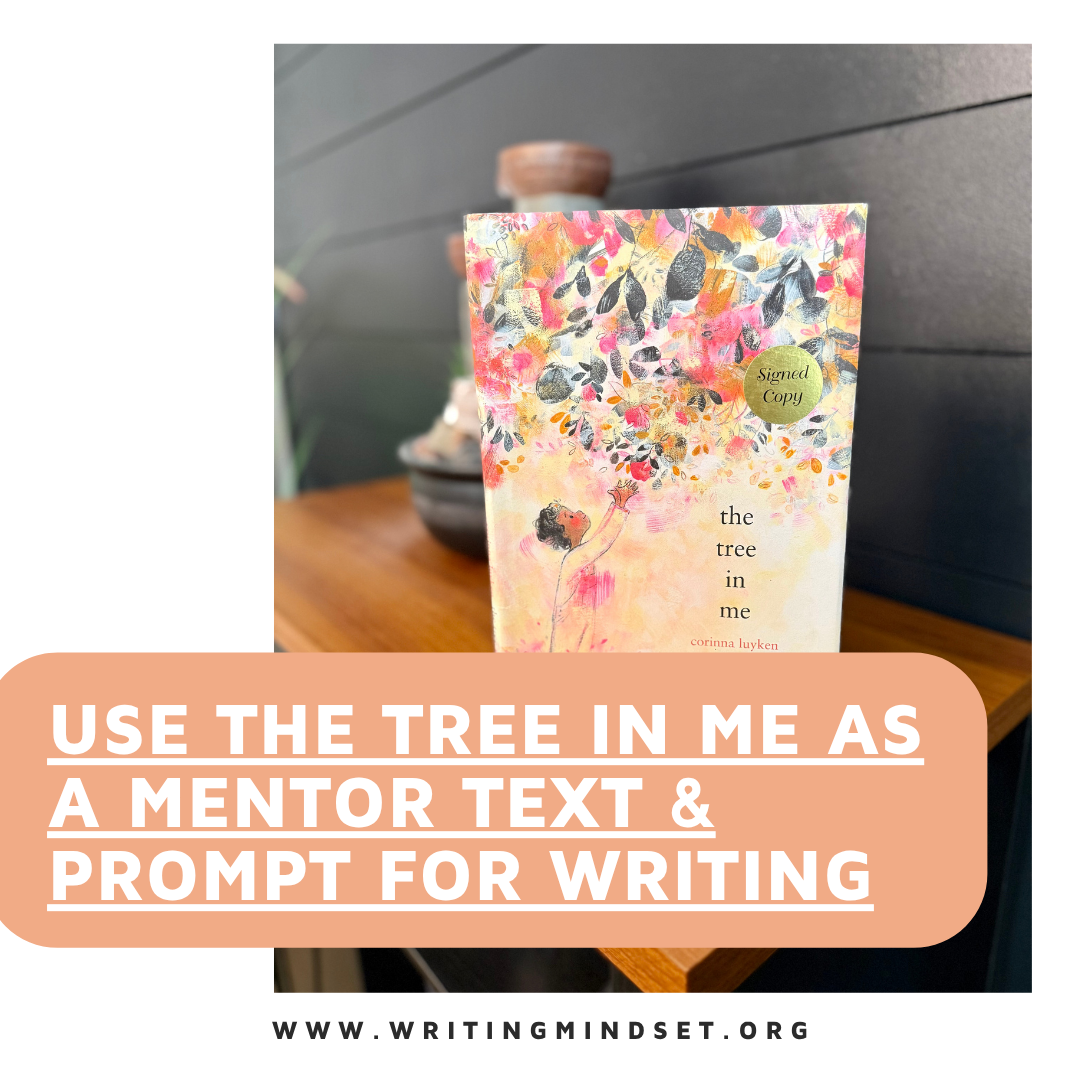
The Tree in Me: Writing with Metaphor and Meaning
The Tree in Me is a quiet, powerful exploration of growth, change, and the deep connections between humans and the natural world. Through lyrical language and expressive illustrations, Luyken invites readers to see themselves reflected in trees—rooted, reaching, bending, and growing.
I especially love the colors throughout this book. The pages evoke a pink sunset, with bright oranges and pinks that seem to jump off the page.
This book reminds us that growth is not always linear. Like trees, we stretch toward the light, weather storms, and change with the seasons. For writers, The Tree in Me becomes an entry point into reflective and metaphorical writing, where personal experience connects to the natural world.
While the book primarily focuses on the trees within us, these ideas can extend to other elements of nature as well. We might consider the storms within us, the flowers that grow inside us, or the gardens we cultivate with our thoughts. In this way, we are deeply connected to the natural world and to one another.
In this post, you can find…
Tips for using this book as a mentor text for writing
Ways to use the book with preschoolers, grades k-5, grades 6-8, grades 9-12, and for disciplinary literacy projects
Journaling prompts linked to the book (including nature journaling)
One grammar exercise to access grammar instruction
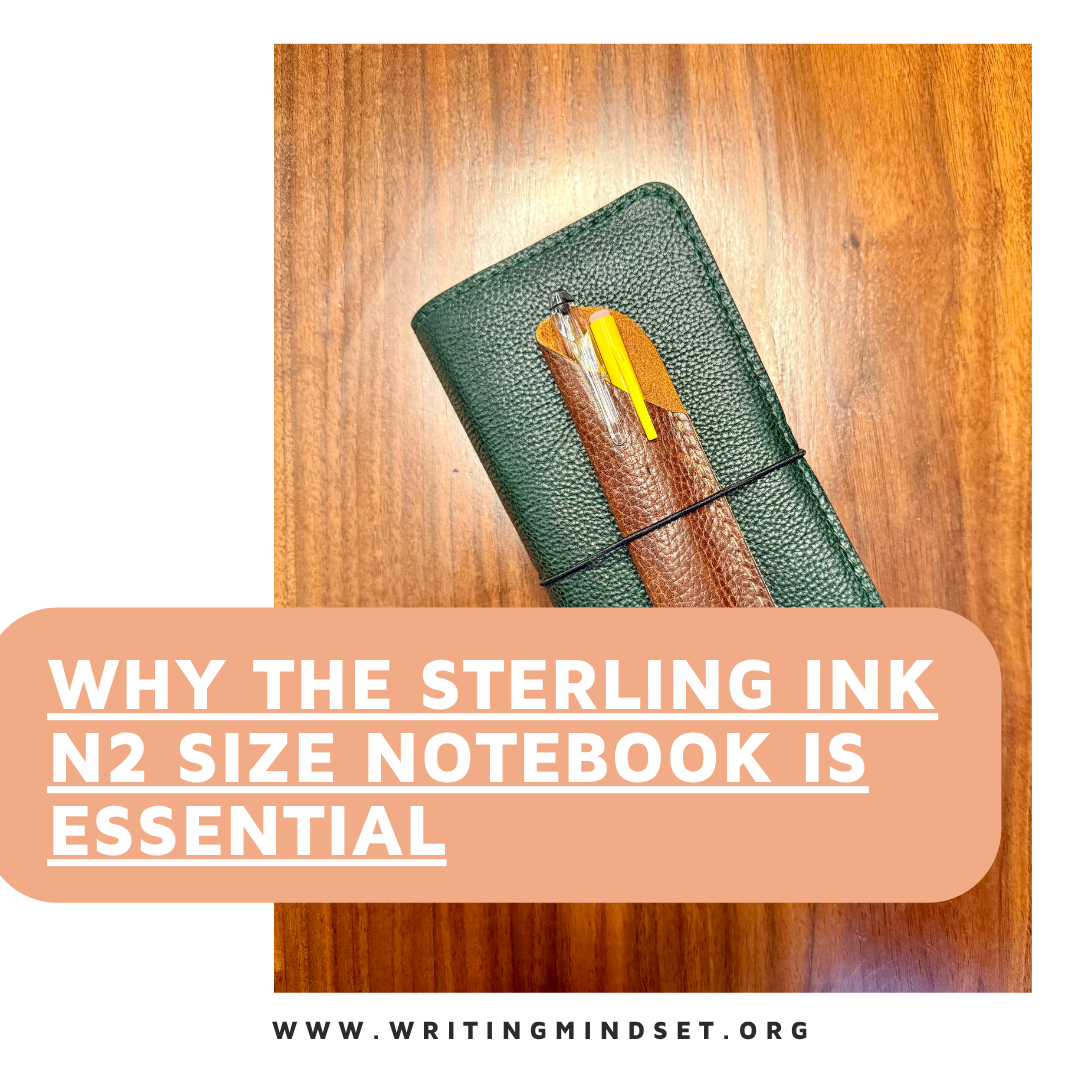
Why the Sterling Ink N2 Size Notebook is Essential in My Journaling System
I spent a couple of months using the Sterling Ink N2 Common Planner because I was searching for something smaller, lighter, and easier to carry. At the time, my Sterling Ink B6 Common Planner was starting to feel bulky—especially once it filled out and became my everything book.
And while the N2 did solve the portability problem, it created a different one:
It limited how I think on paper.
That’s when my system shifted.
Instead of trying to make one planner do everything, I moved to a two-book system:
A B6 Common Planner for structured planning and long-form space
A N2 Weeks Size Notebook (or jotbook/quick notes journal) for daily capture, thinking, and overflow
Now, the two work in tandem—and honestly, it feels much more aligned with how I actually live and write.
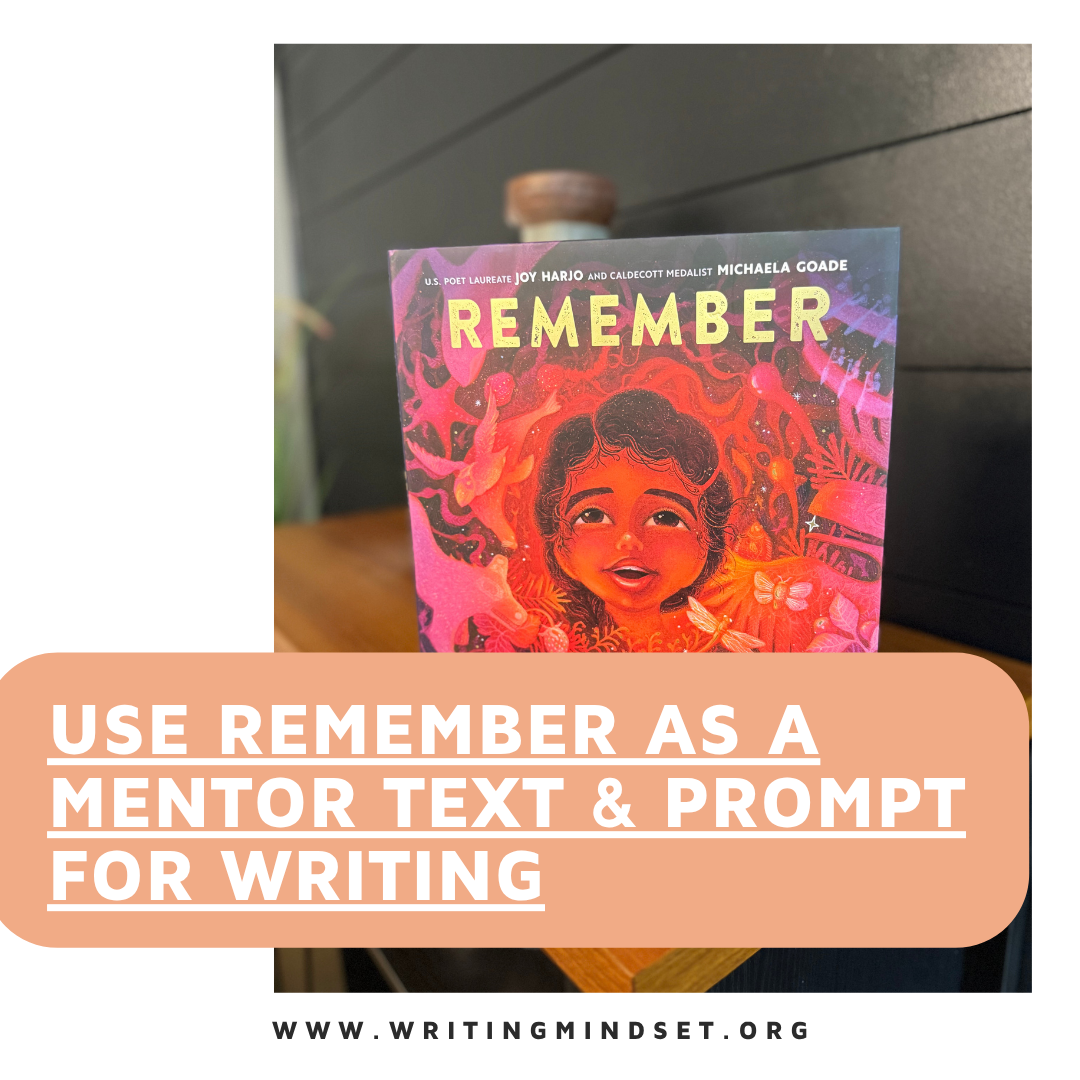
Remember: Writing Through Memory, Identity, and the Natural World
Remember, by Joy Harjo and illustrations by Michaela Goade, is an invitation to reflect on who we are, where we come from, and how we are connected to the world around us. Through Harjo’s poetic repetition and grounding language, readers are reminded that memory is not just something we recall—it is something we carry.
The text moves gently through reminders of connection: to the earth, to ancestors, to breath, to belonging.
This book encourages us to slow down, to listen inward, and to recognize that our stories are part of something larger. For writers, Remember becomes an entry point into reflective writing, where memory, identity, and observation can meet.
In this post, you can find…
Tips for using this book as a mentor text for writing
Ways to use the book with preschoolers, grades k-5, grades 6-8, grades 9-12, and for disciplinary literacy projects
Journaling prompts linked to the book (including nature journaling)
One grammar exercise to access grammar instruction
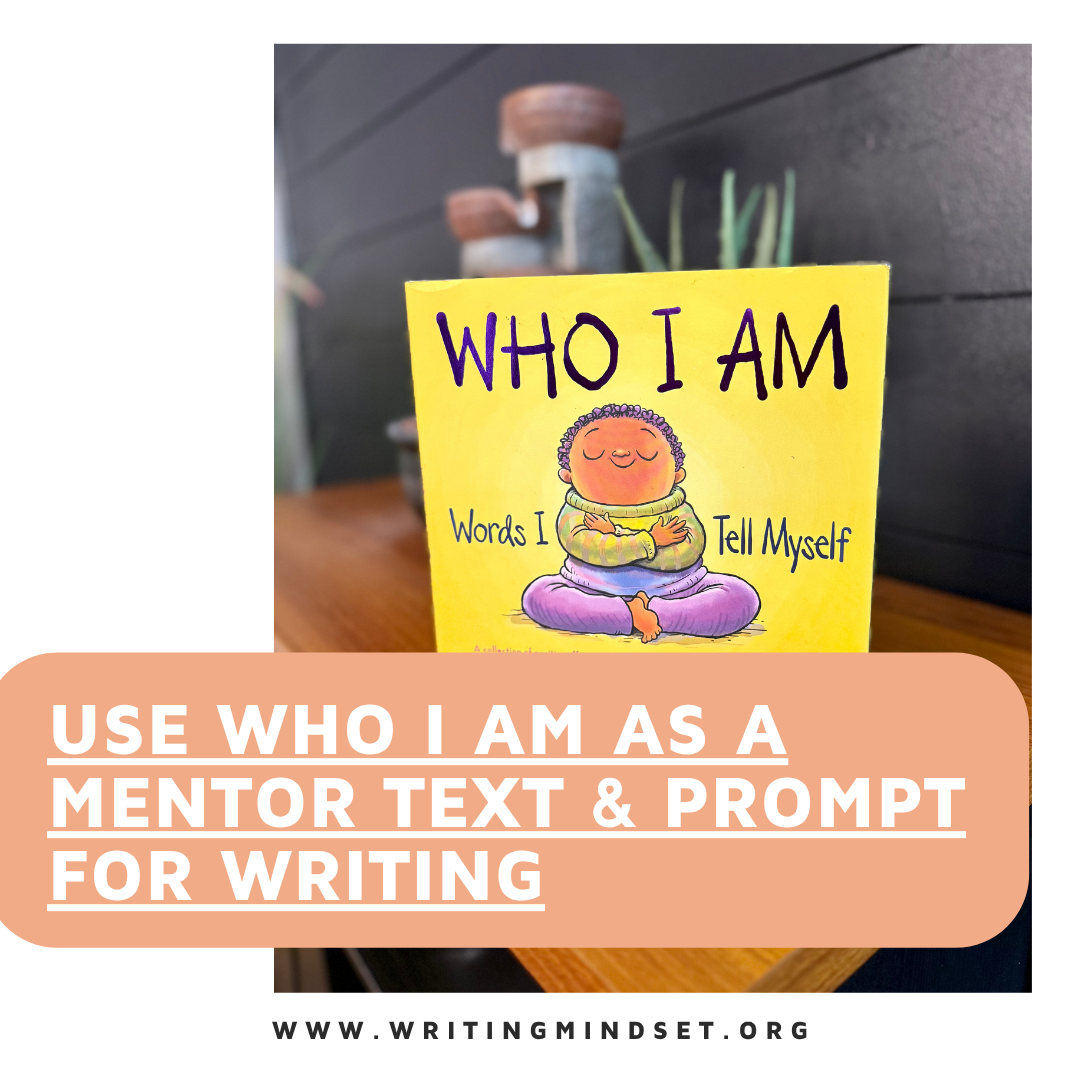
The Daily “Who I Am” Habit: Writing & Speaking Words That Shape Who We Are
I start each day in a very similar way. After getting up and getting ready, I help our preschool-aged daughter prepare for school. As part of our daily hair routine, we always say our affirmations. These words set the tone for each day, and it is a non-negotiable part of our routine.
I want her to know what to say to herself when she doubts she can do something or feels unsure. I want her to be able to remind herself of how great she already is and how wonderful a person she is becoming.
Affirmations are more than flowery phrases—they are the inner dialogue we create for ourselves. Who I Am: Words I Tell Myself, by Susan Verde and illustrated by Peter H. Reynolds, is a powerful exploration of identity and the quiet language we carry within ourselves. Through simple, intentional phrases, the book reminds readers that the words we repeat internally shape how we see ourselves and who we are becoming.
Each line invites reflection:
I am strong.
I am creative.
I am enough.
This text is both grounding and expansive. It creates space for readers to notice their inner voice and begin to shape it with care. This book is not just something to read—it is something to return to. It becomes a mirror for identity and a starting point for daily reflection.
For writers, journalers, students, and caregivers, Who I Am offers an invitation to build a daily practice of affirmation writing—using a notebook or journal as a place to shape identity through language.
In this post, you can find…
Tips for using this book as a mentor text for writing
Ways to use the book with preschoolers, grades k-5, grades 6-8, grades 9-12, and for disciplinary literacy projects
Journaling prompts linked to the book (including nature journaling)
One grammar exercise to access grammar instruction
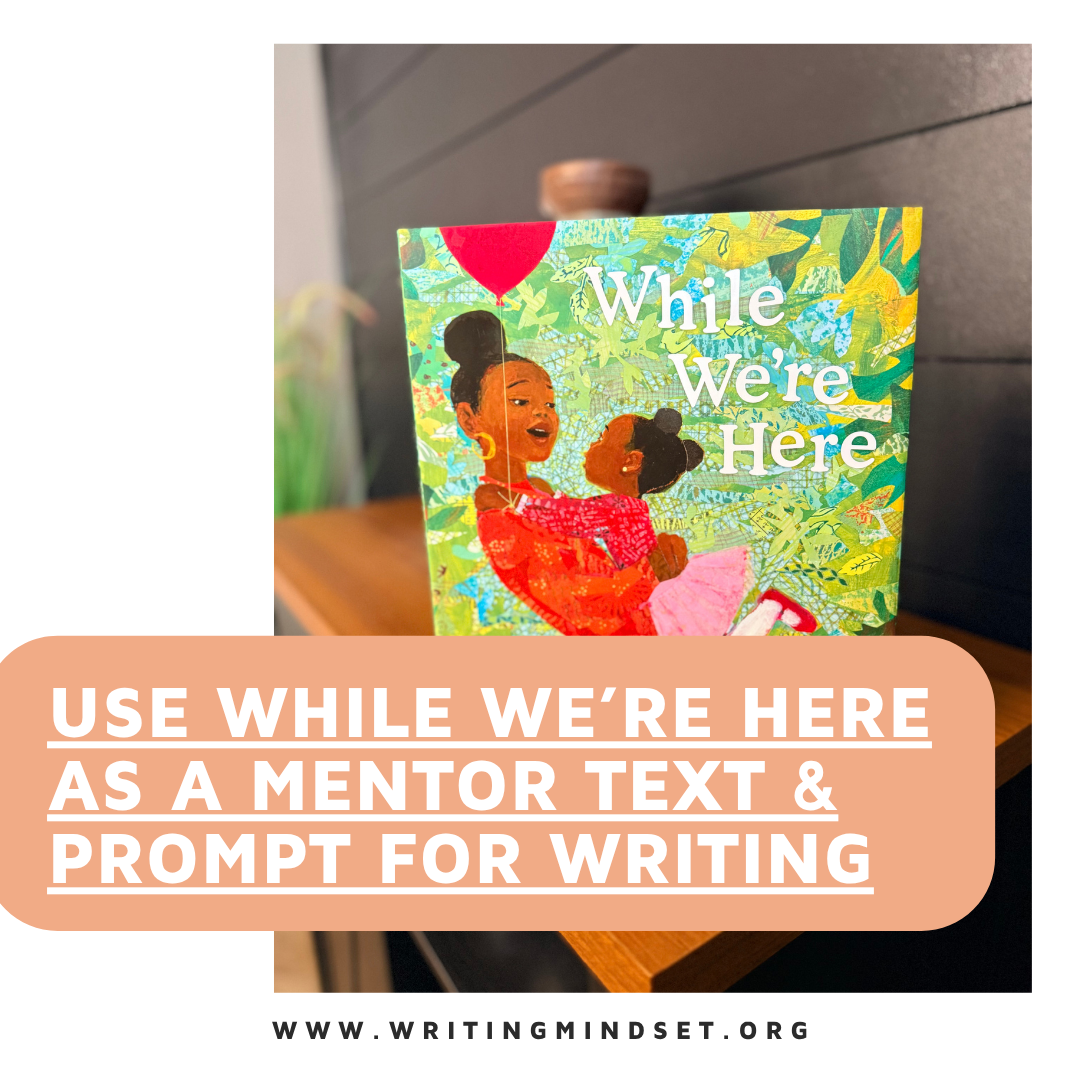
While We’re Here: Writing Through Presence, Connection, and the Shared Moment
While We’re Here by Anne Wynter, with illustrations by Micha Archer, invites readers into a quiet, reflective space centered on a simple but powerful idea: we are here, together, in this moment. Through rhythmic language and layered, collage-style artwork, the book explores what it means to exist alongside others—humans, animals, and the natural world—right now. A striking message for anyone; however, anyone in a caretaker role will truly appreciate the images of slowing down and being with our kids in the everyday moments.
The text moves gently through shared experiences (and yes, disappointment), grounding readers in presence rather than urgency. It doesn’t rush toward a conclusion; instead, it lingers. It asks us to notice where we are, who we are with, and what it means to simply be.
For writers and journalers alike, While We’re Here becomes an invitation to pause, reflect, and write from the present moment—not as something fleeting, but as something worth holding onto.
In this post, you can find…
Tips for using this book as a mentor text for writing
Ways to use the book with preschoolers, grades k-5, grades 6-8, grades 9-12, and for disciplinary literacy projects
Journaling prompts linked to the book (including nature journaling)
One grammar exercise to access grammar instruction
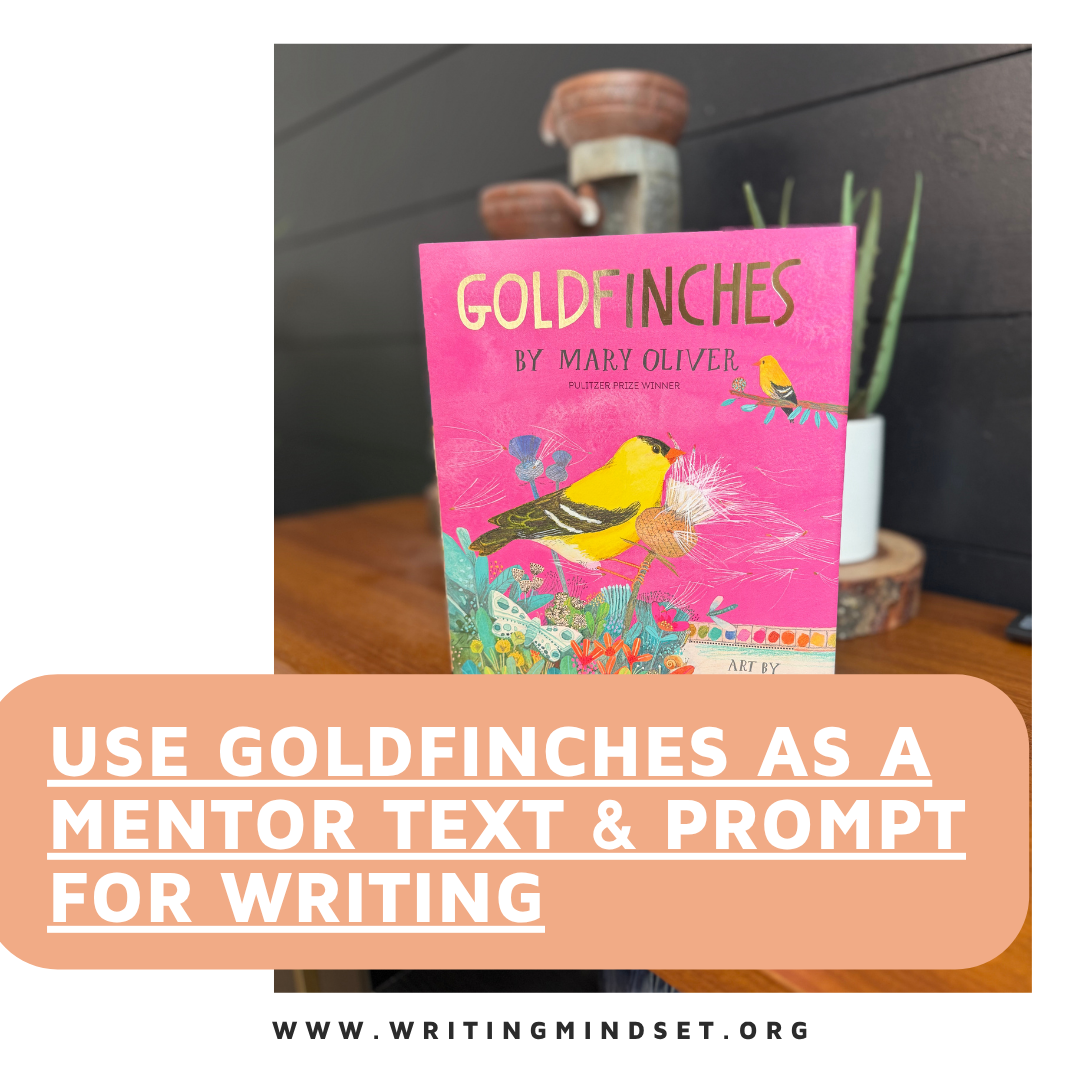
Goldfinches: Journaling Through Joy, Attention, and the Natural World
Goldfinches by Mary Oliver, with beautful artwork by Melissa Sweet, is a celebration of attention, presence, and the quiet joy found in the natural world. Through Oliver’s poetic language and Sweet’s layered, textured illustrations, readers are invited to slow down and notice—truly notice—the brilliance of a small yellow bird moving through its environment.
This picture book, adapted from Oliver’s poem, reminds us that wonder is always available to us, especially when we pause long enough to see it. The goldfinch becomes more than a bird.Iit becomes a symbol of delight, curiosity, and the art of paying attention.
For writers and journalers, Goldfinches offers an invitation to observe closely, to write what we see, and to rediscover beauty in the ordinary.
In this post, you can find…
Tips for using this book as a mentor text for writing
Ways to use the book with preschoolers, grades k-5, grades 6-8, grades 9-12, and for disciplinary literacy projects
Journaling prompts linked to the book (including nature journaling)
One grammar exercise to access grammar instruction
One grammar exercise to access grammar instruction
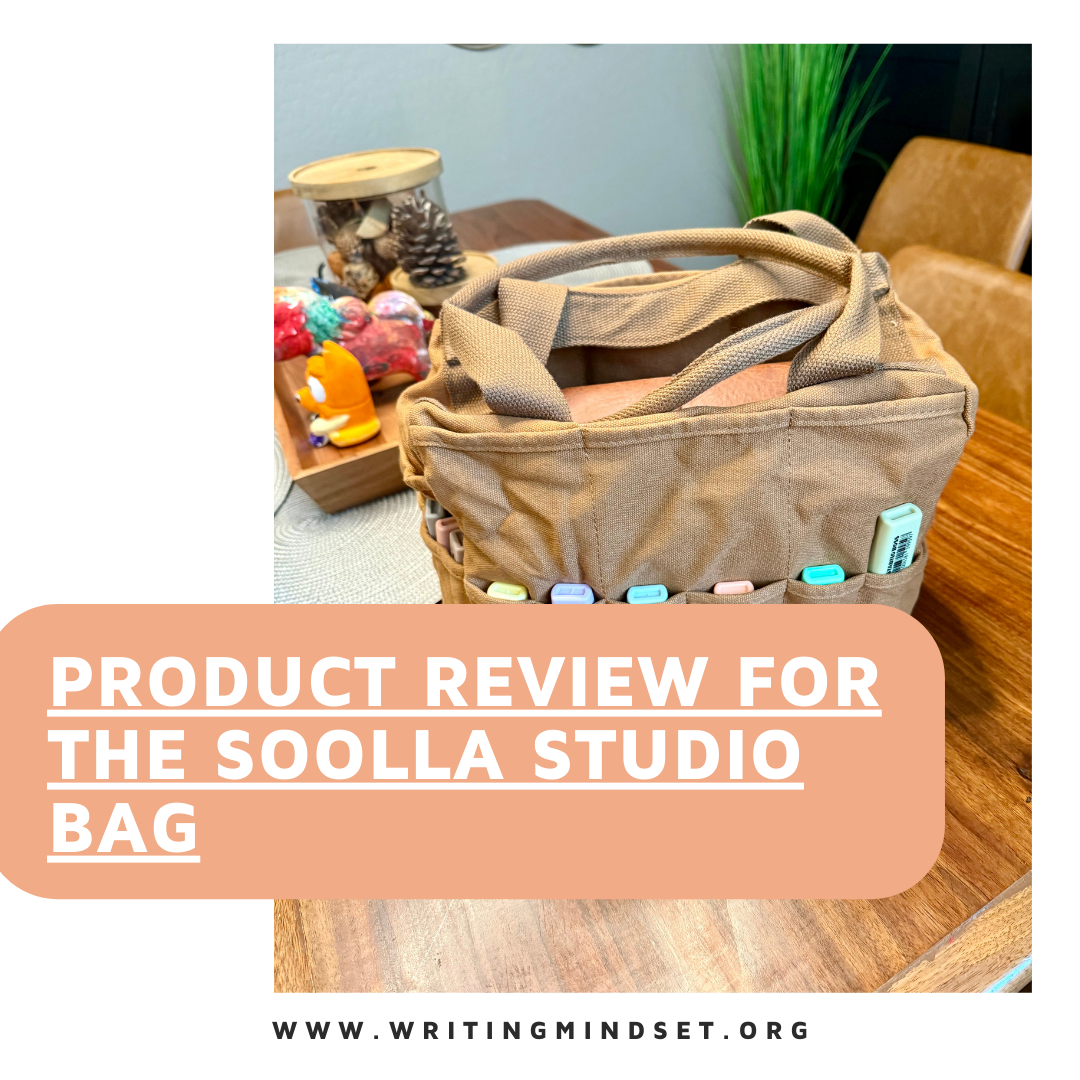
Why the Soolla Studio Bag Makes a Great Journaling Companion
If you’re a seasoned journaler or just getting into bullet journaling, planner setups, or art journaling, having the right bag to store and organize your tools can make all the difference. It becomes even more important when you want to journal and little ones are around. There have been a few times when I’ve left items on the counter or nightstand, only to come back and find pen marks on a leather journal cover or markers left uncapped.
Enter the Soolla Studio Bag — a versatile canvas tote built for creatives that works beautifully as a dedicated journaling carry-all. This post is both a product review and a peek inside my journaling bag. I’ll admit: when I first started seeing these bags everywhere, I didn’t quite understand the hype. Now that I have one, I don’t think I could go without it.
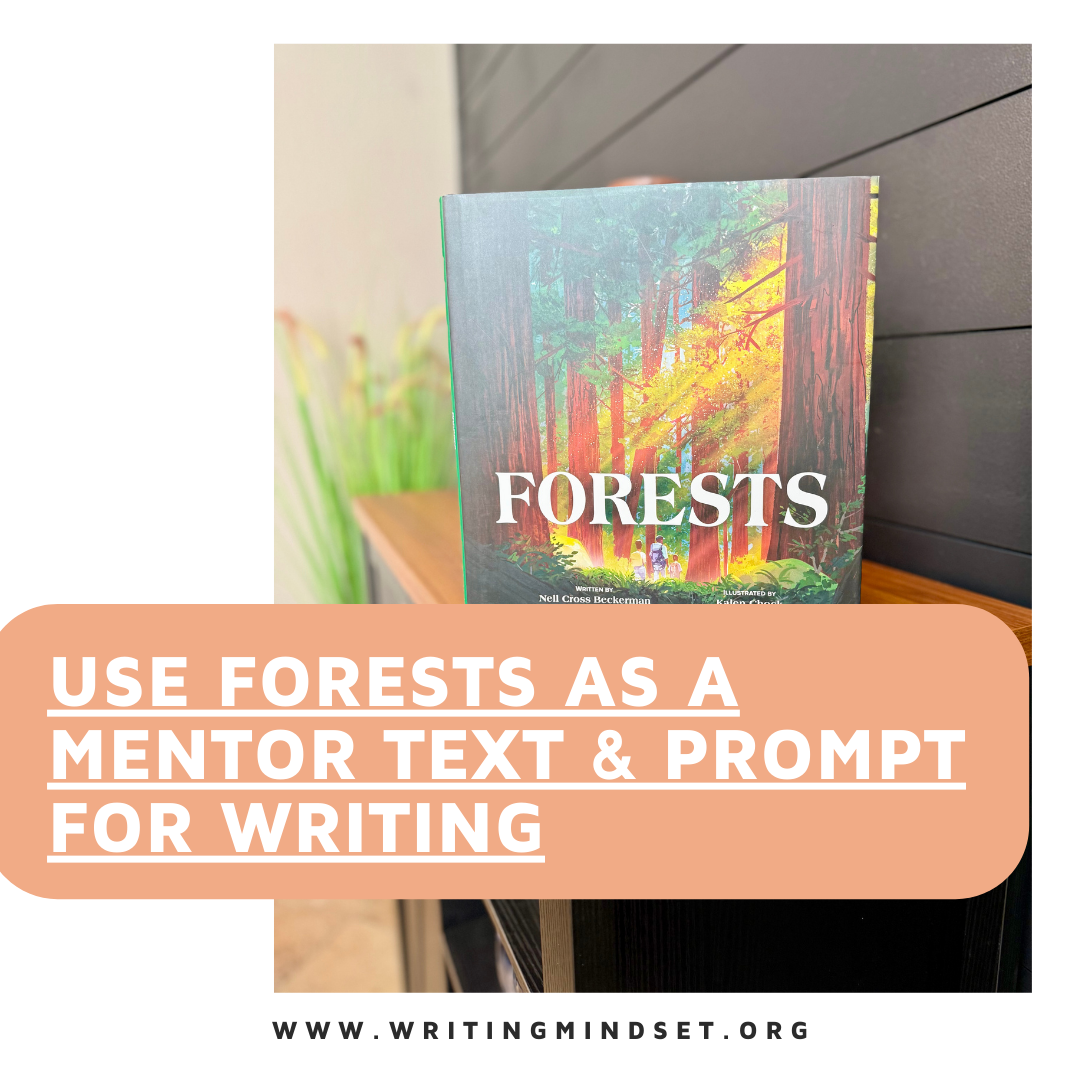
Forests: Journaling Through Interconnection, Perspective, and Place
Nell Cross Beckerman’s Forests, illustrated by Kalen Chock, is a quietly powerful picture book that invites readers to slow down and look closely at the living systems all around them. Some of my favorite go-tos for mentor texts right now are nonfiction picture books that combine informational facts with storytelling in some kind of capacity. Told through a sequence of observational poems, the book explores forests across seasons, climates, and viewpoints—revealing them not as static backdrops, but as dynamic, breathing communities. Each spread highlights how forests are shaped by time, weather, animals, and human interaction, encouraging readers to consider how many stories exist within a single place.
Forests shifts perspective and place again and again. We move from underwater to an urban forest, from the woods to the jungle, from past to present. The result is a deep sense of interconnection: no organism exists alone, and no forest is ever just one thing. For writers, students, and journalers, Forests offers an invitation to observe, reflect, and write with curiosity about the systems we belong to.
In this post, you can find…
Tips for using this book as a mentor text for writing
Ways to use the book with preschoolers, grades k-5, grades 6-8, grades 9-12, and for disciplinary literacy projects
Journaling prompts linked to the book (including nature journaling)
One grammar exercise to access grammar instruction

The History of We: Journaling with Legacy, Connection, and Hope
Nikkolas Smith’s The History of We is a breathtaking picture book that explores humanity’s collective story from our earliest beginnings to the present moment and our shared responsibility to create a more compassionate world. Through his poetic text and powerful illustrations, Smith shows how we are all part of something bigger: a global community bound by love, struggle, and hope.
For writers, The History of We offers a reminder that personal stories connect to a much larger narrative. For journalers, it’s an invitation to reflect on identity, ancestry, and legacy—to ask: Where do I come from? What stories do I carry? What part of the “we” am I helping to write? It is also a picture book with a strong reminder about the danger of single stories. On how we can avoid making generalizations and assumptions in order to really take the time to get to know the multiple points of views that exist within a community, culture, and world around us.
In this post, you can find…
Tips for using this book as a mentor text for writing
Ways to use the book with preschoolers, grades k-5, grades 6-8, grades 9-12, and for disciplinary literacy projects
Journaling prompts linked to the book (including nature journaling)
One grammar exercise to access grammar instruction

So Tortoise Dug: Journaling About Curiosity, Patience, and Discovery
Emmy Kastner’s So Tortoise Dug is a gentle, inspiring story about a tortoise who does what tortoises do best—dig! But as Tortoise digs, she discovers more than dirt and tunnels. She uncovers wonder, quiet courage, and the joy of moving at her own pace. Through Kastner’s warm language and playful illustrations, readers are invited to celebrate curiosity, self-trust, and the slow beauty of discovery. I also really love the nonfiction connections here as we encourage (as both teachers and parents) kids to be aware of the world around them. The book is based off of the real relationship of how two species coexist in the wild: the gopher tortoise and the Florida mouse. In the Author’s Note, Emmy goes on to explain that the book is a “pourquoi tale (“pourquoi” is the french word for “why”) This type of story is a fictional explanation of why something is the way that it is.” I love the idea of writers being able to explain real-world concepts through made up stories.
For writers and journalers alike, So Tortoise Dug reminds us that every creative journey takes time. It encourages us to keep going, keep digging, and find joy in uncovering what’s beneath the surface of our thoughts, stories, and dreams.
In this post, you can find…
Tips for using this book as a mentor text for writing
Ways to use the book with preschoolers, grades k-5, grades 6-8, grades 9-12, and for disciplinary literacy projects
Journaling prompts linked to the book (including nature journaling)
One grammar exercise to access grammar instruction

Dear Acorn (Love, Oak): Journaling Through Connection and Growth
Joyce Sidman and Melissa Sweet’s Dear Acorn (Love, Oak) is a gentle and poetic exploration of connection, patience, and transformation. Told through a series of tender letters from an old oak tree to a newly fallen acorn, this picture book beautifully captures the rhythm of life cycles—growth, waiting, change, and renewal. Through Sidman’s lyrical language and Sweet’s rich mixed-media illustrations, readers are invited to consider how all things in nature are intertwined. On the blog, I have been a huge fan of the illustrations from Melissa Sweet. How to Write a Poem by Kwame Alexander and How to Read a Book by Kwame Alexander are two of the first picture books I recommend to teachers to lead conversations about reading and writing in their classrooms at any level.
For writers and journalers alike, Dear Acorn is an invitation to reflect on relationships, resilience, and the quiet passage of time. It reminds us that even the smallest beginnings hold the promise of something enduring and strong. In Dear Acorn the lost art of letter writing can help writers tap into new ideas and people working in a journal to access different parts of the world around them.
In this post, you can find…
Tips for using this book as a mentor text for writing
Ways to use the book with preschoolers, grades k-5, grades 6-8, grades 9-12, and for disciplinary literacy projects
Journaling prompts linked to the book (including nature journaling)
One grammar exercise to access grammar instruction

Seeing Ourselves in Metaphor: Journaling with A Face is a Poem
Julie Morstad’s picture book A Face is a Poem offers readers a playful and poetic way of seeing something familiar—our own faces. Instead of describing features literally, Morstad leans on metaphor: freckles as sprinkles, flowery faces, faces that you find in the clouds. Each page invites readers to view the ordinary as extraordinary. I actually paused in the bookstore when I saw the cover of this book because the colors and imagery were so beautiful.
For writers, this text is a gift. It reminds us that description doesn’t have to be technical—it can be imaginative, metaphorical, and deeply personal. For journalers, it opens the door to self-reflection and self-expression through the lens of poetry. This post serves as a how-to guide for using this text in multiple ways: in the classroom, at home, or within your own notebook.
In this post, you can find…
Tips for using this book as a mentor text for writing
Ways to use the book with preschoolers, grades k-5, grades 6-8, grades 9-12, and for disciplinary literacy projects
Journaling prompts linked to the book (including nature journaling)
One grammar exercise to access grammar instruction

Chic Sparrow Traveler's Notebook Covers (5 Different Sizes!)
Chic Sparrow is a leather goods company that began as a small Etsy shop creating handcrafted journal covers—and has since grown into a beloved brand known for its beautiful lines of notebook covers and journaling accessories. While there are many notebook cover options on the market across a wide range of price points, Chic Sparrow sits comfortably on the higher end—and for good reason. Their covers are made from genuine, high-quality leather that only becomes more beautiful with time and use. I really love using these because they make journaling feel like a special ritual.
With Chic Sparrow, you can find a cover you love in the exact size and style that fits your journaling needs. Traditional traveler’s notebook covers feature elastic strings that allow you to insert multiple notebooks or planners at once and swap them out as needed—keeping your cover consistent while refreshing what’s inside. You can also choose from other options such as folios that hold the covers of your notebook in pockets. Personally, I’ve collected several of their covers over the years in B5, A5, Traveler’s Notebook, B6, and Weeks sizes, and each one feels like a piece of craftsmanship that grows more personal with every use. This post is a review of the covers themselves, but also a walkthrough of my notebook ecosystem of how I use different notebooks in different sizes to complement my own journaling routine.

Cozy Fall Journaling for Everyone
Everything that reminds me of journaling also reminds me of fall types of things. This may be the best season for grabbing a notebook and getting ready to write.
Hot beverages.
Warm blankets.
Red leaves.
Lit candles.
Crisp mornings.
Sunlight in windows.
Nanowrimo.
Brain-dumping worries.
Moving a little bit slower in life.
Thinking about how the goals for the year are going so far.
Getting ready to think about goals for the new year.
Whether you like the fall for the football, changing leaves, or pumpkin spice lattes, journaling has a place in your everyday routine. This post is an ode to fall journaling. Think of it like a fall journaling toolkit. These are all easy things you can add to your journaling routine to get the most out of fall. Included in this post, you will find an update on my fall journaling routine, cozy fall music links to set the vibe, fun accessories and stickers, and reflective prompts to get you thinking.

How to Set Up a Traveler’s Notebook as Your EDC (Every Day Carry)
There’s something powerful about having one notebook system that goes everywhere with you. When we think about writing, it’s often because we recognize the strong connection between thinking and writing—and the opportunity to get our thoughts down on the page. The real power of a notebook that travels with you throughout your day is that it creates opportunity: a space to jot down thoughts, capture inspiration, plan your day, and reflect on life as it happens.
That’s the beauty of an EDC—or Every Day Carry—especially when it becomes a tool that’s not performative, but genuinely useful.
For me, that everyday notebook is a Traveler’s Notebook in the classic Traveler’s size. It’s compact enough to toss in a bag, flexible enough to meet multiple needs, and—best of all—completely customizable.
If you’re looking to create your own EDC notebook system, here’s a reference guide to help you figure out what works best for you.
You might choose the Traveler’s size, or you might gravitate toward another format. (The running joke is that everyone always ends up back at A5!) What really matters is choosing something you’ll actually use and simplifying your routine so you can consistently get your ideas down on the page.

Listening to the Wild: Using Soundscapes in Nature Journaling
When most people think of nature journaling, they imagine sketching a bird on a branch, noting the colors of a flower, or recording the changing weather. But nature journaling isn't only about what you see. One of the most important—and often overlooked—ways to connect with the natural world is by tuning in to its sounds.
Sounds have a way of pulling us outside. I often find that while I enjoy sound, I struggle to bring it to the forefront of my senses. What I mean by this is that when I’m walking outdoors, I don’t always notice the birdsong, the wind, or even the ambient noises like cars or people talking. I tend to tune them out. Yet I know some sounds can shift how I feel when I’m in nature.
So what happens when we allow sound to come to the forefront of our awareness?
This post is all about tuning into sound using a tool called a soundscape or sound map. I also tried out the Merlin app, which identifies bird calls and displays information about the birds on your screen. Birds seemed like a natural place to start when talking about sounds in relationship to journaling. Why? Because birds are everywhere. You don’t have to have a forest or green area in order to access their music. You can be in the busiest of cities, and you can still work with the sound of birds in your journal. Think of this post as a guide to help you start noticing sounds more intentionally—and using a simple outdoor walk as inspiration for what you might hear.