Goldfinches: Journaling Through Joy, Attention, and the Natural World
Disclosure: Writing Mindset only endorses things that I’ve personally used, something similar, or come highly recommended by trusted peers. If you grab anything I mention using a referral link, I may get a small commission. However, there’s no extra cost to you. If you would like to learn more, please visit the privacy policy and disclosure page.
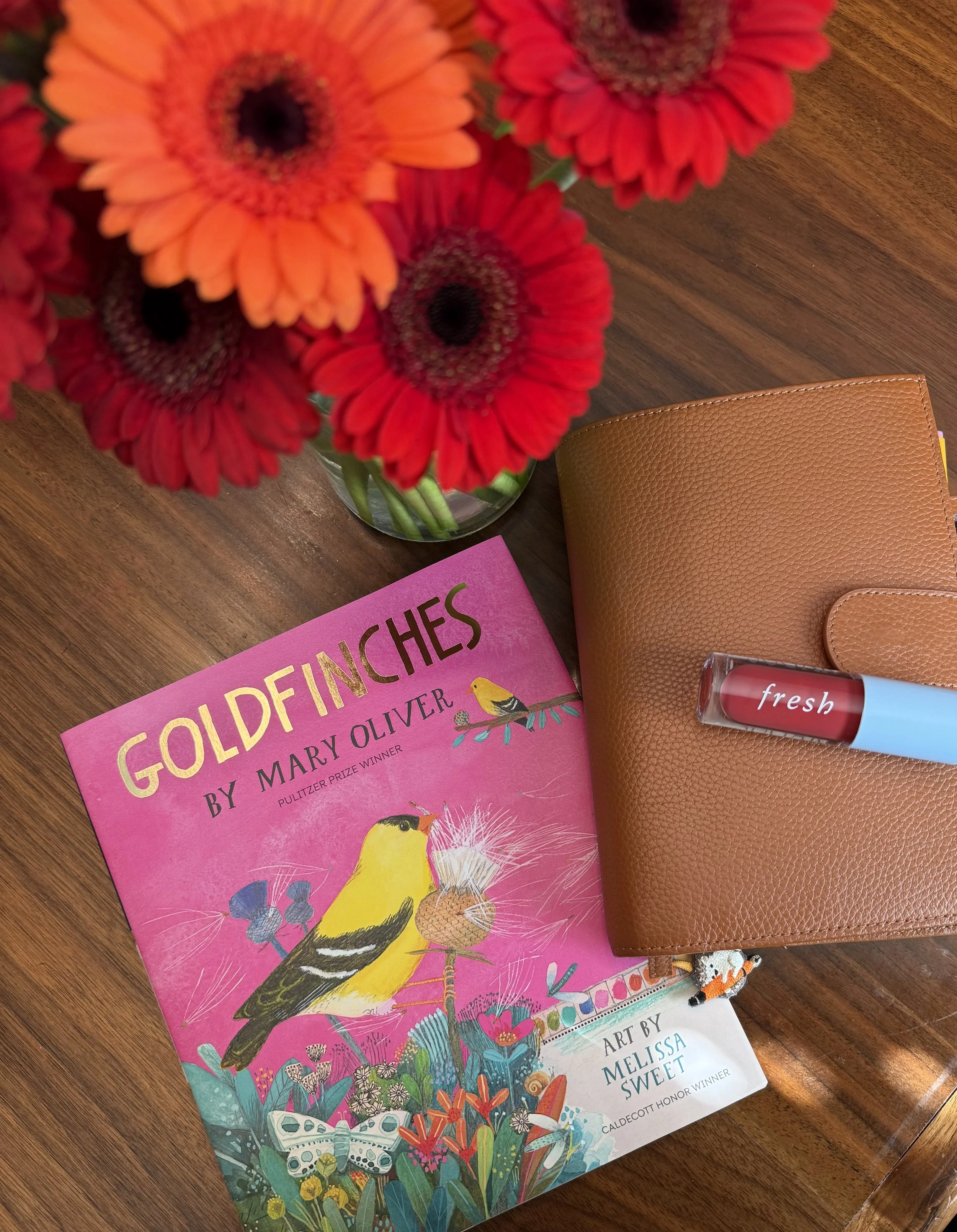
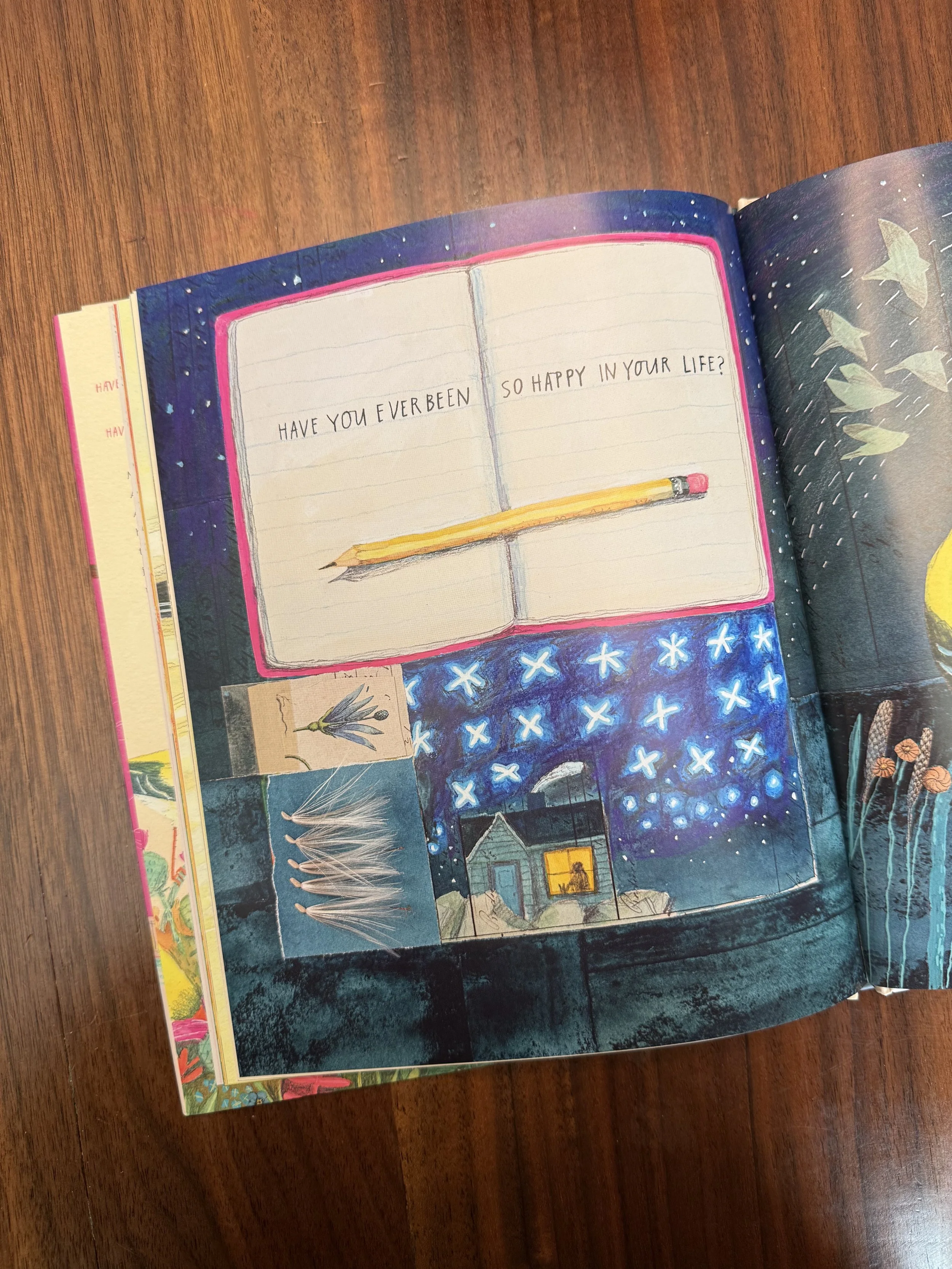
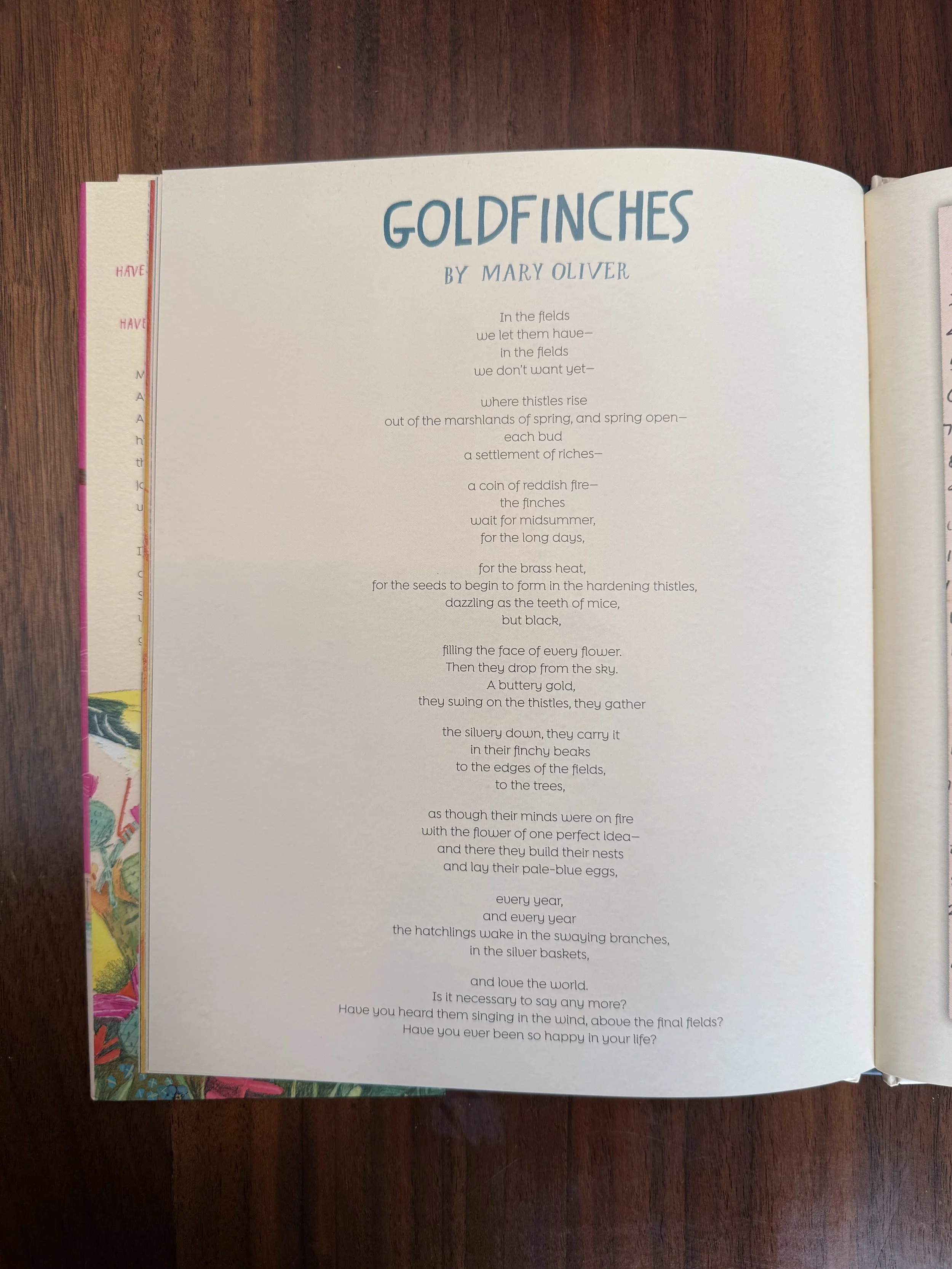
Goldfinches by Mary Oliver, with beautful artwork by Melissa Sweet, is a celebration of attention, presence, and the quiet joy found in the natural world. Through Oliver’s poetic language and Sweet’s layered, textured illustrations, readers are invited to slow down and notice—truly notice—the brilliance of a small yellow bird moving through its environment.
This picture book, adapted from Oliver’s poem, reminds us that wonder is always available to us, especially when we pause long enough to see it. The goldfinch becomes more than a bird.Iit becomes a symbol of delight, curiosity, and the art of paying attention.
For writers and journalers, Goldfinches offers an invitation to observe closely, to write what we see, and to rediscover beauty in the ordinary.
In this post, you can find…
Tips for using this book as a mentor text for writing
Ways to use the book with preschoolers, grades k-5, grades 6-8, grades 9-12, and for disciplinary literacy projects
Journaling prompts linked to the book (including nature journaling)
One grammar exercise to access grammar instruction

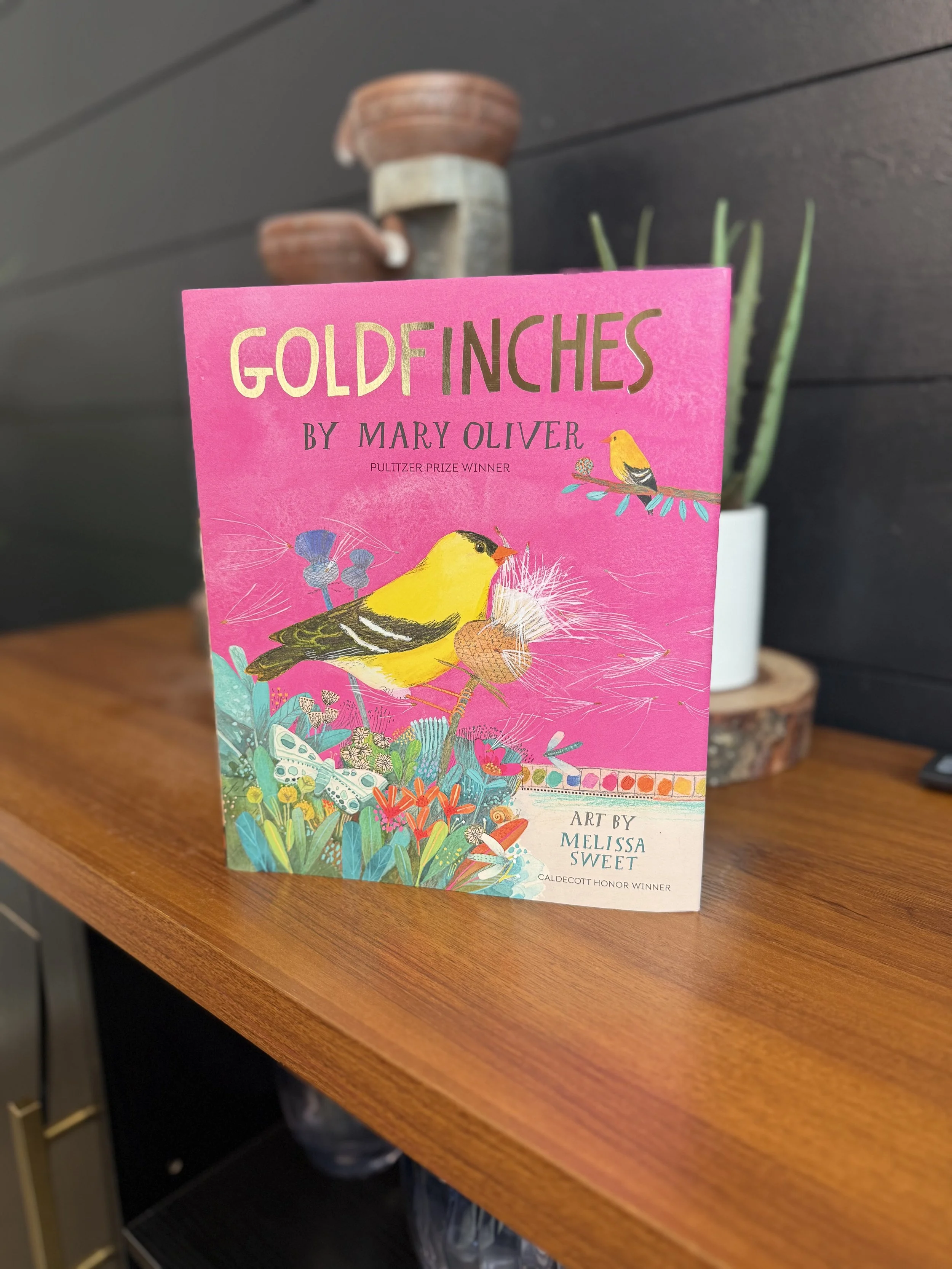
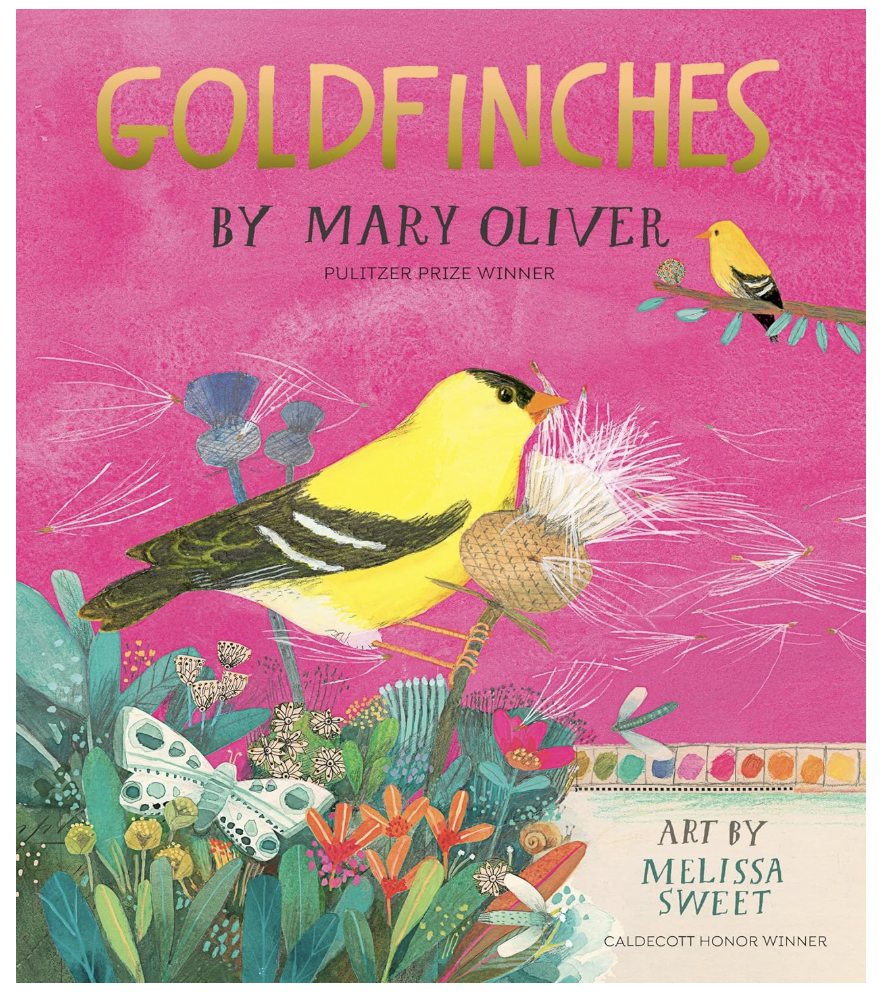
Goldfinches by Mary Oliver and Melissa Sweet
NATIONAL BESTSELLER • Caldecott Honoree Melissa Sweet gorgeously illustrates the work of Pulitzer Prize–winning poet Mary Oliver for the first time in picture book form.
Have you heard them singing in the wind, above the final fields?
Have you ever been so happy in your life?
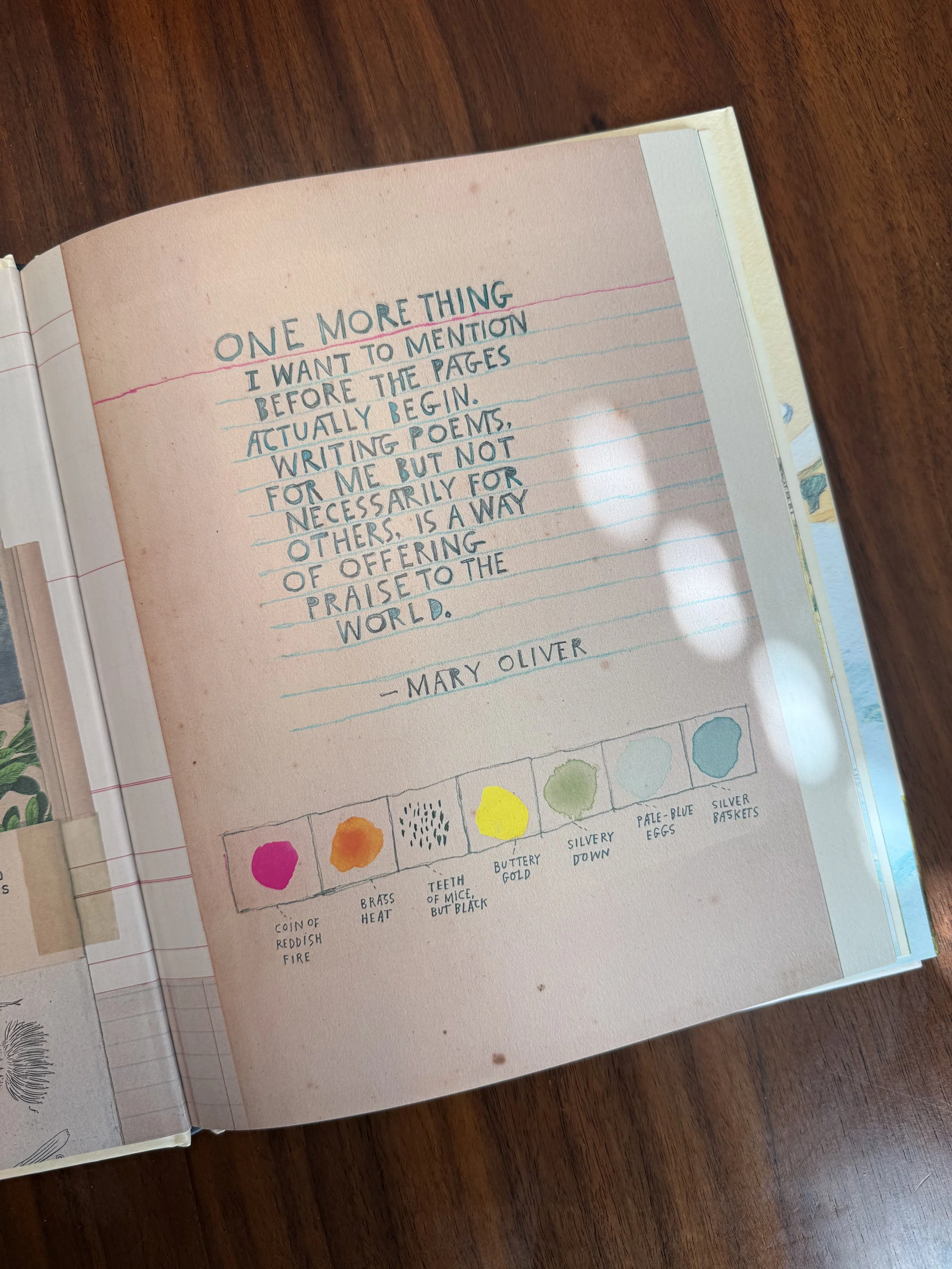
Mary Oliver, winner of the National Book Award and the Pulitzer Prize, is one of America's most beloved poets. Introducing her unforgettable words to children for the very first time, her poem "Goldfinches" joyfully observes the power of the natural world as only Mary Oliver can.
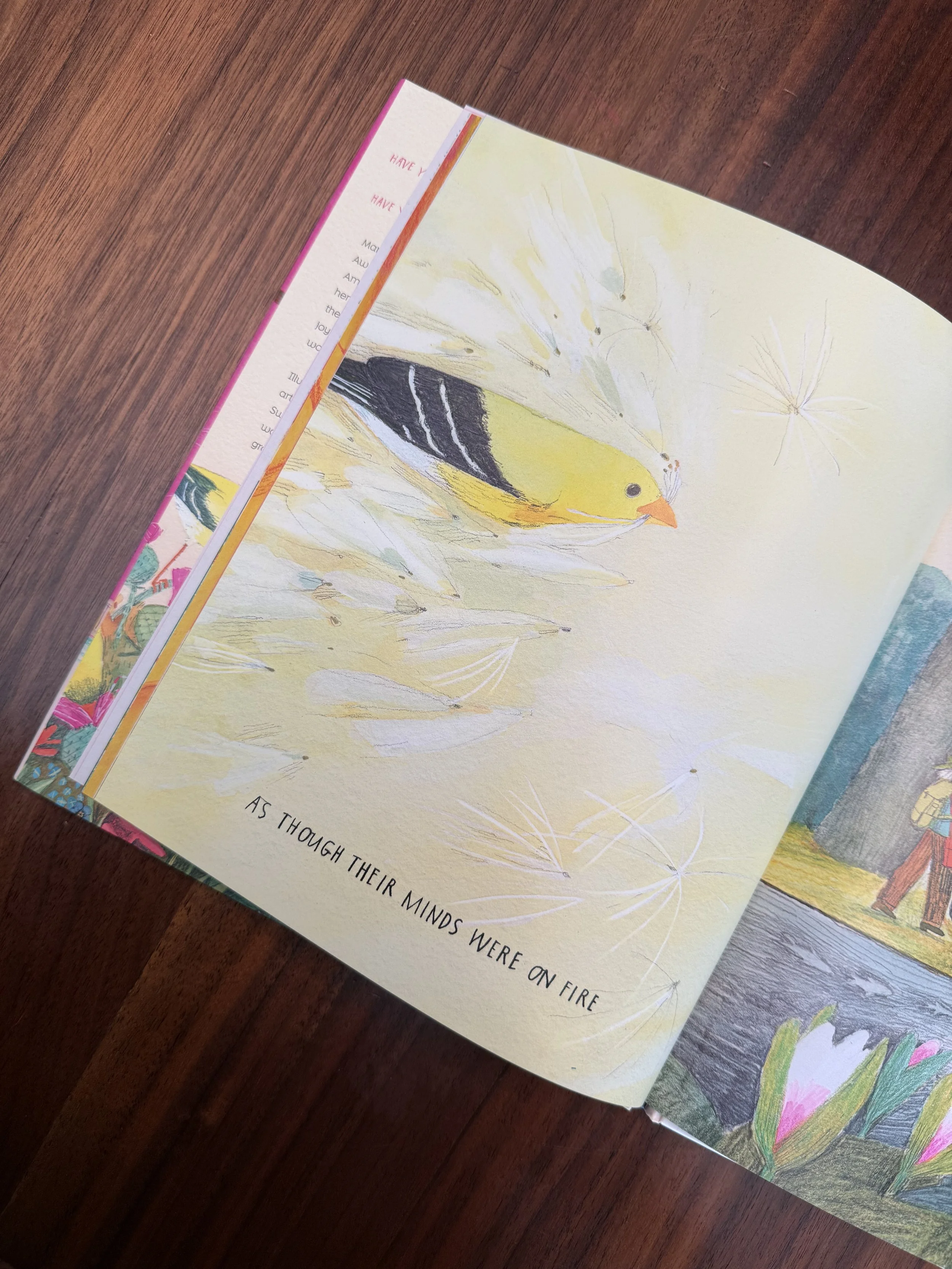
Illuminated by the exquisite mixed-media artwork of Caldecott Honoree Melissa Sweet, Goldfinches fills the reader with wonder for the beauty around them and gratitude for the ability to bear witness to it.
Using Goldfinches as a Mentor Text
This mentor text is ideal for teaching observation, imagery, and poetic noticing. Oliver’s writing models how a single moment—watching a bird—can unfold into something expansive and meaningful.
When reading Goldfinches, notice how she:
Focuses on a single subject – The goldfinch becomes the center of attention, showing how depth can come from simplicity.
Uses vivid sensory imagery – Readers can see, feel, and almost hear the bird in motion.
Captures movement and stillness – The poem balances action with quiet observation.
Finds meaning in noticing – The act of paying attention becomes the message itself.
As a mentor text, Goldfinches teaches us that writing doesn’t always need a big story—sometimes, it begins with simply looking closely.
Journaling Prompt: “I Noticed…”
Open your journal and begin with a simple phrase:
I noticed…
Let your writing grow from there. Choose one small moment, object, or living thing to observe.
You might write:
About a bird outside your window
The way light falls across a table
A child’s laughter
Leaves moving in the wind
Try to mirror Oliver’s style—attentive, curious, and grounded in the present moment.
Sample openings:
I noticed a flash of yellow in the branches…
I noticed how the morning felt softer than yesterday…
I noticed something small, and it stayed with me…
This exercise builds mindfulness, descriptive writing skills, and a deeper connection to everyday life.
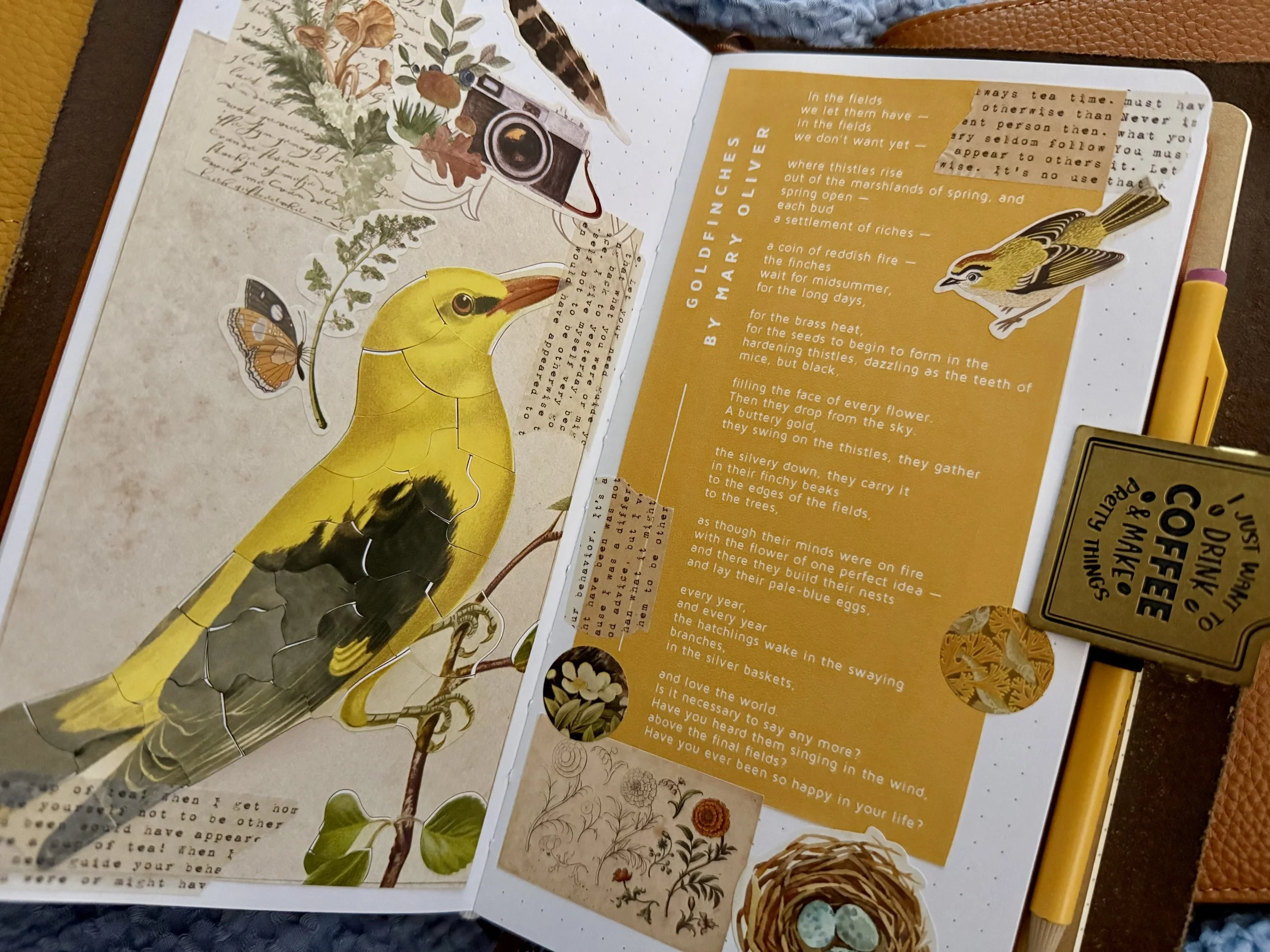
From Stephanie’s notebook, 2026
Why This Works
Observation is the foundation of meaningful writing. When we slow down and pay attention, we begin to see details we might otherwise miss.
Goldfinches reminds us that noticing is a form of care. Writing what we notice helps us:
Strengthen focus
Cultivate gratitude
Develop vivid, sensory language
👉 Try it today: Step outside (or look out a window) and write for five minutes, beginning with “I noticed…”
For Educators: Bringing Goldfinches into the Classroom
Preschool Literacy Connections
Young learners are naturally observant—this book helps give language to what they see.
Invite students to look at birds or nature images and describe what they notice
Have children draw a bird and dictate: “I see a yellow bird…”
Introduce simple vocabulary: feather, wing, sky, perch
Take a short nature walk and practice noticing together
Grades K–5
Practice descriptive writing using the “I noticed…” sentence stem
Create a class book titled “Things We Noticed”
Pair writing with drawing to strengthen observation
Introduce similes: The bird was bright like the sun
Grades 6–8
Begin with a quickwrite: “Something I noticed recently that others might have missed…”
Study how Oliver builds imagery through detail
Write short observational poems or prose paragraphs
Revise writing by adding sensory details (sight, sound, movement)
Grades 9–12
Pair with other works by Mary Oliver such as The Summer Day
Discuss the idea of attention as a form of living well
Write reflective pieces: What am I not noticing in my daily life?
Experiment with poetic structure and line breaks
Disciplinary Literacy Connections
Goldfinches can extend across content areas:
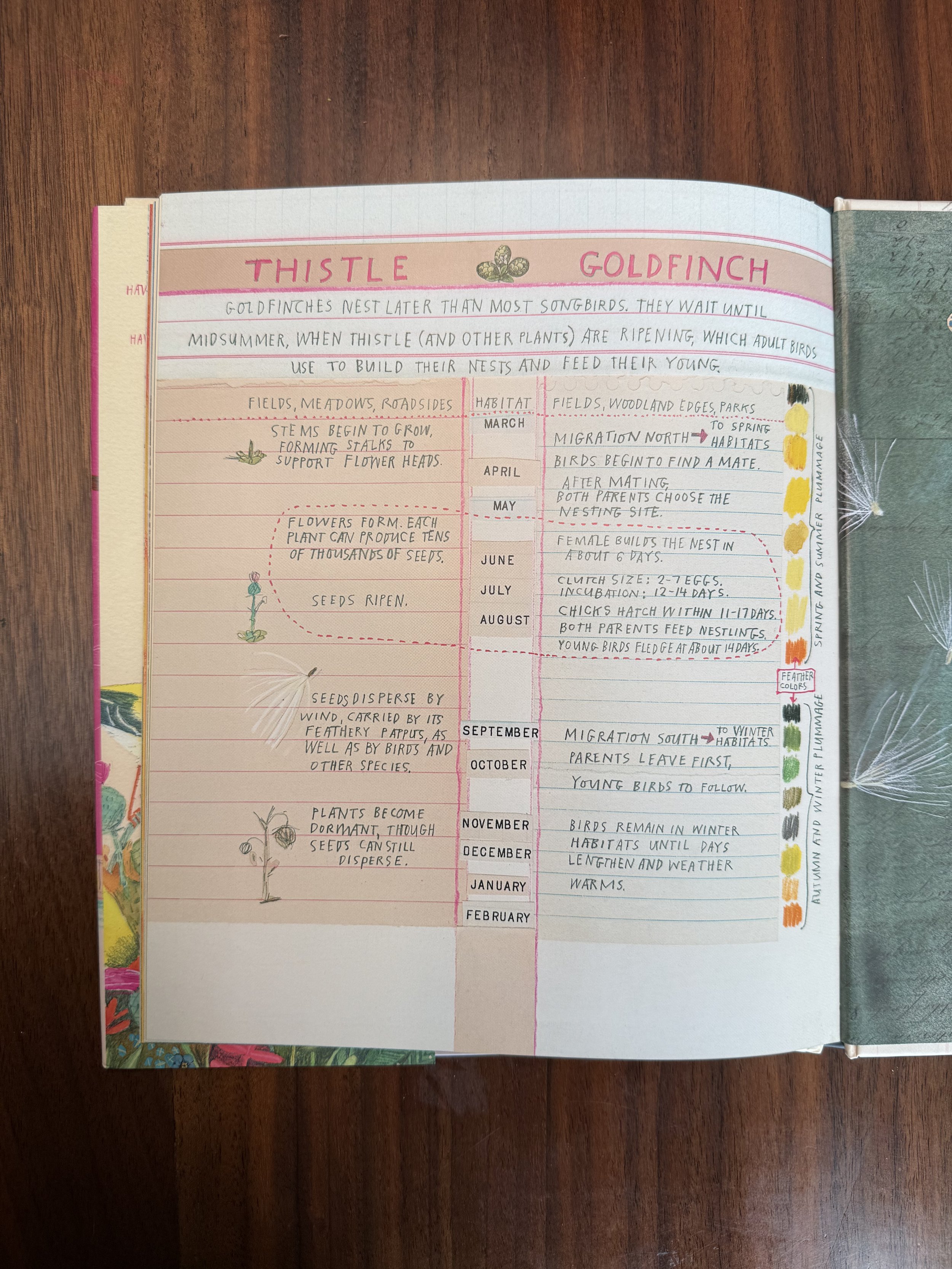
Science: Study bird habitats and behaviors; write observational field notes
Art: Create mixed-media bird collages inspired by Melissa Sweet
Social Studies: Explore how different cultures view birds as symbols
Math: Track and graph bird sightings or patterns over time
Each activity reinforces that writing is a tool for noticing, thinking, and understanding.
Grammar Focus: Sentence-Level Craft
Skill Focus: Expanding Simple Sentences with Detail
Oliver often begins with a simple idea and expands it with descriptive phrases.
The bird flew. → The small yellow bird flickered through the tall grass.
I saw it. → I saw it, bright as sunlight, moving quickly between shadows.
Have students:
Start with a basic sentence
Add details using adjectives, prepositional phrases, or similes
This builds fluency and strengthens descriptive clarity.
Nature Journaling Connection
Goldfinches is a natural fit for journaling outdoors or near a window.
Sit quietly and observe one small area
Write from two perspectives:
The observer (I noticed…)
The observed (I am the bird…)
Add sketches, color, or collage elements inspired by Melissa Sweet’s style.
This practice nurtures curiosity, calm, and creative expression.
Additional Journal Prompts for Wellness
What have I been too busy to notice lately?
Where do I find small moments of joy in my day?
What does it feel like to slow down and pay attention?
What in my life feels bright and alive right now?
These prompts encourage mindfulness and emotional grounding.
Final Thought
Goldfinches reminds us that joy often lives in small, fleeting moments—a flash of yellow, a movement in the grass, a pause in the day. Through observation and writing, we learn to hold onto those moments just a little longer.
When we teach students (and ourselves) to notice, we are really teaching them how to live more fully.