
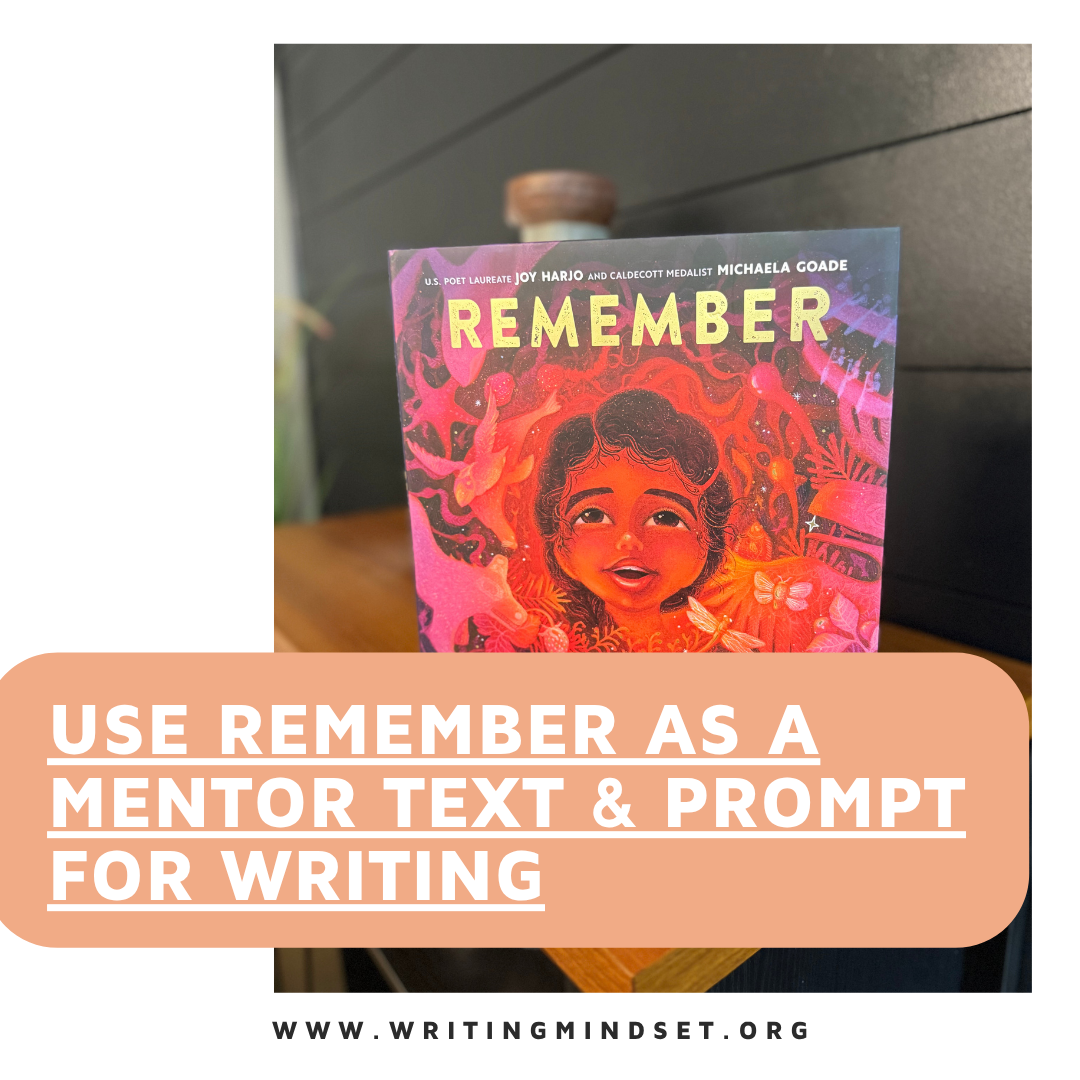
Remember: Writing Through Memory, Identity, and the Natural World
Remember, by Joy Harjo and illustrations by Michaela Goade, is an invitation to reflect on who we are, where we come from, and how we are connected to the world around us. Through Harjo’s poetic repetition and grounding language, readers are reminded that memory is not just something we recall—it is something we carry.
The text moves gently through reminders of connection: to the earth, to ancestors, to breath, to belonging.
This book encourages us to slow down, to listen inward, and to recognize that our stories are part of something larger. For writers, Remember becomes an entry point into reflective writing, where memory, identity, and observation can meet.
In this post, you can find…
Tips for using this book as a mentor text for writing
Ways to use the book with preschoolers, grades k-5, grades 6-8, grades 9-12, and for disciplinary literacy projects
Journaling prompts linked to the book (including nature journaling)
One grammar exercise to access grammar instruction
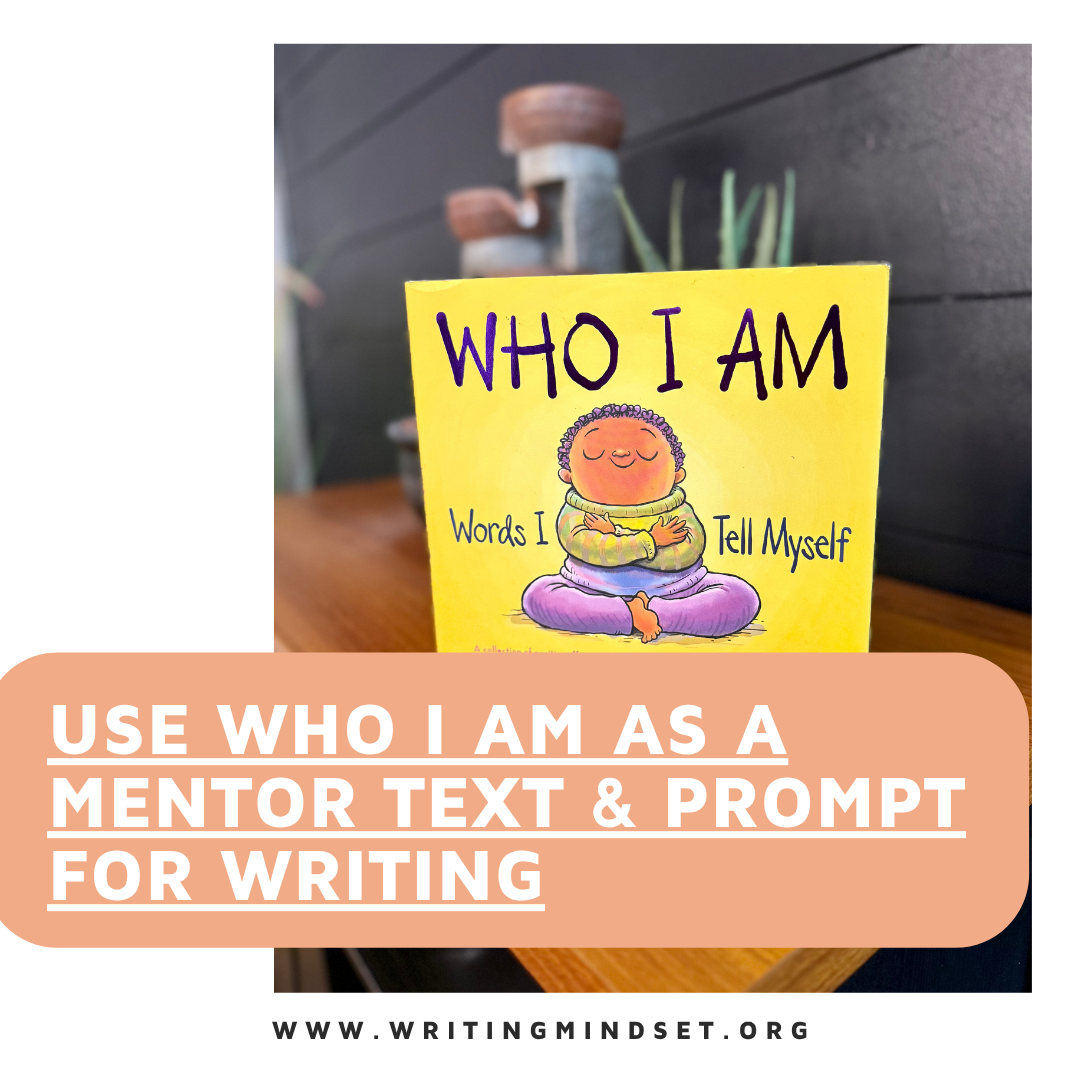
The Daily “Who I Am” Habit: Writing & Speaking Words That Shape Who We Are
I start each day in a very similar way. After getting up and getting ready, I help our preschool-aged daughter prepare for school. As part of our daily hair routine, we always say our affirmations. These words set the tone for each day, and it is a non-negotiable part of our routine.
I want her to know what to say to herself when she doubts she can do something or feels unsure. I want her to be able to remind herself of how great she already is and how wonderful a person she is becoming.
Affirmations are more than flowery phrases—they are the inner dialogue we create for ourselves. Who I Am: Words I Tell Myself, by Susan Verde and illustrated by Peter H. Reynolds, is a powerful exploration of identity and the quiet language we carry within ourselves. Through simple, intentional phrases, the book reminds readers that the words we repeat internally shape how we see ourselves and who we are becoming.
Each line invites reflection:
I am strong.
I am creative.
I am enough.
This text is both grounding and expansive. It creates space for readers to notice their inner voice and begin to shape it with care. This book is not just something to read—it is something to return to. It becomes a mirror for identity and a starting point for daily reflection.
For writers, journalers, students, and caregivers, Who I Am offers an invitation to build a daily practice of affirmation writing—using a notebook or journal as a place to shape identity through language.
In this post, you can find…
Tips for using this book as a mentor text for writing
Ways to use the book with preschoolers, grades k-5, grades 6-8, grades 9-12, and for disciplinary literacy projects
Journaling prompts linked to the book (including nature journaling)
One grammar exercise to access grammar instruction
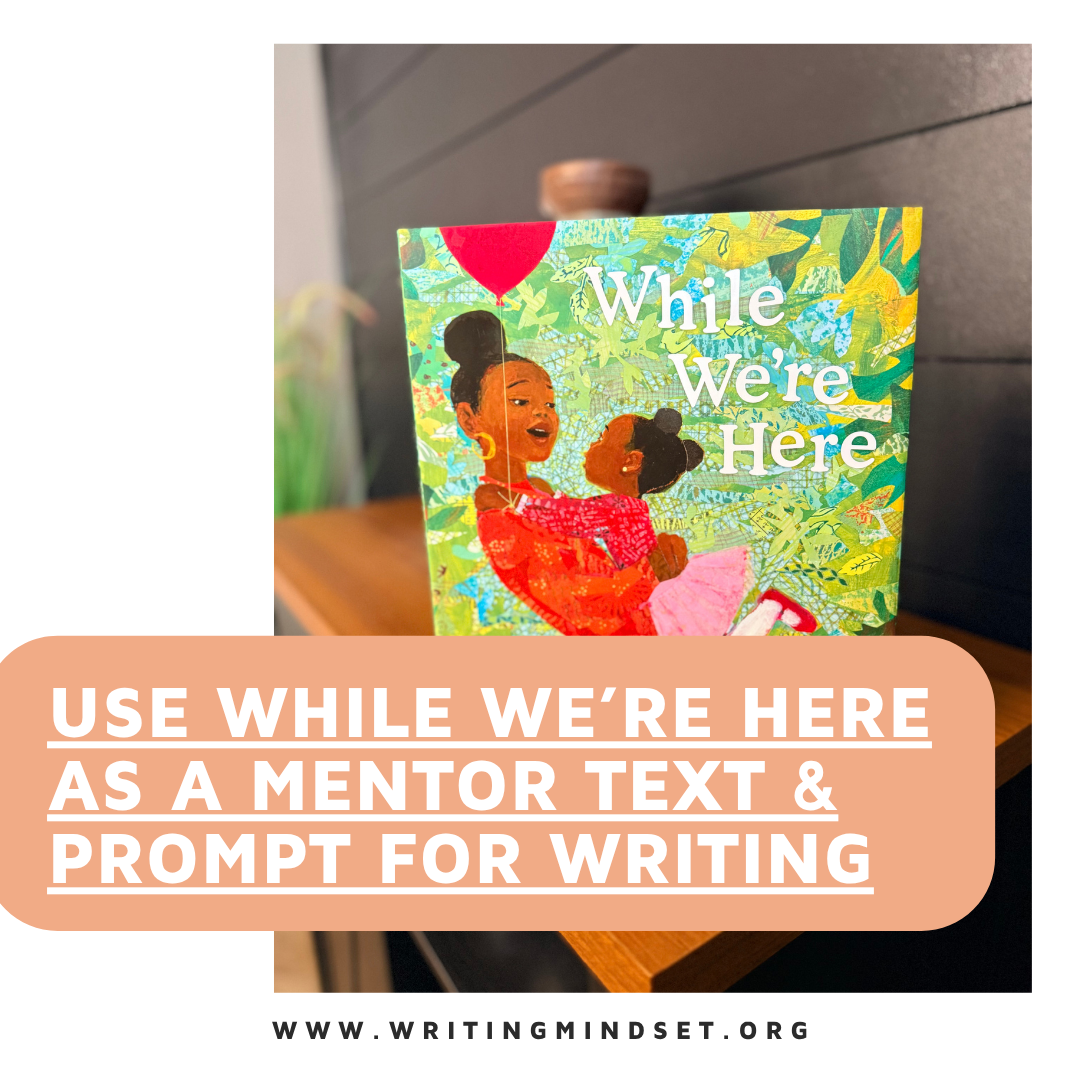
While We’re Here: Writing Through Presence, Connection, and the Shared Moment
While We’re Here by Anne Wynter, with illustrations by Micha Archer, invites readers into a quiet, reflective space centered on a simple but powerful idea: we are here, together, in this moment. Through rhythmic language and layered, collage-style artwork, the book explores what it means to exist alongside others—humans, animals, and the natural world—right now. A striking message for anyone; however, anyone in a caretaker role will truly appreciate the images of slowing down and being with our kids in the everyday moments.
The text moves gently through shared experiences (and yes, disappointment), grounding readers in presence rather than urgency. It doesn’t rush toward a conclusion; instead, it lingers. It asks us to notice where we are, who we are with, and what it means to simply be.
For writers and journalers alike, While We’re Here becomes an invitation to pause, reflect, and write from the present moment—not as something fleeting, but as something worth holding onto.
In this post, you can find…
Tips for using this book as a mentor text for writing
Ways to use the book with preschoolers, grades k-5, grades 6-8, grades 9-12, and for disciplinary literacy projects
Journaling prompts linked to the book (including nature journaling)
One grammar exercise to access grammar instruction